
F1, F2, F3 & F1 Academy: Cars Compared
An extensive comparison of Formula 1, Formula 2, Formula 3 and F1 Academy cars - including power, speed, engines, weight, downforce, tyres, DRS, active aero, safety, cost, driver development and why each car exists in the single-seater racing ladder.

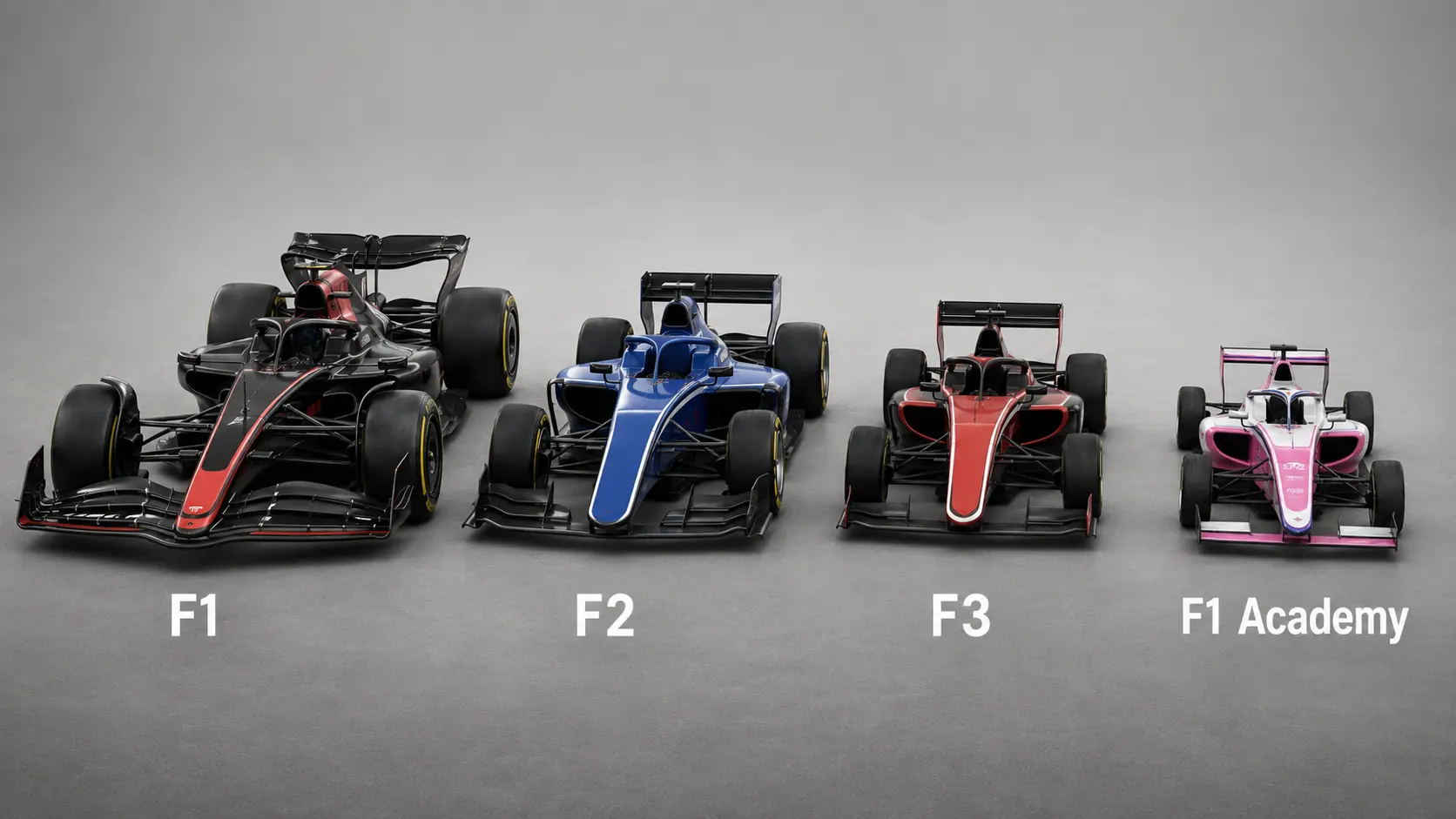
Quick answer
Formula 1, Formula 2, Formula 3 and F1 Academy are all single-seater racing categories, but the cars are not close in performance. F1 is the top level: the cars are designed and developed by individual teams, use hybrid power units, advanced aerodynamics and the most complex race technology in the ladder.
F2 is the final step before F1. It uses identical Dallara-built cars with a 3.4-litre turbocharged V6 engine producing around 620 horsepower. F2 is fast, physical and powerful, but it is still much simpler than F1.
F3 is the level below F2. It also uses identical cars, but with less power, less grip and a bigger grid. It is designed to develop racecraft, overtaking and consistency.
F1 Academy is a Formula 4-level category. It uses a smaller Tatuus car with a 1.4-litre turbo engine producing around 174 horsepower. It is not meant to be as fast as F3 or F2. It is designed to give young female drivers a structured development platform before moving higher up the single-seater ladder.
The simple version is this: F1 is the elite engineering peak, F2 is the final proving ground, F3 is the international junior battleground, and F1 Academy is the F4-level development step.
F1 vs F2 vs F3 vs F1 Academy: basic car comparison
| Category | Car type | Engine / power unit | Power | Top speed |
|---|---|---|---|---|
| Formula 1 | Team-built constructor car | 1.6-litre turbo V6 hybrid power unit | Roughly 1,000 hp depending on deployment and team | Track and aero dependent, can reach up to 345 km/h or 214 mp/h |
| Formula 2 | Spec Dallara single-seater | 3.4-litre turbocharged Mecachrome V6 | 620 hp | 335 km/h or 208 mp/h, in Monza aero configuration with DRS |
| Formula 3 | Spec Dallara single-seater | 3.4-litre naturally aspirated Mecachrome V6 | 380 hp | 300 km/h or 186 mp/h |
| F1 Academy | Spec Tatuus T421-F1A Formula 4-level car | 1.4-litre turbocharged Autotecnica four-cylinder | 174 hp | 240 km/h or 149 mp/h |
Note: F1 figures are less simple than junior-category figures because F1 teams build different cars and manage hybrid energy deployment differently. F2, F3 and F1 Academy are spec categories, so their public figures are easier to compare directly.
How the ladder works
The easiest way to understand these cars is to think of them as a ladder. F1 Academy sits around Formula 4 level. F3 is the first major international step on the Formula 1 support ladder. F2 is the final step before Formula 1. Formula 1 is the world championship at the top.
Each step adds speed, power, downforce, braking force, tyre complexity and pressure. Drivers do not jump straight from F1 Academy to F1 because the performance gap is enormous. They need to learn racecraft, tyre management, car setup, data analysis, physical conditioning and pressure management as the cars become faster.
- F1 Academy: teaches single-seater fundamentals at F4 level.
- F3: teaches international pack racing, aero sensitivity and racecraft.
- F2: teaches high-power single-seater racing, tyre strategy and F1-style weekends.
- F1: demands elite speed, engineering feedback, energy management and pressure handling.
- The ladder is not only about speed; it is about learning more complex racing problems.
Formula 1 car explained
A Formula 1 car is the fastest and most technically complex car in this comparison. Unlike F2, F3 and F1 Academy, F1 is not a spec chassis championship. Each team designs and builds its own car within the FIA Formula 1 regulations.
Modern F1 cars are built around aerodynamic performance, hybrid power, energy recovery, tyre management and extreme braking. The car is not just a racing machine; it is a rolling engineering project. Every surface, duct, suspension part, cooling opening and wing angle is designed to create performance.
- Car type: constructor-built Formula 1 car.
- Power unit: 1.6-litre turbo V6 hybrid.
- Hybrid system: electric power is central to performance.
- Aero: highly advanced, with active aero in the current regulation era.
- Team difference: every team’s car is different.
- F1 is not just a faster F2 car; it is a different level of engineering freedom.
Formula 2 car explained
Formula 2 is the final junior step before Formula 1. All F2 cars are built to the same specification, which means the driver and team operation matter more than car design. The current car is built by Dallara and powered by a 3.4-litre single-turbo Mecachrome V6 engine.
An F2 car is seriously fast. It has 620 horsepower, carbon brakes, slick tyres, DRS-style overtaking aid and enough downforce to make it physically demanding. But it is still much simpler than an F1 car. Teams can set the car up, but they cannot redesign the car like an F1 team can.
- Car type: identical spec Dallara chassis.
- Engine: 3.4-litre turbocharged Mecachrome V6.
- Power: 620 hp.
- Top speed: up to 335 km/h in low-drag Monza configuration with DRS.
- Weight: 795 kg with driver onboard.
- F2 is the closest junior car to F1 in speed and race-weekend pressure.
Formula 3 car explained
Formula 3 is the international junior category below Formula 2. Like F2, it is a spec championship, which means all drivers use the same basic car. The current F3 car uses a 3.4-litre naturally aspirated Mecachrome V6 producing 380 horsepower.
F3 is slower than F2, but it is not easy. The cars still have wings, slick tyres, DRS-style overtaking aid and enough aero sensitivity to punish mistakes. The grid is also larger, which means the racing can be hectic. F3 drivers must learn to pass, defend, qualify well and survive traffic.
- Car type: identical Dallara-built Formula 3 car.
- Engine: 3.4-litre naturally aspirated Mecachrome V6.
- Power: 380 hp.
- Top speed: around 300 km/h.
- Tyres: 16-inch Pirelli tyres.
- F3 is where young drivers learn to race in fast cars with lots of traffic.
F1 Academy car explained
F1 Academy uses a Formula 4-level car, not an F3 or F2 car. The car is the Tatuus T421-F1A, based on the second-generation Tatuus Formula 4 platform, with unique front and rear wings that make it visually different from standard F4 machinery.
The car uses a 1.4-litre turbocharged four-cylinder engine producing around 174 horsepower. That sounds small compared with F2 or F3, but the point of F1 Academy is not to be the fastest junior series. The point is to give young female drivers more structured track time, race experience, professional support and a pathway into higher categories.
- Car type: Tatuus T421-F1A Formula 4-level single-seater.
- Engine: 1.4-litre turbocharged Autotecnica four-cylinder.
- Power: 174 hp.
- Top speed: around 240 km/h.
- Tyres: 13-inch Pirelli tyres.
- F1 Academy is about development, seat time and progression, not matching F3 pace.
Size comparison: which car is biggest?
F1 and F2 cars are much larger than F1 Academy cars. The current F2 car is over five metres long and 1.9 metres wide. F1 cars are also very large, although the current F1 regulations moved toward shorter and narrower cars compared with the previous generation.
F3 sits between F2 and F1 Academy in the ladder. It is a serious international racing car, but it is not as powerful or physically demanding as F2. F1 Academy’s car is smaller because it is based on Formula 4, where drivers are usually earlier in their development.
- F1: large, highly complex, constructor-designed car.
- F2: 5285 mm long, 1900 mm wide, 3135 mm wheelbase.
- F3: smaller and less powerful than F2, but still an advanced junior car.
- F1 Academy: Formula 4-level size and performance.
- F1 Academy cars look much smaller because they are a different ladder step, not a mini F1 car.
Power comparison
Power is one of the biggest differences between the categories. F1 is in a different world because of its hybrid power unit. F2 is the most powerful junior car in this comparison. F3 has enough power to be very fast but remains a training category. F1 Academy uses much less power because it is designed for driver development at Formula 4 level.
- Formula 1: roughly 1,000 hp depending on team, mode and deployment.
- Formula 2: 620 hp from a turbocharged V6.
- Formula 3: 380 hp from a naturally aspirated V6.
- F1 Academy: 174 hp from a 1.4-litre turbocharged four-cylinder.
- The jump from F1 Academy to F3 is huge, and the jump from F2 to F1 is even more complex than the horsepower number suggests.
Engine comparison: hybrid, turbo, naturally aspirated and F4-level
The engine story changes at every level. Formula 1 uses a hybrid power unit, which means the combustion engine and electric deployment work together. F2 uses a powerful turbocharged V6, but without the F1 hybrid complexity. F3 uses a naturally aspirated V6, which gives a more traditional junior formula feel. F1 Academy uses a smaller four-cylinder turbo engine suitable for F4-level learning.
- F1: hybrid 1.6-litre turbo V6 with major electric contribution.
- F2: 3.4-litre single-turbo V6, powerful but simpler than F1.
- F3: 3.4-litre naturally aspirated V6, less power and less torque than F2.
- F1 Academy: 1.4-litre turbo four-cylinder, designed for cost-effective development racing.
- F1 is hybrid strategy; F2 is turbo power; F3 is junior V6 racecraft; F1 Academy is F4-level fundamentals.
Speed comparison
Top speed is useful, but it does not tell the whole story. A car can have a high top speed and still be much slower over a lap if it has less downforce, weaker braking or slower cornering. F1 cars are fastest because they combine straight-line speed with huge braking and cornering performance.
- F1: fastest overall, especially because of cornering, braking, aero and energy deployment.
- F2: up to 335 km/h in Monza aero configuration with DRS.
- F3: around 300 km/h.
- F1 Academy: around 240 km/h.
- F1 does not only win on top speed; it wins because it brakes later and corners much faster.
Acceleration comparison
Acceleration also shows the ladder clearly. F2 and F3 both launch very quickly, but F2 keeps pulling harder at higher speeds because it has far more power. F1 Academy accelerates quickly compared with road cars, but it is nowhere near F2 or F3 once the speed builds.
| Category | 0-100 km/h | 0-200 km/h | What it tells you |
|---|---|---|---|
| F2 | 2.90 seconds | 6.60 seconds | Very powerful junior car with strong acceleration |
| F3 | 3.0 seconds | 7.7 seconds | Close to F2 at low speed, but weaker as speed rises |
| F1 Academy | 3.6 seconds | 12.5 seconds | Fast for an entry-level single-seater, but much slower at high speed |
F1 acceleration is harder to describe with one public number because it depends on tyre grip, hybrid deployment, power unit mode, fuel load, aero configuration and track conditions. The important beginner point is that F1 combines brutal acceleration with far stronger braking and cornering performance.
Downforce comparison: why F1 is so much quicker through corners
Downforce is one of the biggest reasons F1 cars are so much faster than junior cars. Downforce is aerodynamic grip: the car’s wings, floor and bodywork push it into the track as speed increases. More downforce means faster cornering, later braking and better stability at high speed.
F2 and F3 also use wings and floors, but they are much simpler and more controlled. F1 Academy has simpler Formula 4-level aero, so it relies more on mechanical grip and basic driving fundamentals.
- F1: most complex aero, active aero in the current rules and huge engineering freedom.
- F2: strong downforce, but spec and controlled.
- F3: less downforce than F2, designed to help drivers learn aero racing.
- F1 Academy: simpler Formula 4-level wings and much less aero load.
- F1 is not only faster in a straight line; it is much faster when the track turns.
DRS and active aero: who has what?
Formula 1’s current technical direction is different from the junior categories. F1 now uses active aerodynamic concepts and energy-based overtaking systems under the current regulation set, while F2 and F3 still use a DRS-style rear-wing overtaking aid. F1 Academy does not need that kind of system because the car is simpler and the racing is built around Formula 4-level fundamentals.
- F1: active aerodynamics and hybrid energy deployment are central to the car’s performance.
- F2: uses DRS-style rear-wing activation.
- F3: uses DRS-style rear-wing activation.
- F1 Academy: fixed simpler aero, no F2/F3-style DRS training focus.
- F1 manages aero and energy; F2 and F3 use DRS-style overtaking; F1 Academy keeps the car simpler.
Tyres comparison
Tyres are another key difference. F1 and F2 use 18-inch wheels, F3 uses 16-inch tyres, and F1 Academy uses 13-inch Pirelli tyres. Bigger tyres and more advanced tyre behaviour change how the car brakes, corners and warms up.
F2 is a major tyre-management training category because drivers must learn to protect Pirelli slicks over longer runs and handle mandatory pit stop strategy in the Feature Race. F3 and F1 Academy still teach tyre management, but the demands are different.
- F1: Pirelli tyres, complex management, temperature windows and strategy.
- F2: F2-specific Pirelli slicks and wets on 18-inch wheels.
- F3: 16-inch Pirelli tyres with category-specific compounds.
- F1 Academy: 13-inch Pirelli tyres.
- As the ladder rises, tyre management becomes more strategic and more physically demanding.
For more, see: Understand motorsport tyres.
Braking and G-force comparison
Braking is where junior categories start to feel very different. F2 cars can produce very high braking forces, with official figures around -3.5G maximum braking deceleration and up to +/-3.9G lateral acceleration. F3 is less extreme, and F1 Academy is lower again.
This is one reason drivers need to build up the ladder. The body has to adapt to stronger braking loads, more neck strain, higher steering effort and faster decision-making. F1 is another step beyond because the cars brake later, corner faster and require elite physical preparation.
- F1: highest braking and cornering demands overall.
- F2: up to -3.5G braking and +/-3.9G lateral acceleration.
- F3: up to -1.9G braking and +/-2.6G lateral acceleration.
- F1 Academy: up to -1.5G braking and +/-2.0G lateral acceleration.
- Faster cars punish the driver’s body harder.
Constructor racing vs spec racing
This is the most important non-speed difference. Formula 1 is a constructor championship. Teams design their own cars, develop upgrades and fight an engineering war across the season. That is why one F1 team can dominate while another struggles.
F2, F3 and F1 Academy are spec championships. Everyone uses the same basic car. Teams can change setup, prepare the car better, manage tyres better and coach drivers better, but they cannot design a completely new chassis or aero package.
- F1: team-built cars, major engineering freedom.
- F2: identical Dallara cars with setup freedom.
- F3: identical Dallara cars with setup freedom.
- F1 Academy: identical Tatuus cars with Formula 4-level setup learning.
- F1 compares teams and drivers; F2, F3 and F1 Academy are mostly about drivers and team execution.
Safety comparison
All four categories use modern single-seater safety principles: halo protection, carbon survival cells, crash testing, wheel tethers and strict technical inspection. The difference is that higher categories need to withstand higher performance levels and greater crash energy.
F2’s current car was designed to align closely with modern F1 safety expectations. F3’s current generation was also designed around updated FIA safety rules. F1 Academy’s car complies with Formula 4-level safety standards, including halo, crash tests and anti-intrusion protection.
- F1: highest-level FIA single-seater safety structures.
- F2: modern safety standards and F1-style halo specification.
- F3: updated safety rules for the current generation car.
- F1 Academy: Formula 4-level car with FIA 2021 safety compliance.
- Even the slowest car here is still a proper modern single-seater with serious safety engineering.
Cost and complexity comparison
F1 is vastly more expensive because the car is constantly developed. Teams design parts, manufacture upgrades, run simulations, test concepts and bring new packages during the season. F2, F3 and F1 Academy control costs by using spec cars.
That is why the junior categories are not trying to be miniature F1. They are trying to create a fairer development environment. The goal is to identify driver talent without letting car development dominate the results.
- F1: expensive constructor development and constant upgrades.
- F2: high-cost junior racing, but controlled by spec car rules.
- F3: lower than F2, still professional international racing.
- F1 Academy: lower-performance car designed to increase access, seat time and development.
- Spec cars are used to keep junior racing more about drivers and less about engineering budgets.
Driving style: what each car teaches
Each car teaches a different stage of the same skill set. F1 Academy teaches fundamentals: braking, throttle control, race starts, wheel-to-wheel racing and technical feedback. F3 adds higher speed, aero following, traffic and a bigger field. F2 adds more power, heavier braking, tyre strategy, pit stops and F1-style pressure. F1 adds everything at maximum intensity.
- F1 Academy: fundamentals and confidence in single-seaters.
- F3: racecraft, qualifying pressure and surviving large grids.
- F2: tyre management, power delivery, strategy and race execution.
- F1: elite precision, hybrid management, engineering feedback and extreme consistency.
- The more advanced the car, the smaller the margin for error.
Why does F1 Academy use a Formula 4-level car instead of an F2 car?
F1 Academy uses a Formula 4-level car because the series is designed to build experience, not overwhelm drivers with a 620-horsepower F2 machine. Jumping straight into F2-level cars would be expensive, physically demanding and too large a step for many drivers coming from karting, F4 or regional junior racing.
The F1 Academy car gives drivers a platform to learn race starts, tyre use, qualifying, close racing, setup feedback and media pressure while still being manageable. The goal is to prepare drivers for higher categories such as Formula Regional, GB3, F3 or other professional single-seater routes.
- F4-level cars are more appropriate for early development.
- Lower cost means more testing and more access.
- Drivers can build confidence before jumping to faster cars.
- The series is about pathway building, not replacing F3 or F2.
- F1 Academy is not trying to be F2 for women; it is trying to improve the pipeline into the wider ladder.
Lap time comparison: why F1 is so far ahead
On the same circuit, F1 is usually many seconds faster than F2, and F2 is usually several seconds faster than F3. F1 Academy would be further back again. The exact gap changes by circuit because some tracks reward power, some reward downforce and some reward braking.
The biggest gaps usually appear in fast corners, long braking zones and high-downforce sections. An F1 car can carry more speed into corners, brake later and get back on power earlier. F2 and F3 are fast, but they cannot match the combined aero, tyre, braking and power performance of F1.
- Power tracks: F1 and F2 pull away on long straights.
- Aero tracks: F1 gains huge time in fast corners.
- Braking tracks: F1 and F2 gain under braking compared with lower categories.
- Technical tracks: driver precision matters, but car capability still creates gaps.
- Top speed is only one part of lap time; braking and cornering are where F1 really disappears.
Could an F2 car ever beat an F1 car?
In normal conditions, no. An F2 car is extremely fast, but an F1 car has more power, more sophisticated aerodynamics, more advanced energy deployment, stronger braking performance and more engineering freedom. Even a slow F1 car is designed to a much higher performance envelope than an F2 car.
F2 is impressive because the cars are identical and the racing is close, not because the cars are near F1 pace. A great F2 driver can show they deserve an F1 chance, but the F2 car itself is not built to challenge an F1 car.
- F1 advantage: power, aero, braking, tyres, energy deployment and development.
- F2 strength: spec racing, driver comparison and final-step preparation.
- Why the gap matters: F1 rookies still need to adapt massively after F2.
- F2 prepares drivers for F1; it does not match F1 performance.
Are F2, F3 and F1 Academy all the same type of car?
They are all single-seaters, but they are not the same. F2 is a high-power final-step junior car. F3 is a lower-power international junior car with a large grid. F1 Academy is a Formula 4-level car built around entry-level development.
They share some ideas: open wheels, halo protection, wings, slick tyres and single-seat cockpit layout. But the performance level, physical demand, tyre behaviour and learning goals are completely different.
- Same broad family: single-seater, open-wheel racing cars.
- Different performance: F2 is much faster than F3, and F3 is much faster than F1 Academy.
- Different purpose: each step teaches a different level of racecraft.
- Different cost: more performance generally means more expense.
- They look related, but they are not interchangeable.
Common misconceptions
- “F2 cars are just old F1 cars.” No. F2 cars are purpose-built spec junior cars, not retired F1 cars.
- “F3 is just a slower F2.” Not exactly. F3 has a different role, different power level, different grid size and different development purpose.
- “F1 Academy cars are like F3 cars.” No. F1 Academy uses Formula 4-level machinery.
- “F1 Academy is slow.” It is slower than F3 and F2, but still fast compared with road cars and designed for driver development.
- “All single-seaters have DRS.” No. F2 and F3 use DRS-style systems, while F1 Academy does not operate like that, and current F1 uses its own active aero and energy systems.
- “The fastest car always makes the best racing.” Not always. Spec junior cars can create great racing because the cars are equal.
- “F1 is only faster because it has more horsepower.” No. F1 is faster because of power, aero, tyres, braking, energy recovery and development freedom together.
- “A driver can skip the ladder easily.” Rarely. Each step teaches skills needed for the next.
Why watch each category
Each category is fun for a different reason. Do not watch F1 Academy expecting F1 speed. Do not watch F3 expecting clean-air domination. Do not watch F2 expecting every driver to be F1-ready. Each category is testing something different.
- F1: elite speed, strategy, engineering, tyres, energy deployment and title pressure.
- F2: future F1 talent, tyre management, pit strategy and high-pressure sprint/feature formats.
- F3: large grids, young drivers, qualifying pressure and chaotic racecraft.
- F1 Academy: development progress, confidence building, racecraft fundamentals and emerging female talent.
- Lap gaps carefully: the fastest category is not always the most unpredictable.
- Mistakes: junior categories are about learning, so errors reveal development as much as results.
- Overtaking: F3 and F1 Academy often show racecraft development clearly.
- Graduates: the real story is how drivers adapt as the cars get faster.
Terms explained
- Single-seater: racing car with one central driver seat and open wheels.
- Spec car: identical car used by every driver in a category.
- Constructor car: car designed and built by a team or manufacturer within regulations.
- Downforce: aerodynamic grip pushing the car into the track.
- DRS: drag reduction system, a rear-wing overtaking aid used in F2 and F3-style systems.
- Active aero: movable aerodynamic surfaces used to change drag and downforce.
- Hybrid power unit: engine system combining combustion and electric power.
- Formula 4-level: entry-level FIA single-seater performance tier.
- Feature Race: longer race, often with more points and strategy significance.
- Sprint Race: shorter race, often with fewer points and sometimes reverse-grid rules.
- Road to F1: the driver development ladder leading toward Formula 1.
- Racecraft: a driver’s skill in overtaking, defending, positioning and managing risk.
F1 vs F2 vs F3 vs F1 Academy cheat sheet
- F1 is the fastest, most complex and most expensive.
- F2 is the final junior category before F1.
- F3 is the major international junior category below F2.
- F1 Academy is Formula 4-level, not F3-level.
- F1 cars are team-built constructor cars.
- F2, F3 and F1 Academy cars are spec cars.
- F2 has 620 hp and can reach 335 km/h in the right setup.
- F3 has 380 hp and reaches around 300 km/h.
- F1 Academy has 174 hp and reaches around 240 km/h.
- F1 is faster because of aero, braking, hybrid systems and development, not just power.
- F2 teaches future F1-style pressure and strategy.
- F3 and F1 Academy are about development, racecraft and progression.
Best simple comparison
The easiest way to explain the four cars is this:
- F1: the fastest possible car a team can build within the rules.
- F2: a powerful spec car designed to prepare drivers for F1.
- F3: a lower-power spec car designed to develop young drivers in large competitive fields.
- F1 Academy: a Formula 4-level spec car designed to give young female drivers the track time and support needed to progress.
The simple memory trick is this: F1 is the destination, F2 is the final exam, F3 is the international classroom, and F1 Academy is the foundation step.
F1, F2, F3 and F1 Academy cars may look similar to new fans because they are all open-wheel single-seaters, but they are very different machines. F1 is the technological peak, with constructor-built cars, hybrid power, advanced aero and the highest performance. F2 is the powerful final junior step. F3 is the international racecraft battleground. F1 Academy is the Formula 4-level platform built to improve opportunity and development for young female drivers.
The cars get faster, harder and more complex as you move up the ladder. Power increases, braking forces increase, aero sensitivity increases, tyre management becomes more demanding and the pressure becomes more intense.
In summary, F1 is not just faster than F2, F3 and F1 Academy - it is a completely different level of engineering and performance. But every lower category exists to teach drivers the skills they need to eventually survive that jump.
Related Articles
|
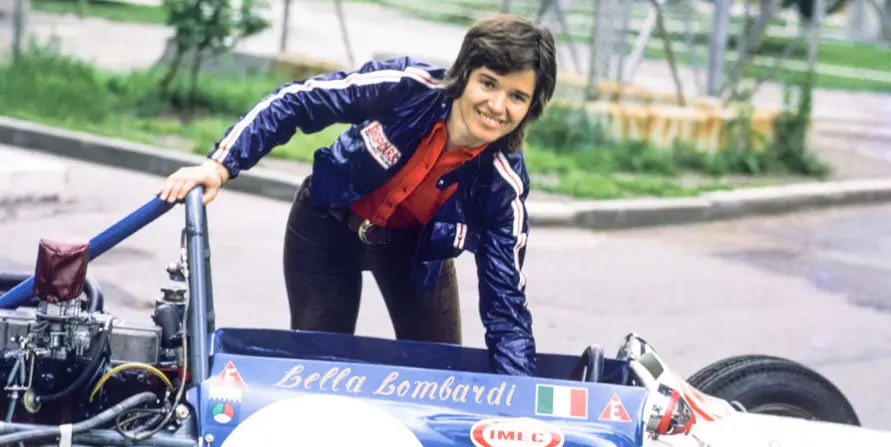
Formula 1 reaches 50 years since a woman last raced in a Grand Prix
|
|
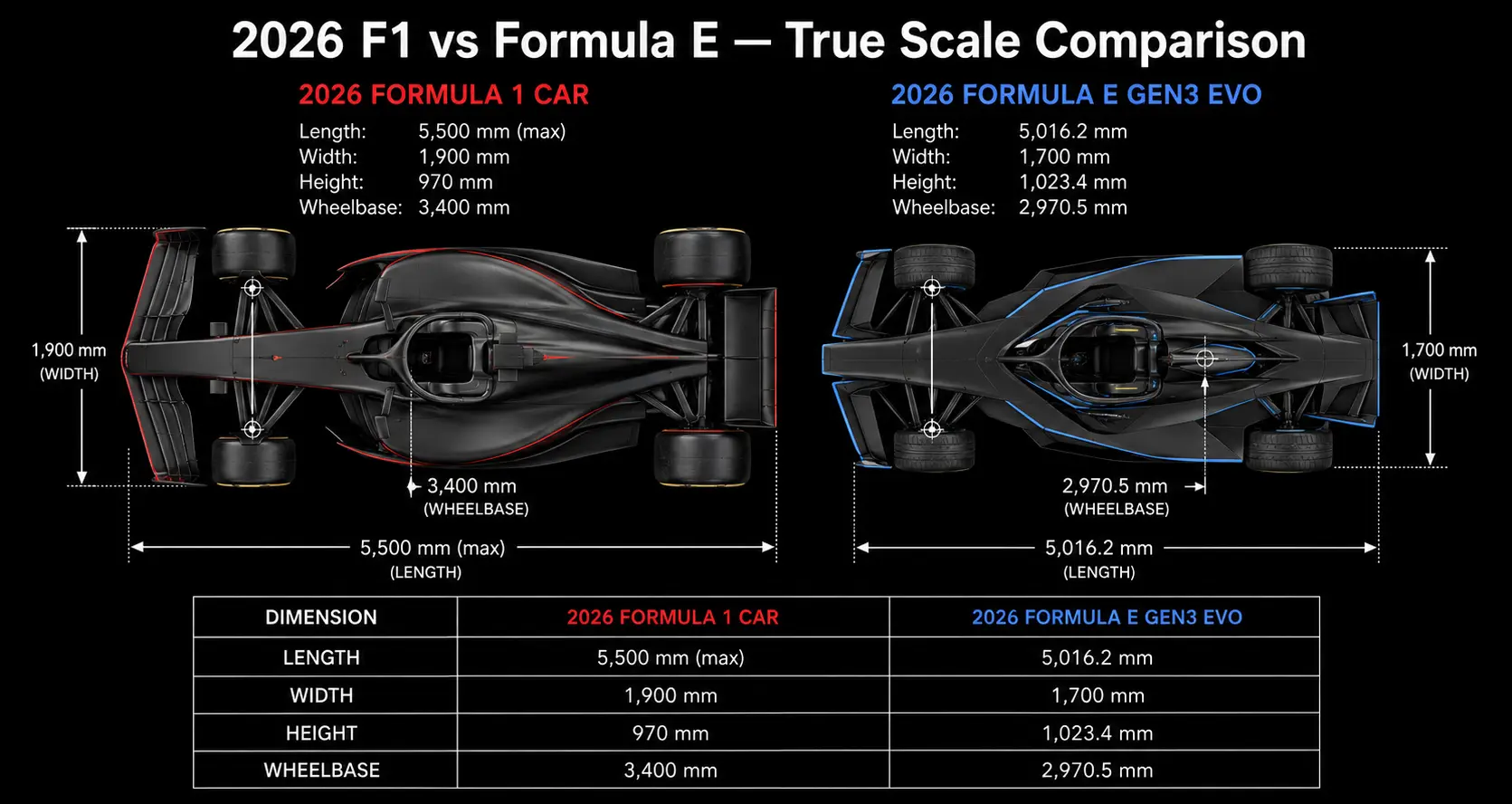
F1 & Formula E: Comparing The Differences Between Each Car
|
|
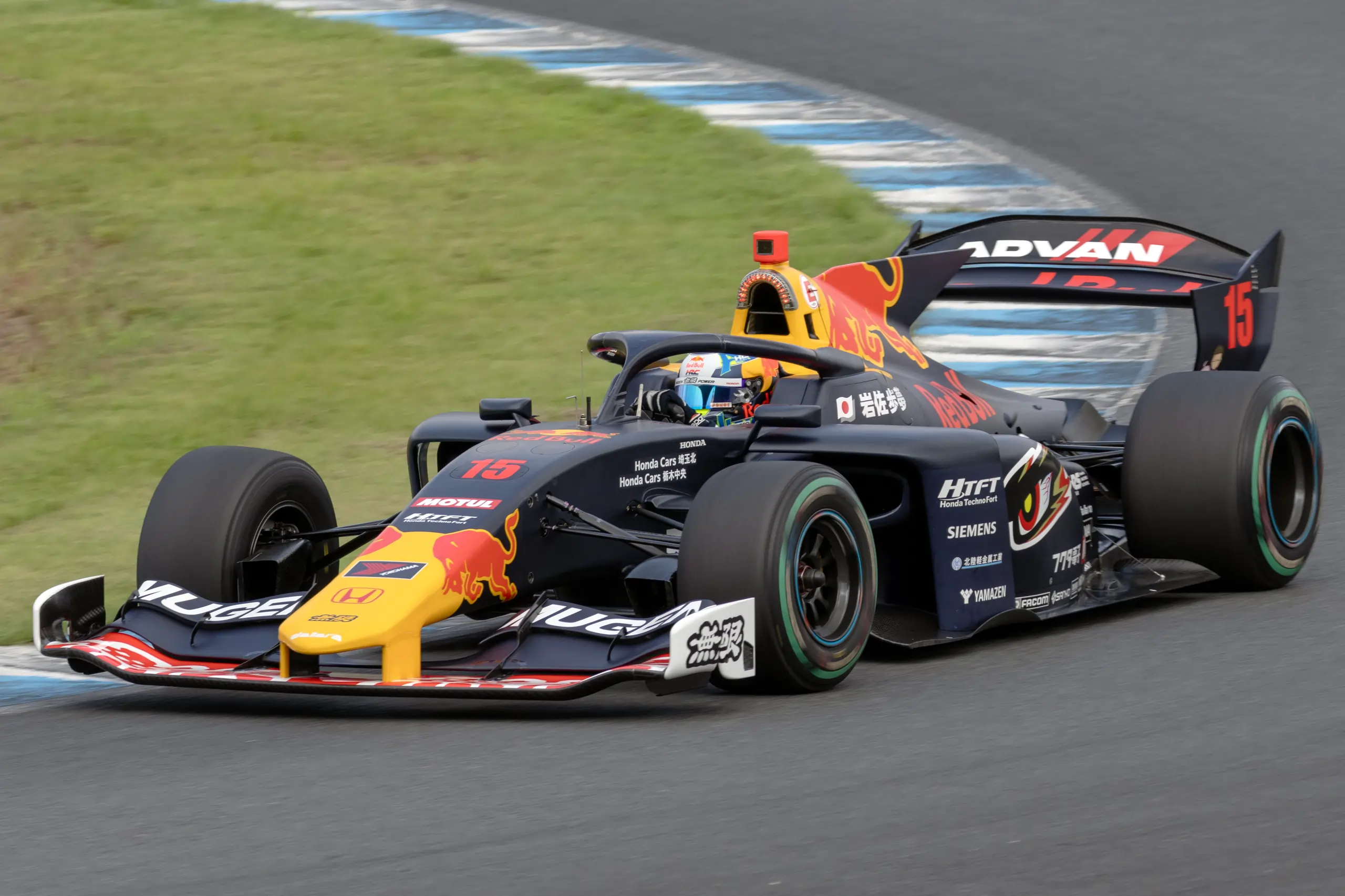
Super Formula Car Regulations Explained
|
|
Formula 1 Tyre Compounds Explained
|

|
IndyCar arrives at a brand-new Canadian street circuit
|
|
|
Formula E signs global Disney+ and ESPN streaming deal for GEN4 era
|

|
NASCAR Explained to an F1 Fan
|
|
|
Porsche Secures Back-To-Back Formula E Manufacturers’ Titles
|
Related series

|
Formula 1 Academy
|

|
Formula 3
|

|
Formula 2
|

|
Formula 1
|