
F1 & Formula E: Comparing The Differences Between Each Car
A in-depth comparison of Formula 1 and Formula E cars - including power, speed, engines, batteries, acceleration, weight, aerodynamics, tyres, braking, regeneration, race strategy, sound, sustainability, street circuits and why the two cars are designed for completely different types of racing.

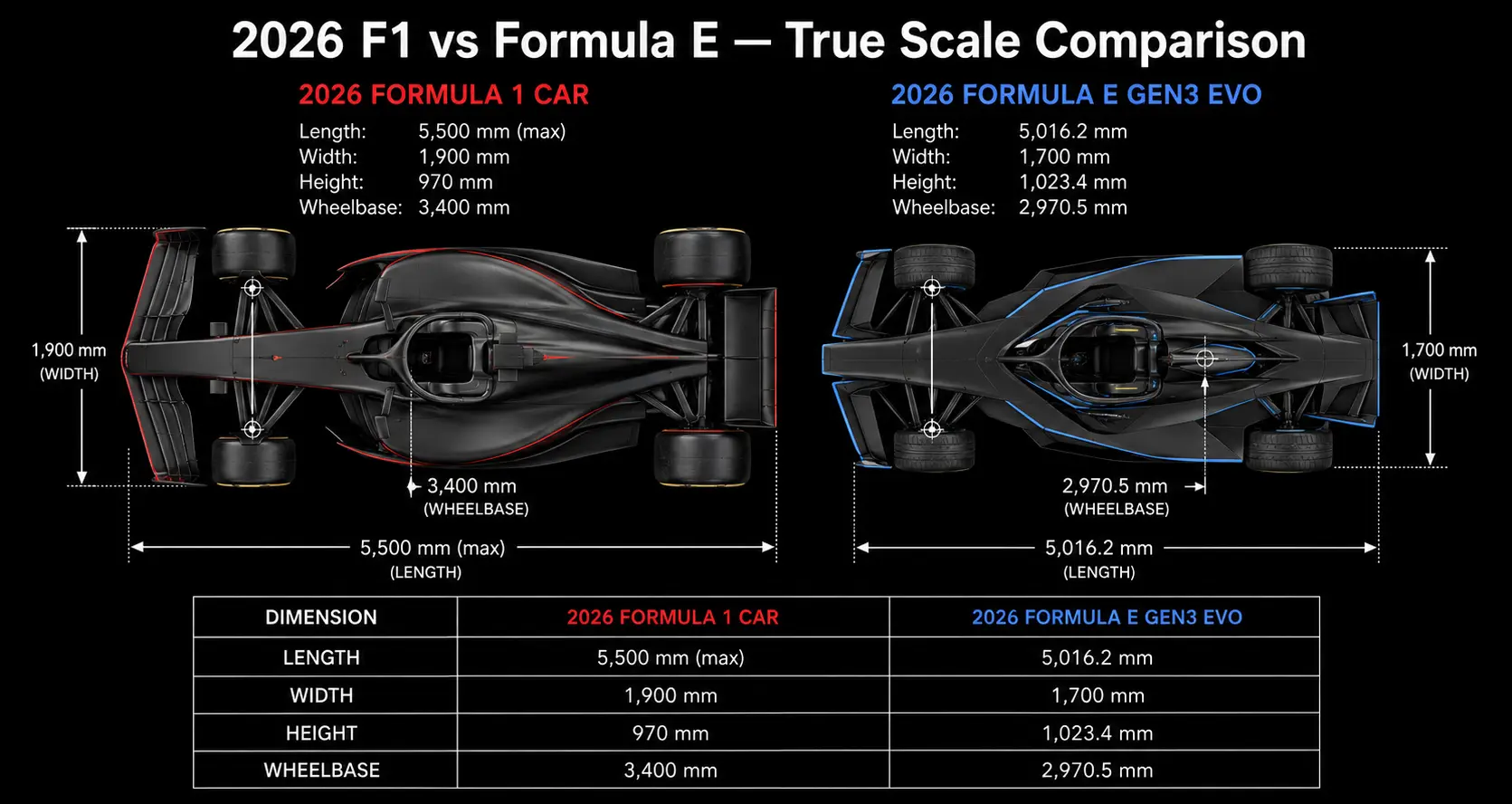
Formula 1 cars are faster than Formula E cars over a normal racing lap, but Formula E cars are not simply “slow F1 cars”. They are built for a different mission. F1 is about the highest-performance hybrid racing car possible within the regulations. Formula E is about electric power, energy recovery, efficiency, street racing and close competition.
An F1 car uses a turbocharged V6 hybrid power unit, advanced aerodynamics, slick tyres and extreme downforce. It is designed to brake very late, corner at huge speed and produce the fastest possible lap time on purpose-built circuits.
A Formula E car is fully electric. The current GEN3 Evo car is built around battery energy, regeneration, electric torque, efficiency and racing on tight street circuits. It is much quieter than an F1 car, has less downforce and less top-end circuit performance, but it can accelerate incredibly quickly and recover huge amounts of energy under braking.
The simple version is this: F1 is the faster car overall; Formula E is the smarter electric energy-management car.
F1 vs Formula E: basic car comparison
| Feature | Formula 1 | Formula E GEN3 Evo |
|---|---|---|
| Power source | 1.6-litre turbo V6 hybrid power unit | Fully electric battery-powered drivetrain |
| Main performance focus | Lap time, downforce, braking, aero efficiency and hybrid deployment | Electric efficiency, regeneration, street-race agility and energy management |
| Top speed | Track-dependent, generally higher on fast circuits | Around 322 km/h for GEN3 Evo |
| Acceleration | Extremely fast, but limited by tyre grip and deployment | 0-100 km/h in around 1.86 seconds |
| Drive layout | Rear-wheel drive | Rear-wheel drive normally, with all-wheel drive available in key modes such as qualifying duels, race starts and ATTACK MODE |
| Aerodynamics | Very high downforce and highly complex aero | Lower downforce, more robust bodywork and efficiency-focused aero |
| Tyres | Slick and wet racing tyres | Grooved all-weather Hankook tyres |
| Typical circuits | Permanent circuits, street circuits and high-speed Grand Prix tracks | Mostly street circuits and compact city layouts |
| Sound | Turbo hybrid engine sound | Electric motor, gear whine and tyre noise |
| Best simple description | Maximum-performance hybrid race car | High-efficiency electric street-racing car |
What each car is built for
The biggest mistake is comparing F1 and Formula E as if they were designed for the same job. They are not. An F1 car is built to be the fastest circuit racing car in the world. A Formula E car is built to race efficiently on tight street circuits using electric energy.
That difference changes everything. F1 cars need huge downforce, high-speed stability and extreme braking. Formula E cars need efficiency, robust bodywork, strong energy recovery and the ability to race closely on narrow city tracks.
- F1 mission: maximum lap time performance.
- Formula E mission: electric racing efficiency and close city racing.
- F1 strength: fast corners, braking, aero grip and race pace.
- Formula E strength: low-speed acceleration, regeneration, efficiency and street-race strategy.
- F1 is built for speed first; Formula E is built for energy-smart racing first.
Formula 1 car explained
A Formula 1 car is a hybrid racing prototype built by each team within the F1 technical regulations. It has a turbocharged combustion engine, electric energy recovery, advanced aerodynamics, slick tyres, complex suspension and huge braking performance.
F1 cars are not identical. Every team designs its own chassis, sidepods, floor, wings, cooling layout and suspension details. That is why the car matters so much in F1. A brilliant driver in a poor F1 car cannot simply overcome a major performance deficit.
- Power unit: turbo V6 hybrid system.
- Fuel: advanced sustainable fuel in the current regulation era.
- Aero: extremely advanced, with active aero under the current rules.
- Tyres: slicks for dry weather and wet-weather tyres for rain.
- Development: teams constantly improve the car across the season.
- F1 is a car-design championship as well as a driver championship.
Formula E car explained
A Formula E car is a fully electric single-seater built around battery power, electric motors and energy recovery. The current GEN3 Evo car is designed to be fast, efficient, robust and suitable for street circuits.
Unlike F1, Formula E is much more controlled around the common car platform. The championship uses a shared chassis and battery package, while manufacturers compete heavily on powertrain software, energy efficiency, motor technology and regeneration. That means Formula E is less about visible aero upgrades and more about electric powertrain intelligence.
- Power source: battery electric.
- Key feature: huge regenerative braking capability.
- Drive system: all-wheel drive available in selected modes on GEN3 Evo.
- Tyres: grooved all-weather tyres designed for different conditions.
- Tracks: mostly city and street circuits.
- Formula E is an electric efficiency championship as much as a driving championship.
Powertrain comparison: hybrid engine vs electric motor
The most obvious difference is the powertrain. F1 uses a combustion engine and electric hybrid system working together. Formula E uses electric motors powered by a battery.
That means the cars feel completely different. F1 has gears, combustion sound, fuel flow, electric deployment and thermal management. Formula E has instant electric torque, battery state-of-charge, regen targets and energy-saving strategy.
- F1: combustion engine plus electric hybrid power.
- Formula E: electric motor power from a battery.
- F1 driver challenge: manage hybrid deployment, tyres, fuel and engine modes within the rules.
- Formula E driver challenge: manage energy, regen, lift-and-coast and ATTACK MODE.
- F1 burns fuel and recovers energy; Formula E spends battery energy and recovers as much as possible.
Power comparison: which has more power?
Formula 1 has more overall performance, but Formula E’s electric power is still impressive. An F1 car’s total performance comes from combustion power, electric deployment and aero efficiency. A Formula E GEN3 Evo car delivers up to 350 kW in key moments and is designed around extremely efficient energy use.
Power alone can be misleading. Formula E can launch very hard because electric motors deliver instant torque. F1 dominates once speed, downforce, braking and full-lap performance are considered.
- F1: higher total race-car performance from hybrid power and aero.
- Formula E GEN3 Evo: up to 350 kW in key modes and around 600 kW maximum regenerative braking capability.
- Formula E GEN4: set to raise Formula E power again from 2026/27.
- Important point: horsepower does not decide everything; tyres, aero and braking matter too.
- Formula E punches hard from low speed, but F1 is stronger across a full lap.
Acceleration: why Formula E is so quick off the line
Formula E’s headline strength is acceleration. The GEN3 Evo car can accelerate from 0-100 km/h in around 1.86 seconds, which is sensational for a single-seater. Electric torque arrives instantly, and the GEN3 Evo’s all-wheel-drive capability in selected moments helps it launch very hard.
F1 cars are also brutally quick, but they are traction-limited at low speed. That means the tyres can only put so much power into the track before they spin. This is why Formula E can look surprisingly strong in a launch comparison, even though F1 is much faster over a lap.
- Formula E advantage: instant torque and all-wheel-drive moments.
- F1 limitation: huge power, but rear tyres must put it down.
- Low-speed launch: Formula E can be spectacular.
- Full-lap pace: F1 quickly pulls away through braking, aero and corner speed.
- Formula E may win the first few metres; F1 wins the lap.
Top speed: which is faster in a straight line?
F1 cars usually have the higher straight-line ceiling, especially on fast circuits with long straights and low-drag setups. Formula E’s GEN3 Evo has a top speed of around 322 km/h, which is very fast, but Formula E tracks rarely allow long full-throttle runs like Monza, Baku or Las Vegas.
This is another example where the track matters. Put Formula E on a short street circuit and it looks sharp, agile and punchy. Put both cars on a long permanent circuit and the F1 car’s power, aero efficiency and braking performance become much more obvious.
- F1: higher top-speed potential on fast circuits.
- Formula E: around 322 km/h for GEN3 Evo, but usually raced on tighter layouts.
- Track effect: Formula E rarely gets the long straights F1 uses.
- F1 is faster in a straight line when the track gives it room.
Lap time: why F1 is much faster overall
If you put an F1 car and a Formula E car on the same full-size circuit, the F1 car is much faster over a lap. The reason is not just top speed. It is braking, downforce, tyre grip, cornering speed and power delivery working together.
F1 cars can carry huge speed through fast corners. They can brake extremely late from high speed. They use slick tyres with much more grip than Formula E’s all-weather tyres. Formula E cars are optimised for a different challenge: short straights, heavy braking, low-speed corners, energy saving and regeneration.
- F1 gains time: fast corners, high-speed braking and long acceleration zones.
- Formula E is strongest: low-speed traction zones, energy recovery and tight street sections.
- Aero difference: F1 produces far more high-speed grip.
- Tyre difference: F1 slicks are much more specialised for dry grip.
- Formula E is quick in bursts; F1 is quicker everywhere over a full racing lap.
Aerodynamics: why F1 looks more complex
F1 aerodynamics are far more complex than Formula E aerodynamics. F1 teams spend enormous effort designing front wings, floors, sidepods, suspension fairings, beam wings and rear wings to produce downforce and control airflow.
Formula E still has aero, but it is not an aero war in the same way. Formula E bodywork is designed to be efficient, robust and suitable for close street racing. It cannot rely on huge delicate aero surfaces in the same way because city circuits are narrow, contact is common and efficiency is central.
- F1 aero: high downforce, high complexity and constant development.
- Formula E aero: lower downforce, more robust and efficiency-focused.
- F1 weakness: following another car can still be difficult because aero is sensitive.
- Formula E strength: bodywork is more suited to close city racing.
- F1 uses air to go faster; Formula E uses air more carefully to save energy and survive close racing.
Tyres: slicks vs all-weather tyres
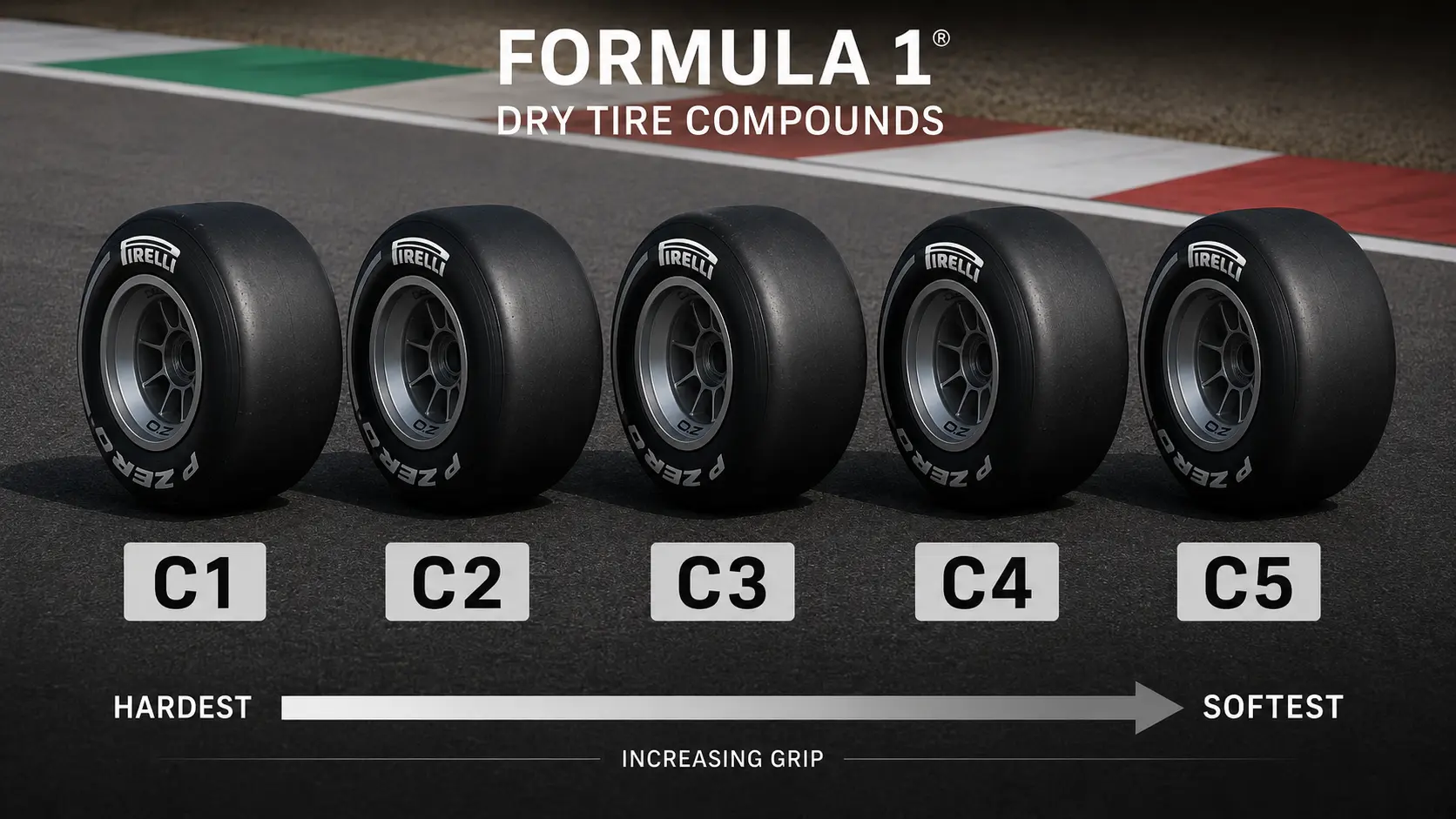
F1 uses slick tyres in the dry and dedicated wet-weather tyres when it rains. This gives F1 cars enormous grip in dry conditions. The downside is that tyre compounds, temperature windows, degradation and strategy become complicated.
Formula E uses grooved all-weather tyres. They are designed to handle a wider range of conditions without the same slick-versus-wet split. That suits Formula E’s sustainability goals, logistics and street-race format, but it also means the car has less pure dry grip than an F1 car on slicks.
- F1 tyres: dry slicks, intermediates and full wets.
- Formula E tyres: grooved all-weather racing tyres.
- F1 advantage: more dry grip and higher cornering speed.
- Formula E advantage: simpler tyre logistics and wider-condition usability.
- F1 tyres are about maximum grip; Formula E tyres are about efficiency and versatility.
For more, see: Understand motorsport tyres.
Braking: carbon brakes vs regeneration
F1 cars have incredible braking performance because of carbon brakes, slick tyres, downforce and low weight. They can brake extremely late from very high speed. Formula E also brakes hard, but braking is more complicated because it is tied to regeneration.
In Formula E, slowing the car is also an opportunity to recover energy. Drivers and teams must decide how much energy to regenerate, when to lift, when to coast and how to hit energy targets without losing too much race time. This makes braking in Formula E partly a performance tool and partly an energy-management tool.
- F1 braking: maximum stopping power and late braking.
- Formula E braking: braking plus energy recovery.
- F1 driver focus: brake late, protect tyres and manage balance.
- Formula E driver focus: brake, regenerate and manage race energy.
- F1 brakes to slow down; Formula E brakes to slow down and refuel the battery slightly.
Energy strategy: the biggest Formula E difference
Formula E races are shaped by usable energy. Drivers cannot simply push flat-out from start to finish without thinking about battery use. They must save energy, regenerate energy, use ATTACK MODE intelligently and sometimes race slower at one point to be faster later.
F1 also has energy management, but it works differently. F1 drivers manage hybrid deployment, battery state, fuel flow, tyre temperature and strategy. Formula E puts electric energy management at the centre of the whole race.
- F1 energy: hybrid deployment as one part of a wider race strategy.
- Formula E energy: battery use and regeneration are central to the race.
- F1 strategy: tyres, pit stops, track position, undercuts and hybrid deployment.
- Formula E strategy: usable energy, ATTACK MODE, regen, pack positioning and efficiency.
- in F1, energy is one tool; in Formula E, energy is the race.
ATTACK MODE vs F1 overtaking systems
Formula E’s most famous race feature is ATTACK MODE. Drivers activate it by driving through an off-line activation zone, temporarily gaining extra power or all-wheel-drive benefit depending on the current rules. The catch is that they usually lose track position or time to activate it.
F1’s overtaking tools are different. In the current rules, the car uses active aerodynamics and electric deployment systems to shape overtaking. Older F1 fans may think of DRS, but the current F1 technical era is built around more integrated aero and power-unit rules.
- Formula E ATTACK MODE: extra performance after taking an off-line activation route.
- F1 overtaking tools: aero modes, hybrid deployment and race strategy.
- Formula E twist: you often lose time to gain the attack benefit.
- F1 twist: overtaking depends heavily on tyres, aero efficiency, battery use and track layout.
- ATTACK MODE is Formula E’s tactical power boost with a built-in cost.
Race format: pit stops vs energy flow
F1 race strategy is strongly shaped by tyre pit stops. Drivers usually need to use different tyre compounds, and teams plan undercuts, overcuts, Safety Car stops and stint lengths. The car is built to run long Grand Prix distances at very high speed.
Formula E races are shorter and are shaped more by energy flow. The question is not only “who is fastest?” but also “who has enough energy to attack at the end?” Formula E can create unusual pack behaviour because leading the race may cost more energy than sitting behind and saving.
- F1 race rhythm: tyre stints, pit stops, undercuts and track position.
- Formula E race rhythm: energy saving, regen, ATTACK MODE and late-race efficiency.
- F1 leader advantage: clean air can be very powerful.
- Formula E leader problem: leading can burn more energy than following.
- F1 strategy is built around tyres; Formula E strategy is built around energy.
For more, see: Understand F1 race strategy and Start watching Formula E.
Tracks: why Formula E races on streets
Formula E is built around city racing. Street circuits suit the car because they emphasise acceleration, braking, energy recovery and close racing rather than long high-speed corners. They also let the championship race close to city centres, which fits the electric mobility message.
F1 can race on street circuits too, but F1 cars need more space. They are wider, faster, more aero-sensitive and more powerful. Tracks like Monaco show how difficult it can be for F1 cars to overtake on very narrow streets. Formula E cars are better suited to compact layouts, but even then the racing can become tactical and position-sensitive.
- F1 circuits: permanent tracks, street circuits and high-speed venues.
- Formula E circuits: mostly street and city circuits.
- F1 needs: space, safety margins, high-speed aero sections and long braking zones.
- Formula E needs: braking zones, regeneration opportunities and compact layouts.
- Formula E cars are designed around city racing, not Monza-style top speed.
For more, see: Understand street circuits and road courses.
Sound: why they feel so different live
Sound is one of the biggest fan-experience differences. F1 cars have a turbo hybrid engine note. They are not as loud as older V10 or V8 F1 cars, but they still sound mechanical, aggressive and powerful.
Formula E cars sound completely different. You hear electric motor whine, gear noise, tyre scrub, brake noise and the crowd. Some fans love this because it sounds futuristic and lets you hear more of the racing environment. Others miss the traditional combustion-engine soundtrack.
- F1 sound: turbo hybrid engine, exhaust and mechanical aggression.
- Formula E sound: electric whine, tyres, gear noise and city atmosphere.
- Live experience: Formula E is easier on the ears, but less visceral for engine-sound fans.
- F1 sounds like motorsport tradition; Formula E sounds like electric speed.
Sustainability: different routes to greener racing
F1 and Formula E both talk about sustainability, but they approach it differently. F1 is working through advanced sustainable fuel, hybrid efficiency, logistics changes and a net-zero target. Formula E is built around electric racing, battery technology, sustainable materials and urban mobility messaging.
That does not mean one is automatically “perfect” and the other is “bad”. Motorsport sustainability includes car technology, freight, calendars, materials, energy sources, tyres, fan travel and event operations. The cars are only one part of the bigger footprint.
- F1 approach: hybrid power, sustainable fuel and efficiency improvements.
- Formula E approach: electric racing, regeneration and sustainable-material focus.
- Shared challenge: logistics and event footprint matter hugely.
- F1 is trying to make combustion-hybrid racing cleaner; Formula E is pushing electric racing technology.
Weight and efficiency
Weight comparisons between F1 and Formula E need context. F1 cars are designed around ultra-high downforce and hybrid power units. Formula E cars carry a large battery, electric drivetrain hardware and robust bodywork for street racing. That means Formula E’s weight is not just a number; it is tied to battery capacity and energy strategy.
The current Formula E GEN3 Evo has a minimum weight of around 859 kg with driver. F1’s current generation moved toward smaller, lighter cars than the previous era, but F1 remains heavily shaped by safety structures, hybrid systems, tyres and aero regulations.
- F1 weight challenge: keep a complex hybrid aero car light and agile.
- Formula E weight challenge: carry enough battery while staying efficient and raceable.
- F1 efficiency: aero and hybrid deployment efficiency.
- Formula E efficiency: battery, regen and powertrain efficiency.
- F1 tries to be fast with complexity; Formula E tries to be efficient with stored energy.
Car development: F1 teams vs Formula E manufacturers
F1 teams develop visible car parts constantly. They bring new floors, wings, sidepods, cooling layouts and suspension parts. The bodywork and aerodynamics are central to performance.
Formula E development is more hidden. Because the chassis and many common parts are controlled, the performance fight is often in the powertrain, inverter, motor, software, energy management, regeneration and efficiency mapping. A Formula E car may look similar across teams, but the invisible systems can make a big difference.
- F1 development: visible aero upgrades and mechanical changes.
- Formula E development: powertrain, software, regen and efficiency.
- F1 performance war: “who built the best car?”
- Formula E performance war: “who uses electric energy best?”
- F1 upgrades are often visible; Formula E upgrades are often hidden in the powertrain and software.
Driving style: how the cars are driven differently
F1 driving is about precision at huge speed. Drivers must trust the downforce, protect tyres, manage hybrid deployment, handle dirty air and brake incredibly late. The car rewards smoothness, commitment and technical feedback.
Formula E driving is more stop-start, tactical and energy-aware. Drivers lift and coast, regenerate energy, position the car for ATTACK MODE, sometimes avoid leading too early and think constantly about energy targets. The driving can look messy compared with F1, but that is partly because the racing problem is different.
- F1 driving style: high-speed precision and tyre/aero management.
- Formula E driving style: energy saving, regen and strategic positioning.
- F1 overtaking: tyres, aero, battery deployment and braking zones.
- Formula E overtaking: energy advantage, ATTACK MODE, braking zones and pack timing.
- F1 is about exploiting grip; Formula E is about spending energy wisely.
Safety comparison
Both cars are modern FIA single-seaters with serious safety engineering. They use halo cockpit protection, crash structures, strong survival cells and strict technical standards. But the risk profile is different.
F1’s safety challenge is very high speed and high-energy impacts. Formula E’s safety challenge includes street walls, tight circuits, heavy braking zones, close racing and battery-electric systems. Both are serious racing cars, but they face different hazards.
- F1 risk profile: very high speed, high-downforce crashes and fast circuit layouts.
- Formula E risk profile: walls, close street racing and electric-system management.
- Shared safety feature: halo cockpit protection.
- Shared principle: survival cell and crash structures are critical.
- both are safe by modern standards, but they are built to survive different kinds of accidents.
What about Formula E GEN4?
Formula E’s next-generation GEN4 car is set to make the electric side of this comparison much more dramatic. GEN4 is scheduled for the 2026/27 Formula E season and is expected to bring much more power, permanent all-wheel-drive capability, higher top speed, more race energy and active high/low downforce bodywork concepts.
This matters because Formula E is evolving quickly. A comparison based only on early Formula E cars is outdated. The gap to F1 over a full lap will still be significant on conventional circuits, but Formula E’s acceleration, electric power and technical relevance are moving fast.
- GEN3 Evo: current Formula E car in the 2025/26 season.
- GEN4: next major step from 2026/27.
- Expected headline: more power, faster acceleration and more advanced electric racing systems.
- Important point: Formula E is still not trying to become F1; it is trying to become the fastest version of electric street racing.
- Formula E is catching up in electric performance, but the two championships remain different by design.
Which car is harder to drive?
F1 is harder in terms of raw speed, physical load, downforce, braking and precision. The driver is dealing with extreme cornering forces, tyre sensitivity, aero balance and huge pressure. A tiny mistake at F1 speed can be very costly.
Formula E is hard in a different way. The car has less grip, races on bumpy street circuits, has tight walls, uses energy-saving tactics and forces drivers to think about efficiency every lap. It may be slower overall, but it is not easy.
- F1 is harder physically: more G-force, faster corners and bigger braking loads.
- Formula E is harder tactically: energy saving, regen, ATTACK MODE and city walls.
- F1 punishes tiny mistakes at high speed.
- Formula E punishes poor energy use and bad positioning.
- F1 is harder to drive flat-out; Formula E is harder to race efficiently.
Fan experience: which is better to watch?
That depends on what you enjoy. If you love maximum speed, noise, strategy, tyre drama and engineering development, F1 is the stronger spectacle. If you like close street racing, energy strategy, city events, ATTACK MODE and unpredictable tactical races, Formula E may click with you.
F1 feels bigger, faster and more traditional. Formula E feels more compact, tactical and futuristic. They can both be enjoyable if you stop expecting them to be the same thing.
- Watch F1 for: speed, prestige, engineering, tyre strategy and driver-team battles.
- Watch Formula E for: electric racing, street circuits, strategy swings and close finishes.
- F1 atmosphere: louder, grander and more traditional.
- Formula E atmosphere: more compact, city-based and accessible in sound level.
- F1 is a Grand Prix; Formula E is an electric street fight.
Common misconceptions about F1 and Formula E cars
- “Formula E cars are just slow F1 cars.” No. They are electric cars designed for a different kind of racing.
- “Formula E should race on the same tracks as F1.” Not usually. Formula E cars are optimised for street circuits and regen-heavy layouts.
- “F1 is not electric.” Modern F1 is hybrid, meaning electric power is a major part of the power unit.
- “Formula E has no strategy.” Wrong. Formula E is full of energy strategy, ATTACK MODE decisions and efficiency management.
- “Top speed tells you which car is better.” No. Lap time depends on braking, cornering, tyres, aero and energy use.
- “Formula E is easier because it is quieter.” No. Quiet does not mean simple. The energy strategy and street circuits are difficult.
- “F1 is only faster because it has more power.” No. F1 is faster because of power, aero, tyres, braking and car development together.
- “Formula E is finished developing.” No. GEN4 shows the category is still evolving quickly.
How to watch F1 and Formula E differently
To enjoy both, watch them with different expectations. F1 rewards attention to tyres, pit strategy, upgrades and long-run pace. Formula E rewards attention to energy percentage, ATTACK MODE timing, regeneration, track position and late-race usable energy.
- In F1, watch tyre strategy: who is on which compound and who is trying the undercut?
- In Formula E, watch energy: who is using less energy while staying in the lead group?
- In F1, watch aero performance: which cars are strong in fast corners?
- In Formula E, watch regen zones: who is braking and recovering energy efficiently?
- In F1, watch pit stops: stops can decide track position.
- In Formula E, watch ATTACK MODE: the timing can decide the race.
- In F1, clean air is powerful: the leader often wants open track.
- In Formula E, leading can be costly: sometimes it is better to save energy in the pack.
F1 vs Formula E terms explained
- Hybrid power unit: F1 engine system combining combustion and electric power.
- Battery electric: Formula E power source using stored electrical energy.
- Regeneration: recovering energy while slowing the car.
- ATTACK MODE: Formula E tactical power boost activated by taking an off-line zone.
- Active aero: movable aero surfaces used to change drag and downforce.
- Downforce: aerodynamic grip pushing the car into the track.
- Lift-and-coast: lifting off the throttle before braking to save energy or fuel.
- Slick tyre: smooth dry-weather racing tyre used in F1.
- All-weather tyre: Formula E tyre designed for a wider range of conditions.
- Street circuit: temporary circuit using public roads and city streets.
- State of charge: remaining battery energy level in an electric race car.
- Energy target: the amount of energy a driver must save or use to finish the race strongly.
F1 vs Formula E cheat sheet
- F1 is faster over a lap.
- Formula E can accelerate extremely quickly from low speed.
- F1 uses a turbo hybrid power unit.
- Formula E is fully electric.
- F1 uses slick tyres in the dry.
- Formula E uses grooved all-weather tyres.
- F1 has much more downforce.
- Formula E has much more focus on regeneration and energy saving.
- F1 is built for Grand Prix circuits and maximum lap time.
- Formula E is built for city circuits and electric efficiency.
- F1 sounds louder and more traditional.
- Formula E sounds quieter and more futuristic.
- F1 strategy is tyre-led.
- Formula E strategy is energy-led.
Simple comparison
- Formula 1: the fastest hybrid racing car built for maximum lap time.
- Formula E: the fastest electric street-racing car built for maximum energy efficiency.
F1 is faster, louder and more extreme. Formula E is more efficient, more compact and more tactical around energy. One is not simply a better version of the other. They are different answers to different racing questions.
Formula 1 cars are faster, more complex and more extreme over a lap than Formula E cars. They have more downforce, more circuit performance, more advanced visible aerodynamics and a hybrid power unit designed for Grand Prix racing.
Formula E cars are fully electric, extremely efficient and designed for a different kind of racing. They are built around battery energy, regenerative braking, ATTACK MODE, street circuits and close tactical racing. They are not trying to be F1 cars without engines. They are trying to prove how fast and strategic electric racing can be.
The simple version is this: F1 is the ultimate hybrid performance car. Formula E is the ultimate electric city-racing car.
Formula 1 and Formula E technical rules, power figures, aero systems, tyres, race formats, energy rules, ATTACK MODE procedures and car specifications can change by season. This article compares the current 2026-era Formula 1 regulations with Formula E’s GEN3 Evo era and notes the upcoming GEN4 direction.
Related Articles
|
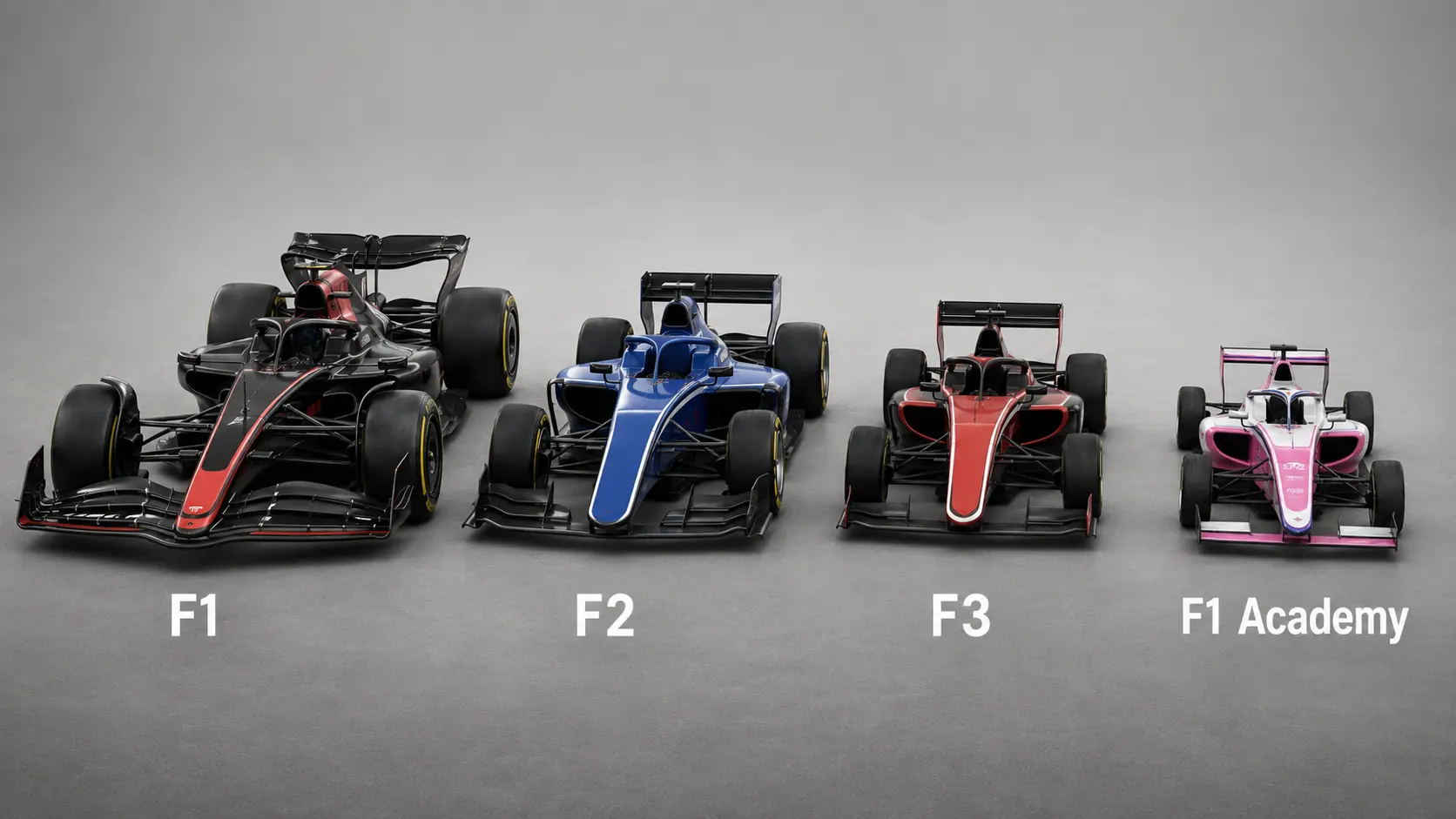
F1, F2, F3 & F1 Academy: Cars Compared
|
|
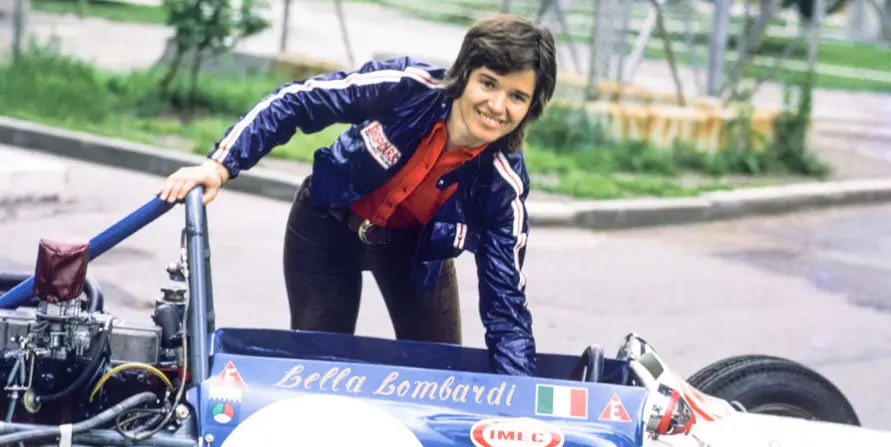
Formula 1 reaches 50 years since a woman last raced in a Grand Prix
|
|
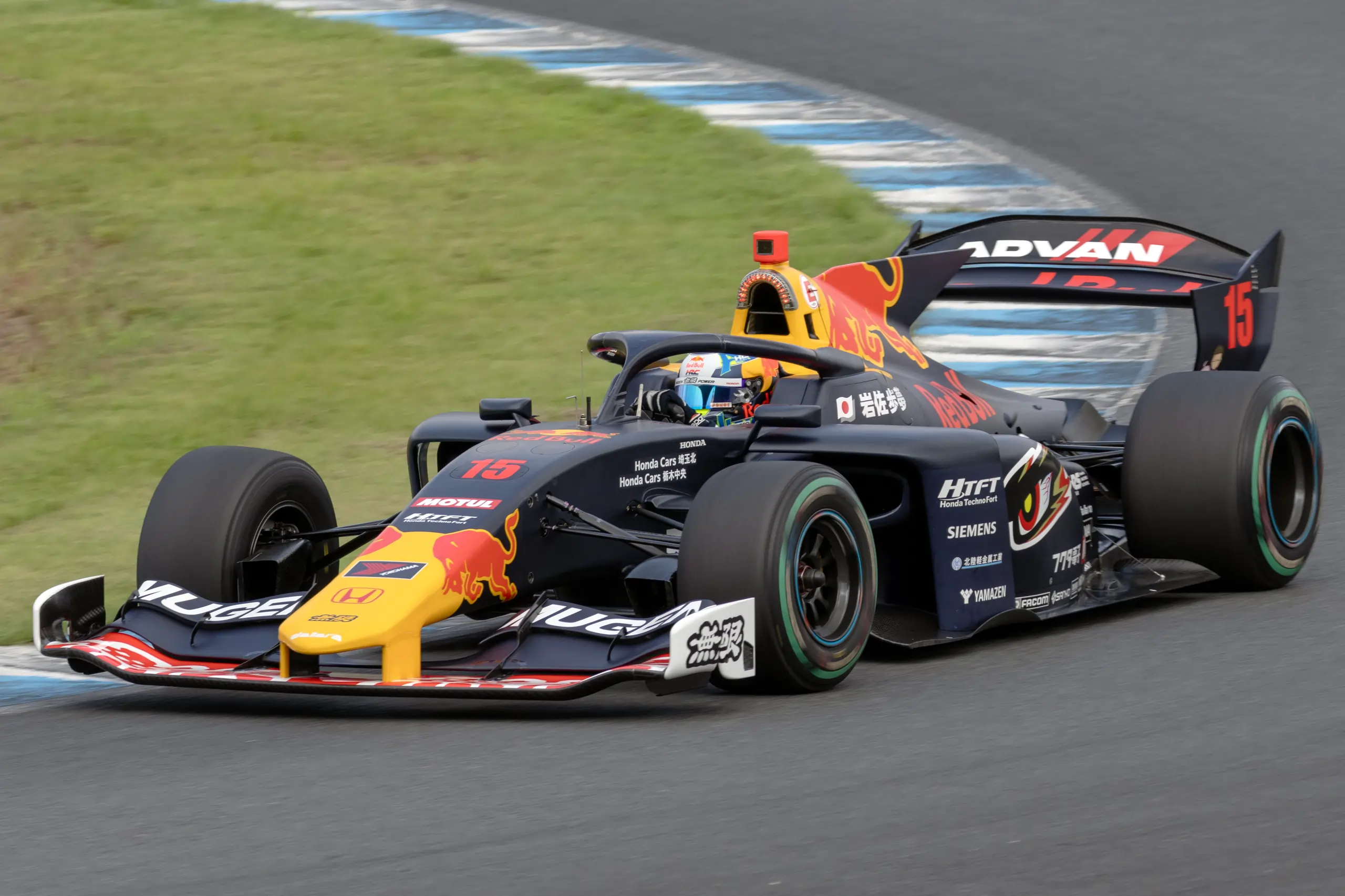
Super Formula Car Regulations Explained
|
|
Formula 1 Tyre Compounds Explained
|

|
IndyCar arrives at a brand-new Canadian street circuit
|
|
|
Formula E signs global Disney+ and ESPN streaming deal for GEN4 era
|

|
NASCAR Explained to an F1 Fan
|
|
|
Porsche Secures Back-To-Back Formula E Manufacturers’ Titles
|
Related series

|
Formula E
|

|
Formula 1
|