
LMP2 Explained: What is an LMP2 Car?
LMP2 cars look like miniature top-class Le Mans prototypes, but the category is built around a different idea: give independent teams a fast, safe and tightly controlled car without asking them to design an entire factory programme. This guide explains the engine, chassis, aerodynamics, weight, electronics, costs and driver rules,

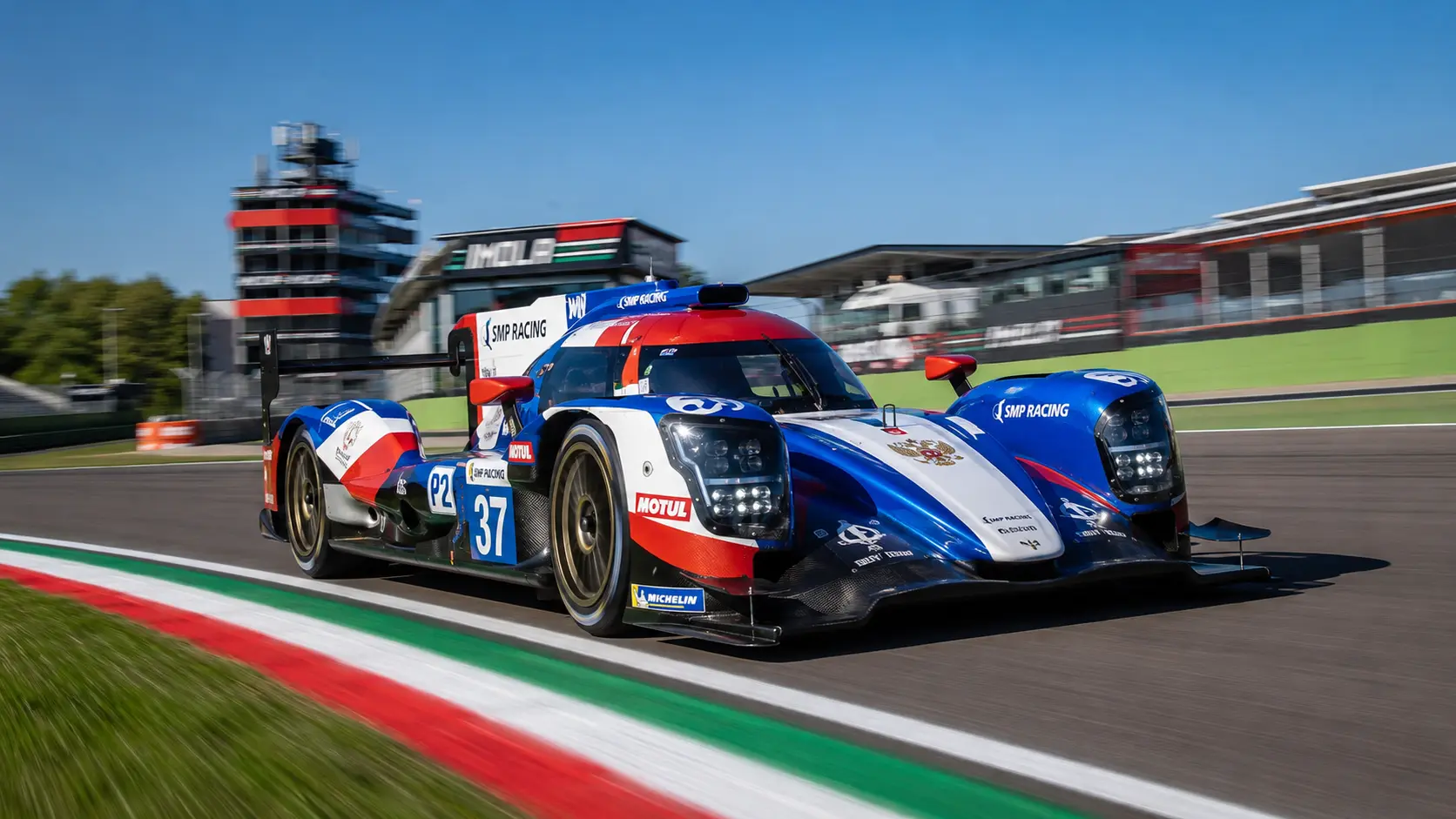
What is an LMP2 car?
LMP2 stands for Le Mans Prototype 2. It is the second level of modern Le Mans-style prototype racing, sitting below the manufacturer-led Hypercar category and above the slower LMP3 class. An LMP2 is not based on a road car. It is a purpose-built racing machine with a carbon-fibre survival cell, enclosed wheels, a roof, doors, a large rear wing and a floor designed to produce downforce.
The important word is independent. The FIA definition reserves LMP2 for teams that are independent from the chassis constructors and the engine supplier. A manufacturer can build and support the car, but the category is not intended to become an open-ended factory technology contest. That is why the engine, major electronic systems, homologated bodywork and many mechanical choices are controlled.
The current LMP2 car at a glance
| Area | Current-generation rule | What it means for a new fan |
|---|---|---|
| Car type | Closed-cockpit, purpose-built prototype | It is designed only for racing and is not derived from a production sports car. |
| Engine | Common Gibson GK428 4.2-litre V8 | Every team starts with the same basic engine architecture and supplier. |
| Drive | Two driven wheels, normally the rear wheels | There is no all-wheel drive or front hybrid system. |
| Gearbox | Maximum of six forward gears plus reverse | The driver uses a sequential racing transmission rather than a road-car automatic. |
| Base minimum weight | 930 kg in the 2026 FIA technical regulations | An event can impose a higher figure; the 2026 Le Mans decision used 950 kg. |
| Base fuel capacity | Maximum 75 litres | Fuel capacity and refuelling rules help shape stint length and strategy. |
| Brakes | Up to one six-piston calliper per wheel; ABS is forbidden | The driver must manage lock-ups without an anti-lock safety net. |
| Driver aids | Engine-based traction control permitted; most active chassis systems forbidden | The car can help control wheelspin, but it cannot automatically manage suspension, steering or braking. |
These are regulation limits, not a promise that every series runs the car in exactly the same performance configuration.
Why different LMP2 spec sheets show different numbers
LMP2 is governed in layers. The main FIA technical regulations define the homologated car and its basic limits. A championship or event can then publish additional decisions covering matters such as minimum weight, engine restrictor size, rev limits, fuel volume, tyres, bodywork configuration and refuelling procedures.
This is why one article may list a 930 kg minimum and another may say 950 kg. Both can be correct in context. The first figure is the base value in the 2026 FIA technical regulations. For the 2026 24 Hours of Le Mans, the WEC Committee specified a 950 kg minimum, a 35 mm engine air restrictor, a maximum of 8,000 rpm in first through fifth gears and 8,500 rpm in sixth, as well as a particular low-drag Le Mans bodywork configuration.
| Item | 2026 FIA base regulation | 2026 Le Mans event decision |
|---|---|---|
| Minimum car weight | 930 kg | 950 kg |
| Maximum onboard fuel | 75 litres | 75 litres |
| Engine control | Operated within the common engine manual | 35 mm inlet restrictor; 8,000 rpm in gears 1–5 and 8,500 rpm in sixth |
| Bodywork | Homologated configuration | Specified Le Mans kit, removal of front dive planes and defined diffuser and rear-flap changes |
The practical lesson is simple: use the general rulebook to understand what an LMP2 car is, then check the latest championship or event bulletin to learn the exact trim in which it will race.
The common Gibson V8 engine
The current car uses the Gibson GK428, a 4.2-litre, 90-degree, naturally aspirated V8. Gibson publishes a maximum output of 450 kW, or about 600 bhp, and maximum torque of 555 Nm for the engine itself. It weighs approximately 135 kg. In racing use, however, the organisers can restrict the air entering the engine and cap its revs to create the desired speed gap between LMP2 and the faster Hypercars.
A common engine removes one of the biggest performance and cost variables in prototype racing. Teams are not developing different combustion systems, turbochargers or hybrid units. They must run the approved engine hardware, control software and operating limits. The engine supplier also defines service and usage requirements, helping the organisers control reliability and prevent expensive private development.
Chassis choices and why homologation matters
The current regulations were introduced in 2017 with four approved chassis suppliers: Oreca, Onroak Automotive, now represented by Ligier Automotive, Dallara and the Riley/Multimatic partnership. Their cars are the Oreca 07, Ligier JS P217, Dallara P217 and Riley Mk30. All use the common Gibson engine, but each constructor created its own monocoque, suspension layout, cooling installation and aerodynamic shape within the same rule framework.
| Approved constructor | Current-generation model | Basic role |
|---|---|---|
| Oreca | Oreca 07 | The most widely used chassis in recent international LMP2 competition. |
| Ligier / Onroak | Ligier JS P217 | An alternative French-built chassis that also formed the basis of a North American DPi programme. |
| Dallara | Dallara P217 | An Italian design used in European and North American endurance racing. |
| Riley / Multimatic | Riley Mk30 | A North American-led design from the original four-constructor package. |
Once a design is homologated, the constructor and teams cannot freely reshape it whenever they discover a faster idea. The car must match its homologation form, approved manuals and official technical bulletins. A team can tune permitted setup items, but it cannot casually add material, cut the chassis or replace a homologated component with its own design.
Aerodynamics: fast, but not a free-for-all
An LMP2 produces downforce through its front bodywork, underfloor, diffuser and rear wing. The vertical fin behind the cockpit helps reduce the risk of the car rotating or lifting when it is sideways at high speed, while the openings above the wheel arches help release pressure that can build beneath the bodywork.
Teams still have meaningful choices. They can select approved aerodynamic configurations, adjust the rear wing within permitted limits and manage cooling openings. At Le Mans, where long straights reward low drag, the organisers can mandate a circuit-specific bodywork package. At a tighter circuit, the same car may run a higher-downforce configuration.
Suspension, steering and gearbox
The suspension is a conventional racing arrangement with double wishbones and pushrod-operated springs and dampers. The rulebook restricts active behaviour: automatic ride-height adjustment, active dampers, four-wheel steering and similar systems are not allowed. Power steering is permitted, but it may only reduce the physical effort required from the driver and must retain a mechanical connection to the wheels.
The transmission can drive no more than two wheels. The gearbox has no more than six forward ratios, selected from homologated sets, plus reverse. Gear changes must happen as separate sequential actions rather than through a continuously variable or instant multi-clutch system. The driver requests each shift, usually with paddles, while a brief engine cut unloads the gearbox.
Brakes, tyres and the lack of ABS
LMP2 cars can use carbon brake equipment, with one disc and one calliper per wheel and no more than six pistons in each calliper. The maximum carbon-disc diameter is 15 inches. Crucially, anti-lock braking is forbidden, as is powered brake assistance. The driver controls the braking force through the pedal and can mechanically adjust the front-to-rear brake balance.
Tyre supply is set by the championship. In the 2026 European Le Mans Series, LMP2 and LMP2 Pro/Am use Goodyear tyres, with one dry and one wet specification, and tyre-warming equipment is forbidden. Other series can publish their own sporting and tyre requirements, so tyre branding and allocation should not be treated as a permanent part of the universal technical formula.
Safety rules shape the whole car
The carbon-fibre monocoque is a survival cell surrounding the driver and fuel tank. The car must use approved front and rear crash structures, rollover structures, wheel tethers, a fire-extinguishing system, an emergency electrical cut-off and a fuel bladder protected by a deformable structure. Fuel lines use safety requirements designed to reduce leakage if parts separate in an accident.
The cockpit has a roof and doors, but regulations still require rapid access and extraction. Door hinges and locks must permit quick removal, the steering wheel must have a quick-release mechanism and the driver must be able to escape within the required procedure. Air conditioning is mandatory in the current rulebook because cockpit heat is a serious endurance-racing safety issue, not merely a comfort concern.
What teams can change and what they cannot
| Teams can work on | Teams cannot freely redesign |
|---|---|
| Spring, damper and anti-roll-bar setup within approved parts | The carbon survival cell and homologated crash structures |
| Ride height, alignment and corner-weight setup | The common Gibson engine hardware or control strategy outside approved limits |
| Approved differential settings and complete homologated gear sets | Bodywork shapes that are not listed in the homologation or official updates |
| Wing angle, brake balance and permitted cooling blanking | Active suspension, four-wheel steering, ABS or automatic transmission systems |
| Tyre pressures, driving plan, pit strategy and traffic management | Unapproved software, electronic aids or one-off private development parts |
This balance is the heart of LMP2. There is enough setup freedom for engineers and drivers to make a real difference, but not enough design freedom for every team to require its own wind tunnel, engine department and factory research programme.
Cost controls and the privateer idea
The 2026 FIA rules cap the sale price of a complete new chassis, excluding the common engine and homologated electronic equipment, at €533,309.28. They also regulate the price of the mandatory air-conditioning system and place limits around spare-parts pricing. These figures do not represent the full cost of operating a team, but they reduce the risk of the car itself becoming an unlimited-price product.
Driver rules and LMP2 Pro/Am
Technical regulations define the car, while sporting regulations define who may drive it and how a race weekend works. Driver line-ups usually contain two or three drivers, and the FIA categorises them as Bronze, Silver, Gold or Platinum according to experience, age and results.
In the European Le Mans Series, the grid is split into LMP2 and LMP2 Pro/Am. Pro/Am line-ups include a Bronze-rated driver, and that driver must qualify the car in the Pro/Am category. Minimum driving times prevent a team from using the amateur-rated driver only briefly before handing the car to professionals.
Where LMP2 fits in modern endurance racing
LMP2 was removed from the full FIA World Endurance Championship season from 2024 because the growing Hypercar and LMGT3 fields filled the available grid. It remains part of the 24 Hours of Le Mans, where it appears as a special one-event class within the WEC round, and it continues as the leading prototype category in the European Le Mans Series and Asian Le Mans Series. It also races in the IMSA WeatherTech SportsCar Championship in North America.
What changes with the next-generation LMP2 in 2028?
The current 2017-generation cars remain homologated through the end of 2027. A new LMP2 package is scheduled to debut in 2028. The FIA has confirmed that the next generation will use a turbocharged Gibson engine, upgraded safety measures and a central driving position. Chassis will come from two approved constructors: Oreca and Ligier Automotive.
Until that new package arrives, references to “current LMP2 regulations” normally mean the 2017-generation cars governed by the updated 2026 and 2027 rulebooks and their championship-specific decisions.
The easiest way to understand LMP2
Think of LMP2 as a controlled professional prototype. It is much more specialised and faster than a production-based GT car, but more standardised than a manufacturer Hypercar. The chassis is homologated, the engine is common, the major electronics are controlled and expensive active systems are restricted.
When reading a specification, remember the two-layer rule: the FIA technical regulations define the car, while championship and event decisions define the exact version racing that weekend. That single distinction explains most of the apparently conflicting LMP2 figures found online.
Related Articles
|
GT3 Explained: What Is a GT3 Car?
|
|
LMP3 Explained: What is an LMP3 Car?
|
|
WEC vs IMSA: What’s the Difference?
|
|
NLS Starting Groups Explained
|
|
GT4 Explained: What Is a GT4 Car, and how is it different from GT3?
|
|
What Is the Difference Between GT3 and Cup 2?
|
|
Hypercar Explained: What Is a Hypercar in WEC, IMSA and Le Mans?
|
|
Car Classes of NLS & 24 Hours of Nürburgring Explained
|
Related series

|
Asian Le Mans Series
|

|
European Le Mans Series
|

|
International Motor Sports Association
|

|
World Endurance Championship
|