
NASCAR Explained to an F1 Fan
A simple guide to NASCAR for Formula 1 fans - including the cars, ovals, stages, cautions, strategy, playoffs, drafting, pit stops and why the racing feels so different.

Quick answer
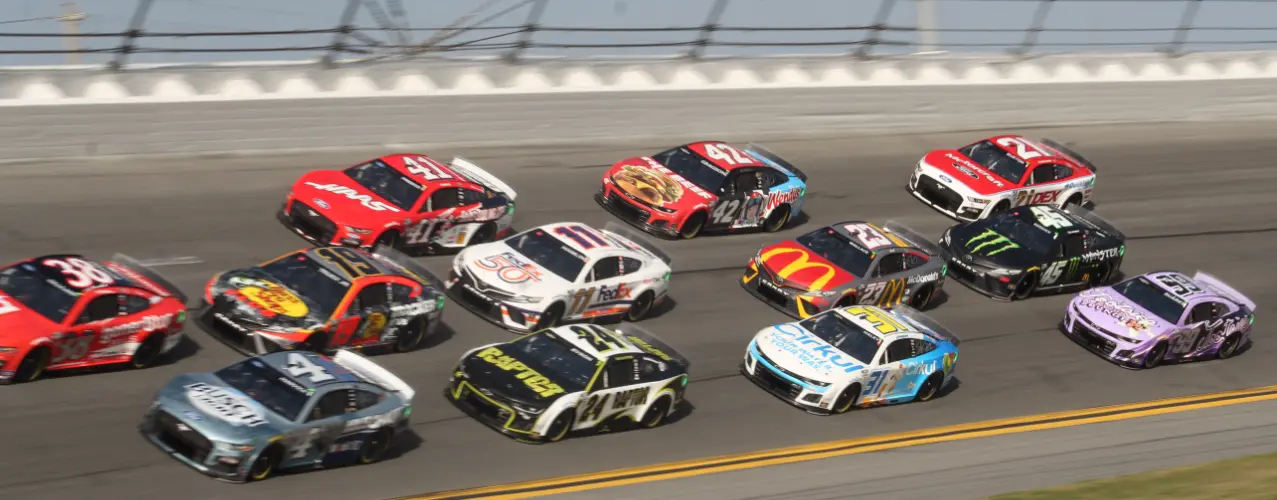
NASCAR is America’s top stock car racing championship, and it rewards a very different skill set from Formula 1. The cars are heavier, less aerodynamically sensitive in the F1 sense, and designed to race close together on ovals, road courses and street circuits. The racing can look chaotic at first, but underneath it is a detailed game of tyre wear, drafting, cautions, restarts, pit strategy and track position.
For an F1 fan, the biggest adjustment is that NASCAR is not trying to be the fastest form of circuit racing. It is trying to create hard, close, long-form competition where the race can change repeatedly. A driver can dominate the first half and still lose because of a late caution, a slow pit stop, a bad restart or being in the wrong lane at the wrong moment.
What is NASCAR?
NASCAR stands for the National Association for Stock Car Auto Racing. The top championship is the NASCAR Cup Series, which is the one most international fans mean when they say “NASCAR”. It is the equivalent of F1 in status, but not in technical philosophy.
Formula 1 is built around constructors designing extremely advanced cars inside a rulebook. NASCAR is more controlled. The cars are much more standardised, the teams work within tighter technical boundaries, and the racing product is built around large fields, long races and frequent wheel-to-wheel battles.
The “stock car” name comes from the sport’s roots, when cars were much closer to showroom models. Modern Cup cars are full racing machines, but they still carry recognisable manufacturer styling cues. Chevrolet, Ford and Toyota compete through body shapes, engines, teams and brand identity, but this is not like F1 where each team designs a completely different car from scratch.
Why should an F1 fan watch NASCAR?
If you love F1 for engineering purity and global glamour, NASCAR may feel strange at first. The cars are not as fast through corners, the ovals can look repetitive on TV, and the race length can seem excessive. But once you understand what you are watching, NASCAR offers something F1 often cannot: constant traffic, repeated restarts, aggressive side-by-side racing and a genuine sense that the race can turn late.
- If you like strategy: NASCAR has a lot of it. Fuel windows, tyre falloff, pit timing and caution timing can completely change the race.
- If you like overtaking: NASCAR has far more visible position changes than F1, although not every pass carries the same strategic importance.
- If you like driver racecraft: watch restarts, side-drafting, lane choice and how drivers manage traffic.
- If you like chaos: late cautions, green-white-checkered finishes and multi-car battles are part of the appeal.
- If you like technical perfection: NASCAR may be less satisfying at first, because the differences are more subtle and the cars are more controlled.
The NASCAR Cup car: what is it compared with an F1 car?
The current NASCAR Cup car is known as the Next Gen car. To an F1 fan, it looks enormous, heavy and simple. That is only partly true. It is heavier and less aerodynamically advanced than an F1 car, but it is still a serious modern race car with independent rear suspension, large wheels, a sequential gearbox and a highly controlled technical platform.
The important difference is the job it is built to do. An F1 car is designed to be the fastest possible open-wheel car around circuits like Silverstone, Suzuka or Spa. A NASCAR Cup car is designed to race in packs, survive contact, work across many track types and create close competition over long runs.
- Power: NASCAR Cup power depends on the track package. From 2026, road courses and ovals under 1.5 miles use a 750-horsepower target, while other configurations can differ.
- Weight: Much heavier than F1, which makes braking, tyre wear and momentum management very different.
- Aero: Less downforce than F1 and much less visually complex. Dirty air still matters, but the cars are designed to race closer than modern F1 cars.
- Tyres: Goodyear slicks with major falloff at many tracks. A driver may be fast early in a run but struggle later as the tyres fade.
- Durability: Contact is part of the sport. A light bump that would destroy an F1 front wing may be survivable in NASCAR.
NASCAR is not just ovals
A common F1 fan mistake is thinking NASCAR is “just turning left”. Ovals are central to the sport, but the Cup Series also races on road courses and has used street circuits. Even within ovals, the racing varies massively. Daytona is nothing like Martinsville. Bristol is nothing like Michigan. Darlington is nothing like Phoenix.
- Superspeedways: Daytona and Talladega-style racing. Huge packs, drafting, big runs and high crash risk.
- Short tracks: Tight, physical, traffic-heavy racing. Think close-quarters pressure rather than pure top speed.
- Intermediate ovals: Often the most “normal” NASCAR tracks, where aero balance, tyre wear and clean air matter heavily.
- Road courses: The most familiar to F1 fans, with braking zones, kerbs, left-right direction changes and more obvious line variation.
- Street circuits: NASCAR can race in urban settings too, but the cars make it look very different from F1.
The best way to understand NASCAR is to treat each track type almost like a different discipline. In F1, Monaco and Monza are obviously different. In NASCAR, the differences between a short oval, a superspeedway and a road course are even more dramatic.
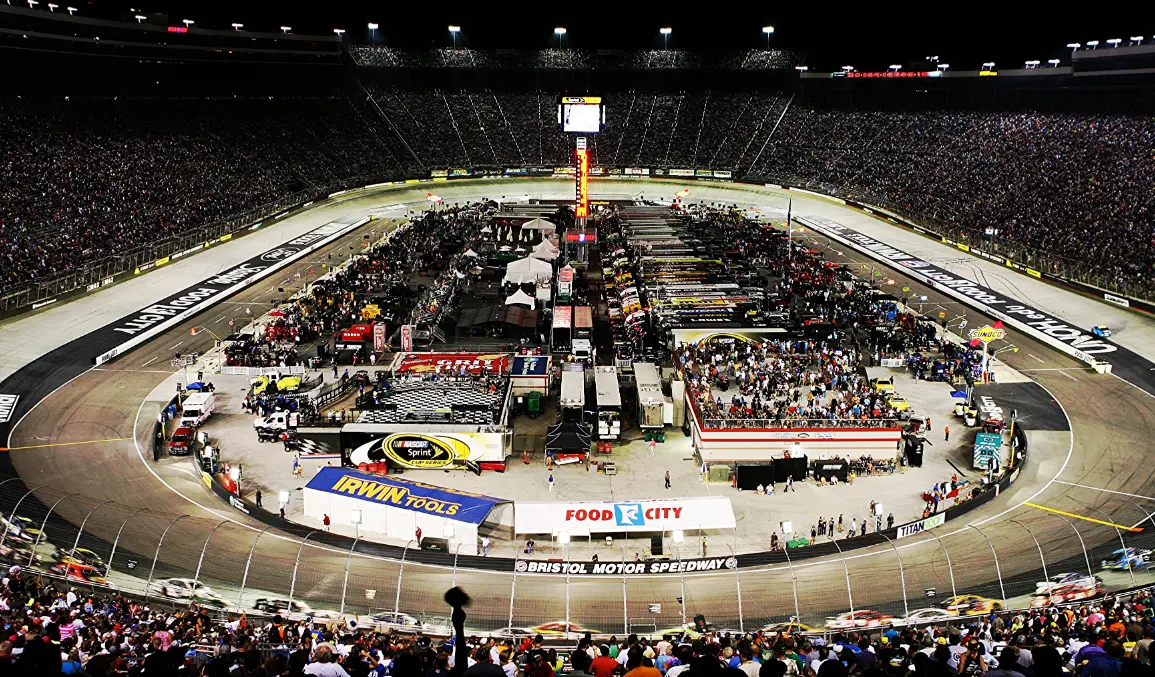
Bristol Motor Speedway.
Why are ovals interesting?
To an F1 fan, an oval can look basic: two straights and two corners. The trick is that the simplicity makes the margins brutal. Cars run close together for long periods, small setup differences matter, and drivers constantly manage lane choice, air, tyre wear and traffic.
On an oval, the racing line is not fixed in the same way as a traditional road course. A driver may run low, middle or high depending on grip, traffic, tyre age and the car’s balance. The “best” lane can change during a race. On some tracks, the top lane builds momentum. On others, the bottom is shorter and safer. On restarts, choosing the wrong lane can cost ten places in a few laps.
Ovals also make racecraft more visible. Drivers side-draft, block, push, lift early, diamond the corner, run the wall or search for clean air. The skill is not just hitting an apex; it is positioning the car in relation to everyone else for hundreds of laps.
Drafting explained for F1 fans
F1 fans already understand slipstreaming from tracks like Monza, Baku and Spa. NASCAR takes that idea much further, especially at superspeedways. Drafting is not just a passing aid - it is the whole race.
At Daytona or Talladega, cars run in packs because the car behind gains speed from the reduced air resistance. Lines of cars can work together, and a driver may need help from another car to make a move. The lead car is punching the hole in the air; the following cars can build runs; the pack becomes a constantly shifting aerodynamic system.
- Draft: following another car to reduce drag and gain speed.
- Side-draft: using your car’s position beside another car to slow them or pull yourself forward.
- Bump-draft: pushing the car ahead to make both cars faster, mainly at drafting tracks.
- The big one: a large multi-car crash, most associated with pack racing at superspeedways.
In F1, slipstreaming is usually a tool to complete a pass. In NASCAR, drafting can be the structure of the race itself.
Drafting and pack racing
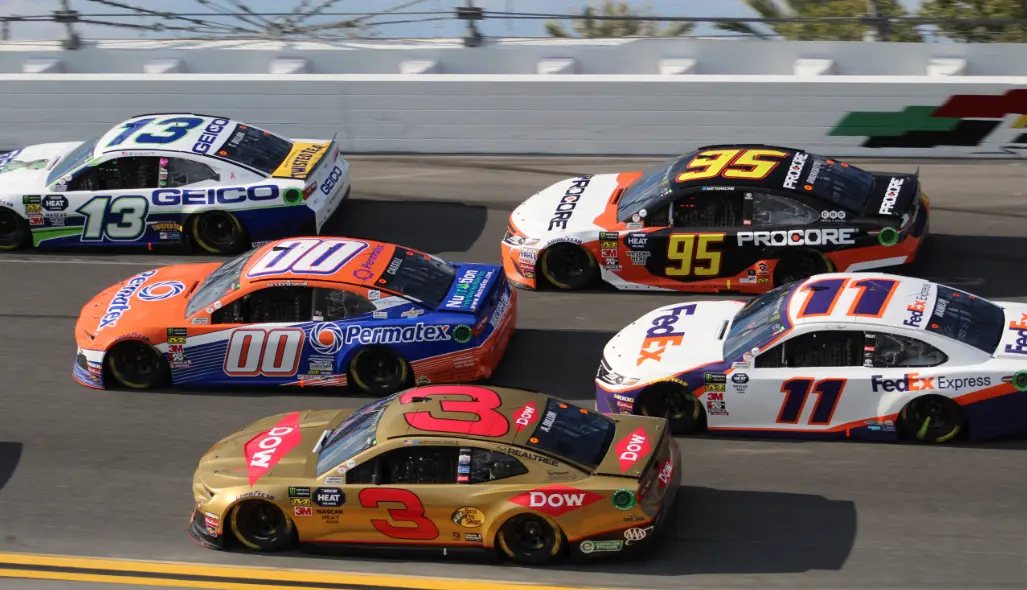
NASCAR pack racing.
What are stages?
NASCAR races are split into stages. Think of them as mini-races inside the main race. At the end of a stage, the top finishers score points, so drivers have a reason to race hard before the final lap.
This is one of the biggest differences from F1. In F1, only the finishing order and fastest lap-style bonuses matter. In NASCAR, a driver can score useful points during the race even if they do not win. That changes strategy. A team may stay out to earn stage points, pit early to set up the next stage, or sacrifice short-term track position for a better long-run plan.
- Stage 1: early race points and first strategic checkpoint.
- Stage 2: often where strategy starts to diverge.
- Final stage: the run to the race win.
- Stage points: awarded to the top 10 at stage ends.
At first, stages may feel artificial to an F1 fan. But they are part of how NASCAR creates pressure throughout long races rather than saving everything for the final stint.
Cautions, safety cars and why restarts matter so much
If you come from F1, think of a NASCAR caution as a safety-car period, but with even more strategic importance. A caution can erase a huge gap, bring everyone to pit road, reshuffle the order and create a restart where the race effectively begins again.
This is why NASCAR can feel unfair if you expect the fastest car to simply pull away and win. A driver can build a 10-second lead, then lose it instantly when a caution comes out. That is not a bug in the format; it is part of the sport’s competitive rhythm.
- Caution: race neutralisation for incidents, debris, weather or other safety reasons.
- Restart: cars line up and go green again, often side-by-side.
- Lucky Dog: the first car one lap down can get a lap back under certain cautions.
- Wave-around: some lapped cars may regain a lap depending on pit strategy and race situation.
- Overtime: if a late caution prevents a normal finish, NASCAR can attempt a green-flag finish.
For F1 fans, restarts are one of the best places to focus. Watch which lane a driver chooses, who has fresh tyres, who has clean air, and who is willing to be aggressive immediately.
Pit stops: slower than F1, but strategically huge
F1 pit stops are short, choreographed and brutal: all four tyres in around two seconds if everything goes well. NASCAR stops are longer and more physical. Crews work with a different car, different equipment, different choreography and more strategic variation.
The pit crew is a major part of NASCAR performance. A slow stop can drop a driver into traffic. A great stop can gain multiple positions. Because passing can be difficult at some tracks, gaining three spots on pit road can be as valuable as overtaking three cars on track.
- Four tyres: slower stop, more grip, better long-run pace.
- Two tyres: faster stop, track position now, possible disadvantage later.
- Fuel only: rare but possible in strategy moments.
- Short-pitting: stopping earlier for fresh tyres or track position.
- Staying out: keeping track position during a caution, often risky if others take fresh tyres.
The key F1 comparison is this: NASCAR pit strategy often looks less precise, but the strategic range is wider because cautions, tyre falloff and track position interact so strongly.
Tyres and falloff: NASCAR’s hidden strategy layer
In F1, tyre compounds and degradation are obvious because Pirelli names the compounds and the graphics explain strategy. NASCAR uses Goodyear tyres, and the same compound framework is not presented in the same way to casual viewers. But tyre wear is absolutely central.
At many NASCAR tracks, lap time falls away over a run. A car may be brilliant for five laps after a restart and then fade. Another car may be average early but excellent after 30 laps. This is called falloff, and it shapes pit strategy, passing and race pace.
For an F1 fan, it is similar to watching a driver manage medium tyres over a long stint, except NASCAR often adds traffic, dirty air, cautions and lane changes on top. A driver is not only managing tyre temperature and wear; they are also deciding where to run on the track to protect the tyres and maintain momentum.
Are NASCAR road courses like F1 circuits?
NASCAR road courses are the easiest entry point for many F1 fans because the visual language is familiar: braking zones, kerbs, left-right corners, strategy windows and mistakes under braking. But the cars make it feel very different.
A NASCAR Cup car is heavy, less agile and less downforce-dependent than an F1 car. It moves around more under braking, uses kerbs differently and can tolerate contact. A pass that would look clumsy in F1 may be normal stock-car racing on a NASCAR road course.
Road courses also highlight driver adaptability. Some drivers come from dirt, some from oval backgrounds, some from sports cars, some from open-wheel racing. When NASCAR goes to a road course, you often see different names rise toward the front than you would on an intermediate oval.
What does a NASCAR race weekend look like?
A NASCAR weekend is usually more compact than an F1 weekend. F1 has three practice sessions at many traditional events, a long qualifying build-up and a Grand Prix that usually runs around 90 minutes. NASCAR often has limited practice, qualifying and then a long race where the car changes dramatically as rubber builds, temperatures shift and traffic evolves.
The exact format varies by event, but a basic Cup weekend usually includes:
- Practice: teams check balance, tyre behaviour and race trim.
- Qualifying: sets the starting order, with formats varying by track type.
- Race: the main event, split into stages and often lasting several hours.
- Support series: lower NASCAR divisions or other categories may race on the same weekend.
Because races are long, qualifying does not carry the same importance as Monaco or Singapore in F1. Starting near the front helps, but NASCAR races give teams far more chances to recover through pit strategy, restarts and changing track conditions.
How does the NASCAR championship work?
The NASCAR Cup Series is built around a regular season followed by a postseason championship format called The Chase. From 2026, the Cup Series has a 26-race regular season, then the top 16 drivers in points advance into a 10-race championship battle.
This is a major mindset difference from F1. In F1, every race simply adds points toward a season total. NASCAR still rewards points, but it also uses a postseason structure to decide the champion. From 2026, winning a regular-season race no longer automatically puts a driver into the postseason; qualification is based on points position after the regular season.
- Regular season: first 26 Cup races.
- The Chase: final 10 races for the top 16 drivers in points.
- No “win and in”: wins matter, but points position decides Chase qualification.
- Race win value: Cup race wins are worth 55 points from 2026.
- Stage points: still matter because they build the regular-season total.
- Champion: the Chase driver with the most points after the finale wins the title.
For an F1 fan, the cleanest way to think about it is: NASCAR has a long qualifying phase for the championship, then a 10-race title run where consistency still matters but the pressure rises.
Teams and manufacturers: why it is not like F1
F1 teams are constructors. Red Bull, Ferrari, Mercedes, McLaren and others build their own cars around an FIA rulebook. NASCAR teams are not constructors in the same sense. The Cup car is a controlled platform, and teams mostly work within a standardised technical ecosystem.
NASCAR organisations can run multiple cars, and teams usually align with one manufacturer. The main Cup manufacturers are Chevrolet, Ford and Toyota. Each car has its own number, driver, crew chief and sponsor identity, so the team structure can feel unusual to an F1 fan at first.
The closest F1 comparison is a customer-car world where several teams use the same base platform but still compete through setup, execution, driver skill, pit crews, alliances and manufacturer support. The difference between teams is real, but it is not expressed through completely different chassis designs in the way F1 fans expect.
What counts as good driving in NASCAR?
F1 fans often judge drivers by qualifying speed, tyre management, race pace and wheel-to-wheel precision. NASCAR uses those skills too, but adds several others that are more specific to stock cars.
- Restart skill: gaining positions immediately when the race goes green.
- Traffic management: passing slower cars without losing momentum.
- Lane choice: knowing when to run low, middle or high.
- Side-by-side control: racing inches from another car without overreacting.
- Drafting intelligence: knowing when to push, when to block and when to switch lanes.
- Tyre conservation: being fast late in a run, not just early.
- Controlled aggression: using the bumper or side-draft without wrecking yourself.
In F1, contact usually means damage or a penalty conversation. In NASCAR, some contact is normal. That does not mean anything goes, but the threshold is different. The cars are built to handle more physical racing, and the culture expects drivers to fight for space.
How to watch your first NASCAR race as an F1 fan
The best way to enjoy NASCAR is to stop waiting for it to behave like F1. Do not expect one clean strategic arc from lights out to chequered flag. Instead, watch it in phases.
- Start by learning the track type: superspeedway, short track, intermediate, road course or street course.
- Watch the first 20 laps: identify which lanes work and which cars look good in traffic.
- Follow stage points: the end of each stage can create battles before the finish.
- Watch pit cycles: track position can change completely during green-flag stops or cautions.
- Pay attention to restarts: many NASCAR races are won or lost in the first two laps after a restart.
- Do not panic if your driver falls back: long races give teams chances to recover.
- Expect late drama: cautions and tyre strategy can reshape the final stage.
A good first race to watch is a road course if you want familiarity, Bristol or Martinsville if you want physical short-track racing, or Daytona/Talladega if you want the full drafting chaos. Just remember that superspeedway racing is not representative of every NASCAR race.
What is NASCAR like to attend in person?
For F1 fans, a NASCAR race can feel more relaxed, more fan-accessible and more American in its atmosphere. Tailgating, camping, scanners, merchandise, driver intros and pre-race ceremonies are a big part of the experience.
The cars are also loud. If you are attending in person, especially with children, take hearing protection. NASCAR events can be much louder than modern F1 from the grandstand because many cars run close together for long periods, often in bowl-shaped venues that reflect sound.
- Bring ear protection: especially for kids, short tracks and front-row seats.
- Consider a scanner: team radio and broadcast audio help you follow strategy.
- Arrive early: NASCAR pre-race culture is part of the event.
- Expect long races: bring water, sun protection and patience.
- Pick seats carefully: higher seats often give a better view of the whole oval.
For more on hearing safety at race tracks, see our guide: Do you need ear protection at motorsport events?
Common myths F1 fans have about NASCAR
- “They only turn left.” Ovals are more complex than they look, and NASCAR also races on road and street circuits.
- “The cars are just road cars.” Modern Cup cars are purpose-built race cars with controlled manufacturer styling.
- “There is no strategy.” NASCAR has constant strategy through cautions, tyres, fuel, stages and track position.
- “Crashes are the whole point.” Crashes are part of the risk, especially in packs, but the best NASCAR racing is about pressure and racecraft, not wrecking.
- “Qualifying does not matter.” It matters, but not in the same way as F1. Long races and cautions create more recovery routes.
- “The fastest car always wins.” Not always. Execution, timing, restarts and lane choice can beat raw pace.
NASCAR terms translated for F1 fans
- Caution: similar to a safety car, but often even more strategically disruptive.
- Restart: the moment the race goes green again; one of the most important parts of NASCAR.
- Loose: oversteer. The rear of the car wants to step out.
- Tight: understeer. The car will not rotate enough in the corner.
- Clean air: still important, especially at intermediate tracks.
- Dirty air: turbulent air behind another car, but NASCAR cars can often race closer through it than F1 cars.
- Stage: a points-paying segment inside the race.
- Green-flag stop: a pit stop while racing continues at speed.
- Lucky Dog: a rule that can return one lapped car to the lead lap under caution.
- Overtime: NASCAR’s attempt to avoid finishing under caution.
Which NASCAR race should an F1 fan watch first?
There is no single perfect answer, because NASCAR changes so much by track type. Pick your first race based on what you already enjoy.
- If you want a famous event: watch the Daytona 500. It is NASCAR’s biggest race, but remember that pack racing is its own discipline.
- If you want familiar corners and braking: choose a road course such as Watkins Glen, Sonoma, COTA-style layouts or the Charlotte Roval.
- If you want intense close racing: watch Bristol or Martinsville.
- If you want tyre strategy: tracks like Darlington are often good for watching falloff and driver management.
- If you want chaos: Daytona and Talladega are the obvious choices.
The smartest route for an F1 fan is to watch three different NASCAR races before judging the sport: one road course, one short track and one superspeedway. Those three will show you far more than one random oval race ever could.
NASCAR is not F1 with different cars. It is a different racing language. Formula 1 is usually about elite car development, qualifying precision, tyre strategy and global grand prix execution. NASCAR is about long-form combat: restarts, traffic, tyre falloff, drafting, cautions, pit crews and drivers fighting for space over hundreds of miles.
If you judge NASCAR only by lap time or cornering speed, you will miss the point. Watch the lanes, the air, the timing of cautions, the tyre age, the pit crews and the way drivers position themselves in traffic. Once those pieces click, NASCAR becomes much easier to respect - and much more fun to watch.
Related Articles
|
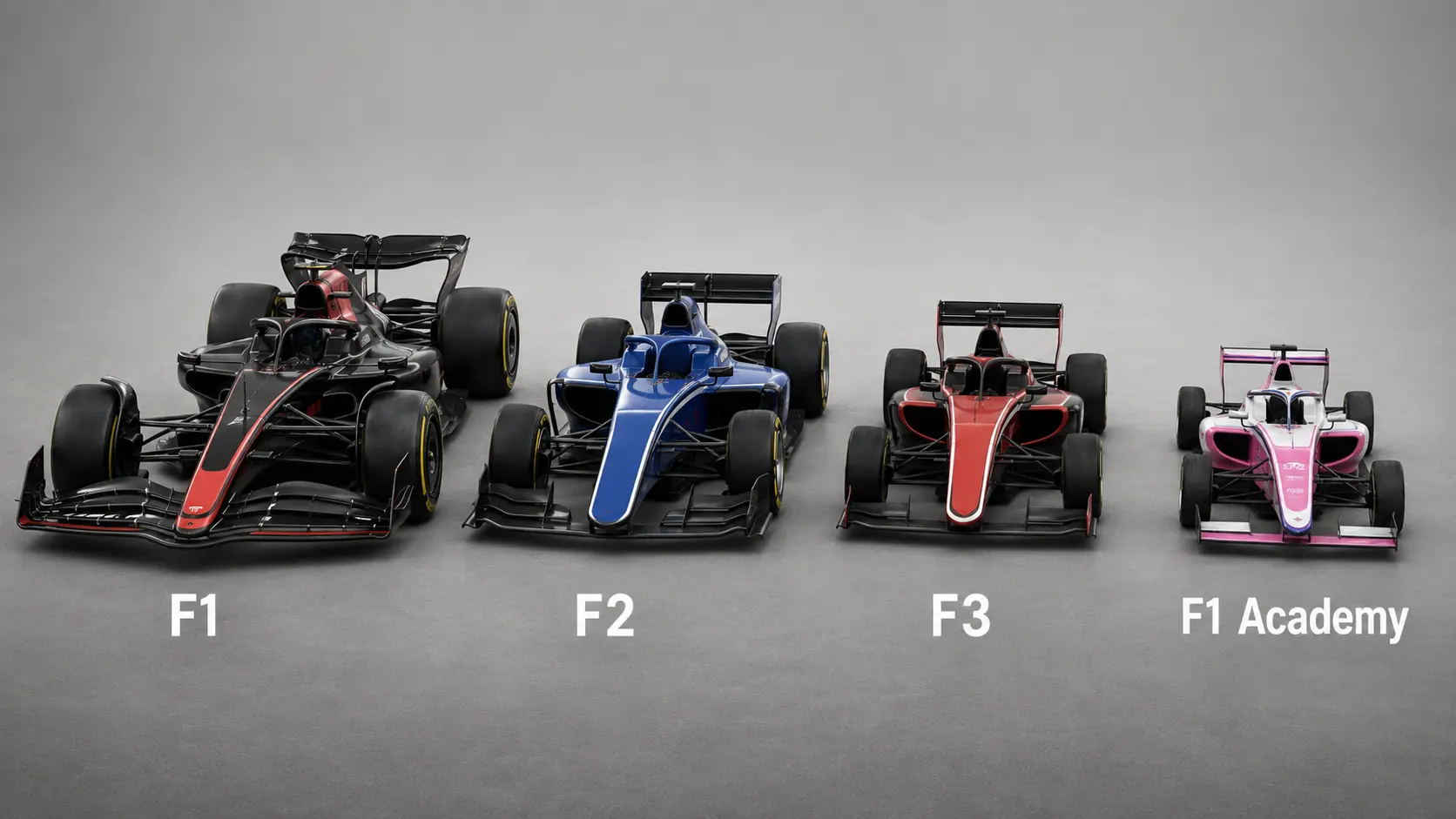
F1, F2, F3 & F1 Academy: Cars Compared
|
|
Formula 1 reaches 50 years since a woman last raced in a Grand Prix
|
|
F1 & Formula E: Comparing The Differences Between Each Car
|
|
Super Formula Car Regulations Explained
|
|
Formula 1 Tyre Compounds Explained
|

|
IndyCar arrives at a brand-new Canadian street circuit
|
|
|
Formula E signs global Disney+ and ESPN streaming deal for GEN4 era
|
|
|
Porsche Secures Back-To-Back Formula E Manufacturers’ Titles
|
Related series
|
Nascar Cup
|

|
Formula 1
|