
Different Types of Rally Stages Explained: What Happens During a Rally Weekend?
A guide to the different parts of a rally event - including reconnaissance, shakedown, special stages, super special stages, road sections, service parks, time controls, parc fermé, Power Stages and what drivers and co-drivers go through across a rally weekend.

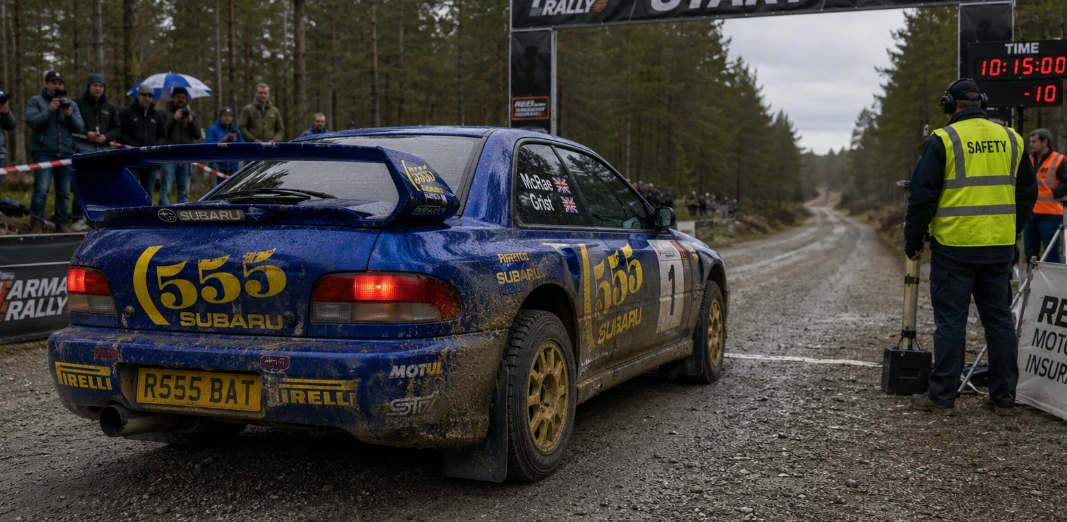
A rally weekend is not one continuous race. It is a schedule of timed stages, public-road sections, service stops, regroup areas, control points and official procedures spread across several days. The crews race one at a time on closed roads, then drive on normal roads between stages while following traffic laws and strict timing rules.
The winner is the crew with the lowest total time after all competitive stages, plus any penalties. That means a rally driver does not just need to be fast. They need to be consistent, accurate, calm under pressure and able to manage tyres, damage, weather, timing and changing road conditions across a whole weekend.
The simple version is this: special stages are where the rally is won, but the weekend is survived everywhere else.
How a rally weekend works
A rally weekend is built around an official route called the itinerary. The itinerary tells every crew where they need to be, when they need to leave, when they must arrive at control points, when each stage starts, when service happens and when the rally finishes.
Unlike circuit racing, rally cars do not stay inside one track all weekend. They move between special stages, service parks, regroup areas, tyre fitting zones, public roads and overnight secure areas. This is why rallying is as much about organisation as speed.
- Reconnaissance: crews preview the route and create pace notes.
- Shakedown: crews test the competition car before the rally starts.
- Ceremonial start: the public launch of the rally.
- Special stages: the timed competitive roads.
- Road sections: public-road links between stages and service.
- Service park: where mechanics repair and prepare the car.
- Regroup: a holding area used to manage timing and the running order.
- Parc fermé: a secure no-work area where cars are held under official control.
- Power Stage: the final WRC stage, with bonus points available.
A typical rally weekend timeline
The exact schedule changes from event to event, but most modern WRC-style rallies follow a similar rhythm. The crews arrive early, complete reconnaissance, run shakedown, start the rally, then compete across several days of stages before finishing on Sunday.
- Monday / Tuesday: teams set up the service park and prepare the cars, spares and working areas.
- Tuesday / Wednesday: drivers and co-drivers complete reconnaissance and make pace notes.
- Thursday morning: shakedown gives the crews a final full-speed test.
- Thursday evening: ceremonial start and often an opening city, stadium or short spectator stage.
- Friday: first full day of competitive stages.
- Saturday: often the longest or toughest day, with repeated stages and heavy service demands.
- Sunday: final stages, Sunday points in WRC and the rally-ending Power Stage.
- After the finish: podium, interviews, scrutineering and final classification.
For drivers and co-drivers, the weekend is not just the spectacular stage action you see in highlights. It is a long cycle of notes, tyres, timing, repairs, food, sleep, media, debriefs and constant pressure.
Reconnaissance: where the rally really begins
Reconnaissance, often shortened to recce, is when crews drive through the stages before the rally begins. They do this in normal road cars, not the competition rally car, and they drive at controlled road speeds rather than full rally pace.
The purpose of recce is to create or check the pace notes. These are the detailed instructions the co-driver reads during the stage. The notes tell the driver what is coming: corner speed, direction, distance, crests, jumps, braking points, hazards, cuts, narrow sections, surface changes and anything else that could affect speed or safety.
- Purpose: create or check the pace notes.
- Car used: road-going recce car, not the rally car.
- Speed: controlled and limited, not a practice run at rally speed.
- What crews study: corners, crests, jumps, braking zones, grip changes, landmarks and hazards.
- Why it matters: the driver will later trust those notes at full speed, often over blind crests and around corners they cannot see.
For beginners, recce is like writing the instructions for the race before the race happens. If the notes are wrong, late or unclear, the driver cannot fully trust the road.
Pace notes: the hidden stage inside the stage
Pace notes are one of the biggest things that make rallying different from circuit racing. On a circuit, a driver learns the same corners lap after lap. In rallying, the driver may only get one competitive pass over a stage, so the co-driver’s notes become the driver’s memory.
The notes are not simply “left” and “right”. They describe the road in detail: how fast a corner is, whether it tightens, how far to the next instruction, whether there is a crest, whether the car can cut the corner, whether the surface changes and whether there is a danger on the exit.
- Corner direction: left or right.
- Corner severity: how fast or tight the corner is.
- Distance: how far until the next instruction.
- Crests and jumps: where the car may go light or leave the ground.
- Hazards: rocks, ditches, water, mud, ice, bumps, cuts or narrow exits.
- Rhythm: how each instruction connects to the next at speed.
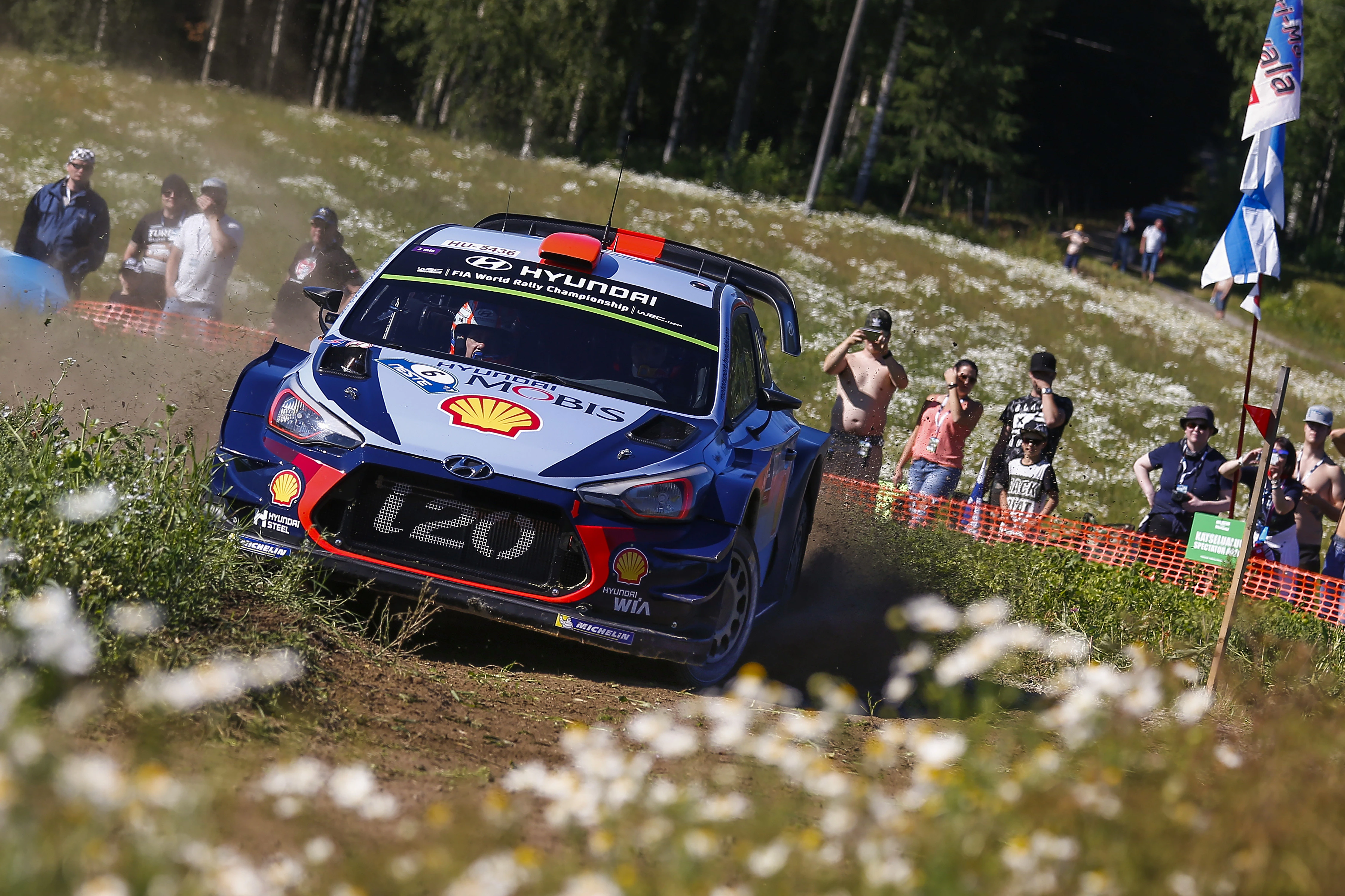
Rallying is a two-person job: the driver controls the car, and the co-driver delivers the road through pace notes.
Shakedown: the final full-speed test
Shakedown is the pre-rally test stage. It is run on a short section of road that is similar to the rally’s surface and character. Unlike recce, shakedown is driven in the actual rally car at competition speed.
Crews use shakedown to check the car, test the setup, confirm tyre feeling, build confidence and make sure nothing is wrong before the rally starts. It does not normally decide the rally result, but it can reveal problems before they become costly.
- Purpose: final car check and setup confirmation.
- Car used: the competition rally car.
- Speed: full rally pace.
- What teams learn: suspension feel, tyre behaviour, braking, engine response and driver confidence.
- Why fans like it: it is often easier to access and gives an early look at the cars before the rally starts.
Think of shakedown as the rally equivalent of a final practice session, but on a real closed-road stage rather than a circuit.
Free Practice
In some rally series, such as the FIA European Rally Championship, a designated test session, called Free Practice, is scheduled early in the event weekend. During this session, drivers practice on a short section of road to prepare for the main event.
It allows crews to test their car settings, check their pace notes, and make sure everything is working properly before the real racing begins.
- Priority drivers (Rally2 cars) are usually given exactly two runs through this practice track.
- It takes place right before the Qualifying Stage, which decides the starting positions for the first day of the rally.
- If a driver goes too slowly, makes a mistake, or decides to skip it, there are no time penalties.
- The tires used during Free Practice usually do not count against the driver's strict tire limit for the main rally.
Free practice gives drivers a chance to "warm up" and learn the layout of the road. After they finish their two practice runs, they immediately move to the Qualifying Stage. In Qualifying, drivers only get one run, and how fast they are determines where they start in the actual race. Drivers who get a faster time in Qualifying get to choose a more favourable starting position for the weekend.
Qualifying
In some rally series, such as the FIA European Rally Championship, the Qualifying Stage is a short, timed run where the top-seeded drivers race to secure their starting positions for the first day of the actual event.
The starting order is important because of how road conditions change as cars pass.
The rules work as follows:
- Top drivers get to do a practice run and then a single, full-speed timed run on a stage that is at least six kilometers long.
- The driver who sets the fastest time waits in a designated "Hot Zone" area until another driver beats their time. The eventual winner receives a special trophy.
- The fastest qualifier earns the advantage of picking their preferred starting position for the first day of the rally.
On asphalt (paved/tarmac) roads, being the first car is usually best because the road is cleanest. On gravel or dirt, starting further back is usually an advantage, as the first cars sweep the loose dirt away and create a faster, cleaner racing line for the cars following them
Ceremonial start: the public launch
The ceremonial start is the public beginning of the rally. The cars roll over a podium, crews are introduced to fans, and the event officially comes to life. It is usually more about atmosphere than competition, but it is still an important part of the weekend.
For crews, it marks the shift from preparation to competition. The notes are done, the car is ready, the schedule is live and the rally is about to begin.
- Purpose: launch the event for fans, media, sponsors and the host location.
- Competition status: normally not a timed special stage.
- Best for fans: seeing crews and cars up close.
- Why it matters: it gives the rally a public centre before the serious stage work begins.
Special Stage: the main competitive section
A Special Stage, often shortened to SS, is the timed section that decides the rally. It is run on closed roads, with each car starting separately. The crew drives from a standing start to a flying finish as quickly as possible, and the time is added to their total rally time.
Special stages can be short and technical, long and flowing, fast and open, narrow and rough, icy and unpredictable, or packed with jumps and crests. A rally normally contains many special stages across several days, and some stages are repeated later in the event.
- Timing: from standing start to flying finish.
- Road status: closed to public traffic.
- Cars run: one at a time, usually at timed intervals.
- Result: stage times are added together to form the rally classification.
- What matters: pace notes, grip, tyres, road position, weather, confidence and avoiding mistakes.
This is the part of rallying people recognise from highlight reels: cars sliding, jumping, braking late, clipping cuts, throwing stones and attacking roads that look far too narrow for the speed involved.
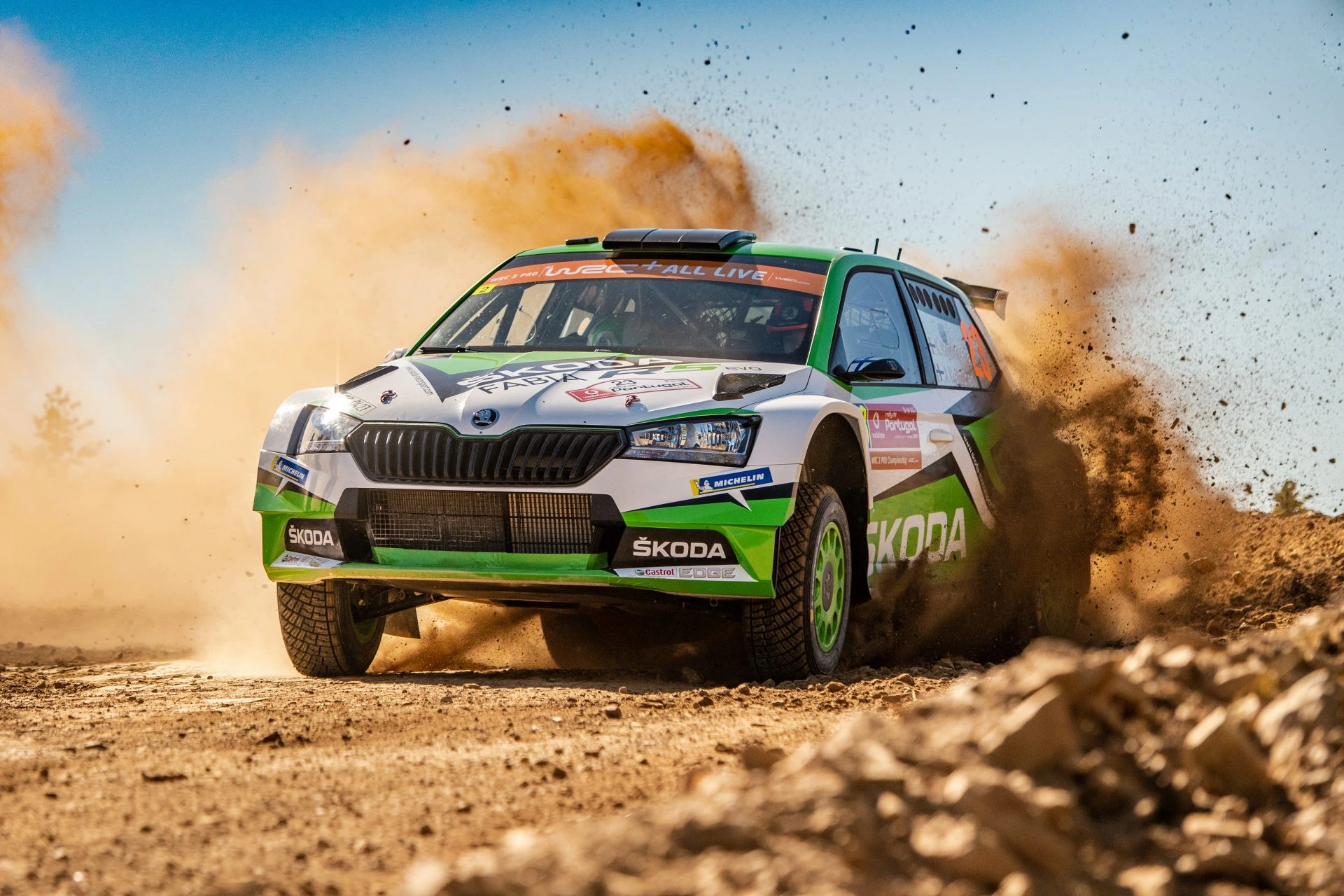
Rally car on gravel. Special stages are the timed sections that decide the rally result.
Stage start, flying finish and stop control
A rally stage has a clear procedure. The car does not simply drive onto the stage whenever it wants. Crews check in at a time control, move to the start line, begin from a standing start, cross the flying finish at speed, then stop at a control point shortly after the finish.
- Time control: where the crew checks in at the required time.
- Stage start: the car begins the stage from a standing start.
- Flying finish: the timing line at the end of the stage, crossed at full speed.
- Stop control: the point after the flying finish where the car stops and officials record the time.
- Time card: the co-driver’s official record of stage times and control arrivals.
This is why rally cars do not stop immediately at the finish line. The timed section ends at the flying finish, but the crew stops safely a short distance later at the stop control.
Super Special Stage: the fan-friendly stage
A Super Special Stage, often shortened to SSS, is a short stage designed to be easy for spectators to watch. It may be held in a stadium, city centre, arena, harbour area, service-park venue or purpose-built layout.
Some super special stages use two parallel lanes, so two cars appear to race side by side. They are still timed separately, but the format makes rallying easier to follow for fans in the venue and on television.
- Purpose: bring rallying close to fans.
- Location: stadium, city centre, arena, parkland venue or compact spectator course.
- Length: usually short compared with normal special stages.
- Format: sometimes two cars run in parallel lanes.
- Risk: the stage is short, so one small mistake can cost a lot of time.
- Best for beginners: easier access, clearer viewing and more facilities than remote stages.
Super specials are not always the purest test of rallying, but they are often the easiest stage type for first-time spectators to enjoy.
Power Stage: the final bonus-points stage
The Power Stage is the rally-ending stage in the WRC, with bonus points available for the fastest crews. It is usually treated as a major TV stage and gives drivers something extra to fight for even if they are not in position to win the rally overall.
This creates a strategy question. A crew leading the rally may protect the win rather than risk everything for bonus points. A crew further down the order may push harder because Power Stage points are still available.
- When it happens: usually the final stage of a WRC rally.
- Why it matters: bonus points are available for the fastest crews.
- Driver mindset: some crews attack, others manage risk.
- Fan value: the rally ends with a high-pressure stage.
- Beginner tip: the rally winner and Power Stage winner are not always the same crew.
Super Sunday: why Sunday has its own fight
Modern WRC Sundays carry extra importance because the final day can award additional points. This means crews may still have something to fight for even if the overall rally positions look settled.
A driver may be protecting an overall result, chasing Sunday points, saving tyres for the Power Stage or trying to recover something from a difficult Friday or Saturday. That makes Sunday more than just a run to the finish.
- Overall rally result: based on total time across all stages.
- Sunday classification: rewards performance across Sunday’s stages.
- Power Stage: final bonus-points opportunity.
- Strategy effect: crews may balance risk differently depending on championship position.
- Fan tip: Sunday can matter even when the rally win looks almost decided.
Road Section / Liaison: the non-racing roads between stages
Road sections, also called liaison sections, are the public roads that connect special stages, service parks, regroup areas and parc fermé. Crews are not racing on these roads. They must obey normal traffic laws and arrive at official controls at the correct time.
This is one of the strangest things for circuit-racing fans. A Rally1 or Rally2 car may finish a flat-out forest stage, then drive through ordinary public roads with traffic signs, roundabouts, fuel stops and speed limits. The car is still in the event, but it is not on a timed stage.
- Purpose: link stages, service and control points.
- Road status: public roads open to normal traffic.
- Rules: crews must obey traffic laws.
- Timing: crews have target times to reach the next control.
- Risk: arriving early or late can mean penalties.
- Car work: outside service, only the driver and co-driver can work on the car using tools and spares carried onboard.
Road sections are not glamorous, but they can decide a rally. A damaged car, puncture, overheating issue or late arrival can turn a strong result into a penalty or retirement.
Service Park: where the car gets repaired
The service park is the rally’s working base. This is where mechanics repair, inspect, adjust and prepare the cars during scheduled service windows. It is the closest rally equivalent to a paddock, but the rules are much stricter because teams can only work on the cars at permitted times.
Service time is limited. If the team takes too long, the crew can receive time penalties. Mechanics may need to change suspension, repair bodywork, inspect brakes, adjust setup, replace damaged parts and prepare the car for the next loop of stages in a very short window.
- Morning service: quick preparation before the day’s opening stages.
- Midday service: repair and setup window between stage loops.
- Evening service: longer re-preparation before cars are placed in parc fermé overnight.
- What mechanics do: repairs, checks, tyre preparation, setup changes and component replacement.
- Why it matters: a brilliant stage time means little if the car cannot be repaired in time.
For spectators, the service park is one of the best parts of a rally weekend because you can see the mechanics, drivers, engineers and media at work.
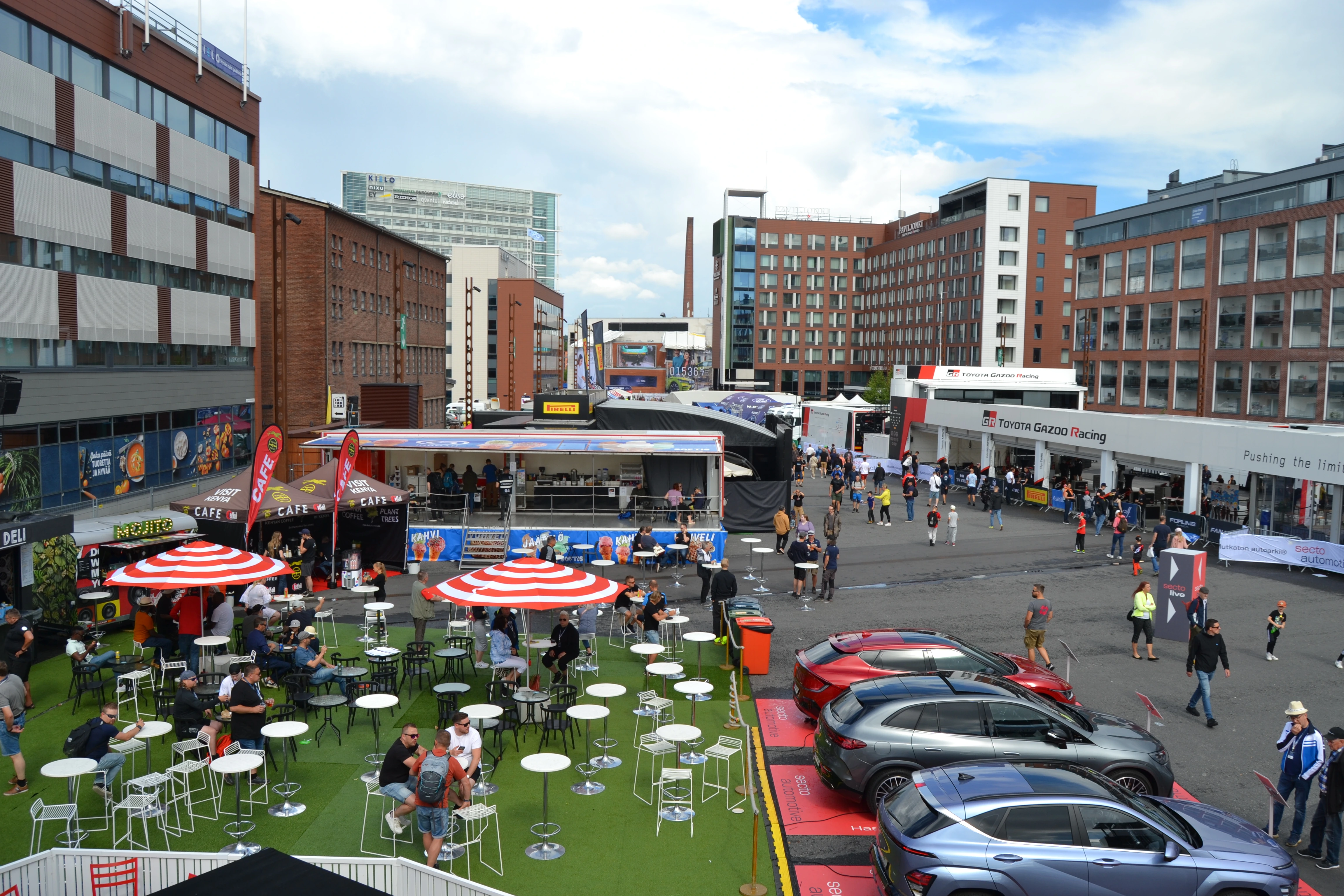
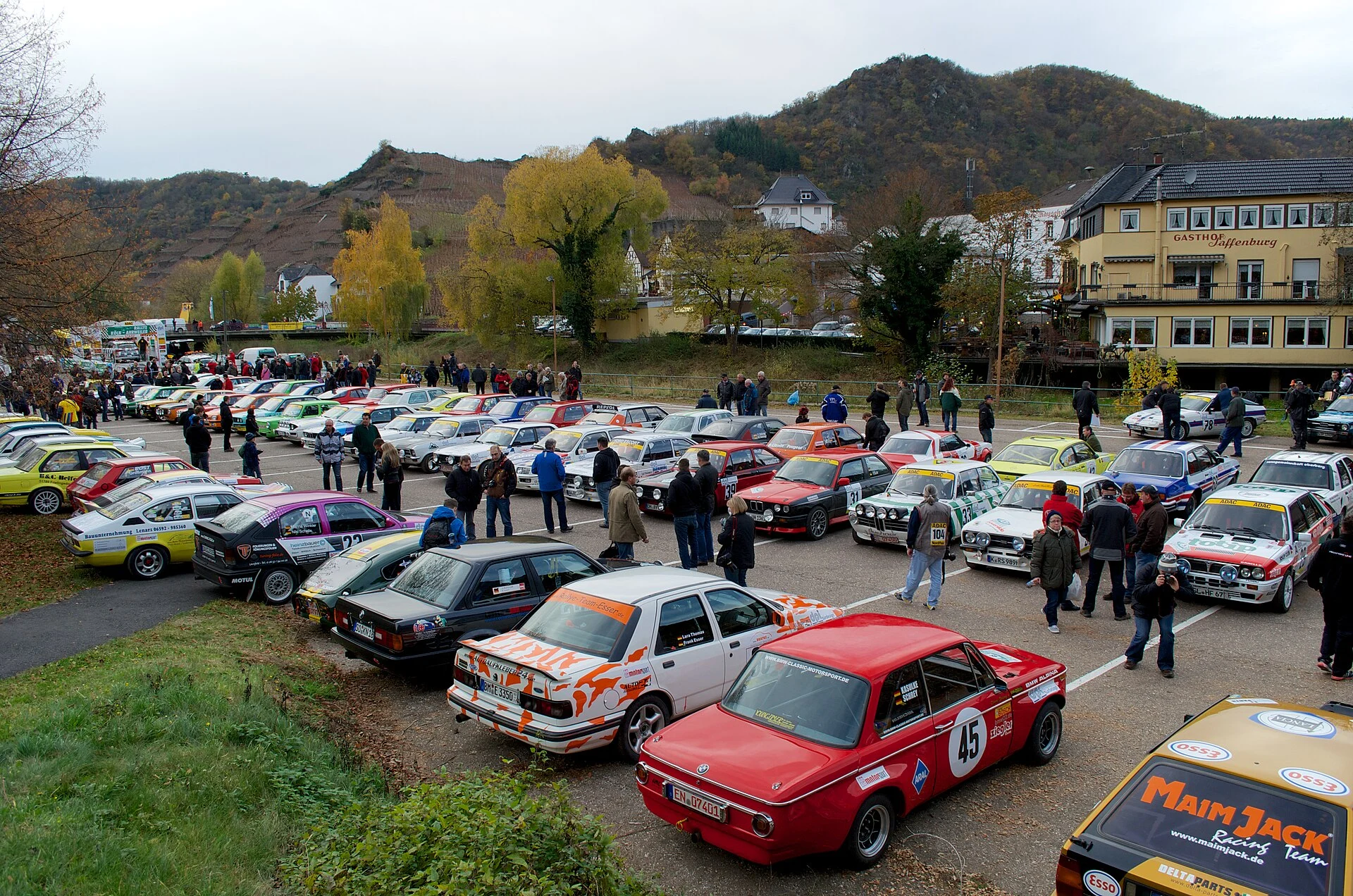
Rally service park. Rally performance depends on mechanics, time limits and repairs as much as stage speed.
Remote service and tyre fitting zones
Some rallies include limited service areas away from the main service park. These can include remote service or tyre fitting zones, depending on the event rules and itinerary.
These areas matter because rallies can cover huge distances. The main service park may be far from the stages, so organisers may create limited zones where crews can change tyres or carry out restricted work without returning to full service.
- Remote service: limited service away from the main service park.
- Tyre fitting zone: controlled area where tyres can be changed according to event rules.
- Restrictions: much less freedom than full service.
- Strategy effect: crews must decide what tyres and spares to carry for the next loop.
- Why it matters: the car must survive until the next proper service opportunity.
Regroup: why cars sometimes wait between stages
A regroup is a scheduled holding area where cars are gathered before the next section of the rally. It helps organisers manage timing, rebuild gaps between cars, prepare for television windows, handle delays and keep the event running in order.
For crews, regroup can be useful and frustrating. It gives them time to reset mentally, check timing and prepare for the next stage, but it can also cool tyres and brakes or interrupt rhythm.
- Purpose: organise timing and running order.
- Why it happens: delays, TV scheduling, safety planning or field management.
- Driver effect: waiting, refocusing and restarting rhythm.
- Fan tip: some regroup areas give spectators a chance to see the cars at low speed or stopped, depending on access.
Parc fermé: the secure no-work zone
Parc fermé is a secure area controlled by officials. When a car is in parc fermé, teams and competitors cannot work on it unless the rules specifically allow it. Cars usually enter parc fermé overnight and after the rally finish.
This keeps the competition fair. Teams cannot secretly repair, inspect or adjust cars overnight. Once the car is parked, it is under official control until the rally schedule allows it to leave again.
- Purpose: secure the cars and prevent unauthorised work.
- When used: overnight and after the finish.
- Who controls it: rally officials.
- Why it matters: teams must finish each day with a car healthy enough to continue.
- Beginner tip: parc fermé is why evening service can be so important.
Time controls: why punctuality matters
Rally crews must check in at official time controls throughout the event. These controls appear at stage starts, service-in, service-out, regroup areas and other key points on the route. The co-driver manages the time card and makes sure the crew checks in at exactly the right moment.
Being fast on stage is not enough. If a crew arrives late at a control, it can receive a time penalty. If it arrives early, the penalty can be even worse. That is why co-drivers are not just note-readers. They are navigators, timekeepers and event managers inside the car.
- Time control: official checkpoint where arrival time is recorded.
- Target time: the time allowed to complete a road section.
- Time card: official timing record carried by the co-driver.
- Late arrival: can trigger time penalties.
- Early arrival: can also trigger penalties and is often punished more heavily.
- Why it matters: rallying rewards discipline as well as speed.
Stage types by surface: gravel, asphalt, snow and mixed conditions
Not all special stages feel the same. Rally stages vary massively depending on surface, weather, road width, grip, camber, altitude and roughness. A driver may face smooth asphalt one month and rock-strewn gravel the next.
- Gravel stages: loose surface, dust, ruts, stones, jumps and road-cleaning effects.
- Asphalt stages: higher grip, later braking, cuts, dirt dragged onto the road and precise tyre choices.
- Snow and ice stages: low grip, studded tyres, snowbanks and changing grip line by line.
- Mixed stages: dry, wet, muddy, icy or dirty sections in the same stage.
- Rough stages: rocks, holes, compressions, puncture risk and car preservation.
- Fast stages: commitment, clean pace notes, crests and high-speed confidence.
- Technical stages: hairpins, narrow roads, junctions, rhythm changes and precise braking.
This is why rally car setup changes so much between events. The same car may need to become a gravel car, asphalt car, snow car and survival machine across one season.
Repeated stages: why the same road changes completely
Many rallies use the same stage more than once. A crew may drive a stage in the morning, return to service, then drive the same road again later in the day. That does not mean the second pass is easy.
On gravel, the first pass may clean loose stones from the racing line, helping later cars. But the second pass may be more rutted, rougher and more likely to cause punctures. On asphalt, cuts can drag mud and gravel onto the road. On snow, the surface can become polished, slushy or deeply rutted.
- First pass: unknown grip, fresh surface and road-position effects.
- Second pass: more knowledge, but more ruts, cuts, dirt or damage.
- Gravel: road cleaning can help later cars, but roughness can increase.
- Asphalt: cuts can bring mud and stones onto the road.
- Snow: conditions can change with every car.
- Driver challenge: trust the notes while adjusting to a road that has evolved.
Road position: why starting order matters
In rallying, when you start can matter almost as much as how fast you are. On loose gravel, the first car on the road often sweeps loose stones away, giving later cars a cleaner line. On snow, the first cars may create tracks, but later cars can face slush, ruts or polished ice. On wet asphalt, later cars may get more dirt dragged onto the road by corner cuts.
- Gravel disadvantage: early cars often clean loose stones from the road.
- Gravel advantage: early cars may avoid rougher second-pass ruts.
- Snow: starting order can dramatically change grip.
- Wet asphalt: cuts and mud can make the road worse for later cars.
- Strategy effect: championship position and rally order can influence stage performance.
What drivers and co-drivers go through on a rally weekend
A rally weekend is physically and mentally demanding. Crews are not just turning up for a few timed runs. They are managing notes, schedules, weather, tyres, repairs, sleep, media, service planning and changing road conditions across several days.
- Prepare the notes: recce creates the foundation for the whole event.
- Test the car: shakedown confirms setup and confidence.
- Start the rally: ceremonial start and opening stage bring the event to life.
- Attack stages: every special stage adds to the total time.
- Drive liaisons: crews must obey traffic laws and hit target times.
- Manage tyres: wrong tyre choice can ruin a whole loop of stages.
- Survive between service stops: outside service, the crew must handle problems themselves.
- Use service wisely: limited time means repairs and setup changes must be prioritised.
- Reset overnight: cars go to parc fermé, crews debrief and prepare for the next day.
- Finish under pressure: Sunday and the Power Stage can still change points and positions.
A circuit race is usually one contained burst of intensity. A rally is a whole weekend of controlled chaos.
What happens if a stage is stopped?
Sometimes a stage has to be interrupted or stopped. This can happen because of a crash, blocked road, unsafe spectators, medical response, fire, weather or another safety issue. Crews may be shown a red flag or instructed to slow down and follow official procedures.
When this happens, the priority is safety. Rally control and officials decide how the affected crews are treated in the classification. For fans, it can be confusing because some crews may get a notional time, some may be delayed, and the running order may need to be adjusted.
- Possible causes: crash, blocked stage, medical response, spectators in unsafe areas or severe weather.
- Driver response: slow down, be ready to stop and follow official instructions.
- Fan response: follow marshals, stay in official areas and never move onto the stage.
- Sporting effect: times and running order may need official adjustment.
Which stage type is best for spectators?
The best stage type depends on what kind of experience you want. A super special stage is usually easiest for families and first-time fans. A forest, gravel or mountain stage gives the most authentic rally atmosphere. A service park gives the best look at the teams. A Power Stage gives the most final-day pressure.
- Best for first-timers: super special stage or official spectator zone.
- Best for families: super special, service park or ceremonial start.
- Best for hardcore fans: remote gravel, forest or mountain stage.
- Best for understanding the sport: service park plus one proper special stage.
- Best for drama: Power Stage or final Sunday loop.
- Best for photography: official spectator area with elevation, safe distance and a clear corner or jump.
For first-time spectators, the safest plan is to use official spectator areas, arrive early and follow marshals. Rally cars can leave the road unpredictably, and the best-looking spot is not always the safest spot.
For a full planning guide, see: How to attend a rally for the first time.
Common mistakes about rally stages
- “Every stage is the same.” No. A super special, gravel stage, mountain asphalt stage and Power Stage can feel completely different.
- “The cars race side by side.” Usually no. Rally cars normally start one at a time and race the clock.
- “Road sections are just transfers.” They matter. Crews must obey traffic laws and arrive at controls on time.
- “Shakedown decides the result.” Usually no. It is a full-speed test, not part of the final classification.
- “The Power Stage decides the rally.” Not necessarily. It offers bonus points, but the rally result is based on total time.
- “The co-driver just reads directions.” No. The co-driver manages notes, timing, controls and route discipline.
- “Service is unlimited.” No. Service time is tightly controlled, and cars cannot be freely worked on outside permitted areas.
Rally stage terms explained
- SS: Special Stage, the main timed competitive section.
- SSS: Super Special Stage, a short spectator-focused stage.
- Power Stage: the final WRC stage with bonus points available.
- Recce: reconnaissance, where crews make pace notes before the rally.
- Shakedown: full-speed pre-event test stage.
- Liaison: public-road section between stages and controls.
- Service Park: the main area where teams repair and prepare cars.
- Remote Service: limited service away from the main service park.
- Regroup: holding area used to organise timing and running order.
- Parc fermé: secure area where cars cannot be worked on.
- Time Control: official checkpoint where crews must arrive at the correct time.
- Stop Control: point after the flying finish where crews stop to record the stage time.
- Itinerary: the official schedule and route of the rally.
A rally event is much more than a collection of fast stages. The special stages decide the result, but the weekend also includes reconnaissance, shakedown, road sections, service parks, time controls, regrouping, parc fermé and the final Power Stage.
For the driver and co-driver, every part of the weekend matters. Recce gives them the notes. Shakedown gives them confidence in the car. Special stages demand commitment. Road sections demand discipline. Service demands clear priorities. The Power Stage demands one final push under pressure.
The simple version is this: rallying is a race against the clock, but the clock is only part of the challenge. The real test is surviving the whole weekend faster, cleaner and smarter than everyone else.
Information can change by rally, season and championship. Stage formats, Power Stage rules, Sunday points, service times, road closures, itineraries, tyre fitting zones and spectator access vary by event. Always check official WRC, FIA and event documents for the current schedule and regulations. Image licences should be checked on the original file pages before publication.
Related Articles
|
All Major Rally Car Classes Explained
|

|
World Rally-Raid Championship Technical Regulations Explained
|
Related series
|
Irish Tarmac Rally Championship
|

|
British Rally Championship
|

|
European Rally Championship
|

|
World Rally Championship
|