Next Formula 1 Academy Race - British Grand Prix
3 - 5 Jul

Silverstone Circuit
Display & Timezone
Display & Timezone
Showing times for America/Chicago
Timezone
America - Chicago
Upcoming in F1 Academy
|
Dutch Grand Prix
21 - 23 Aug
|
||
|
United States Grand Prix
23 - 25 Oct
|
||
|
Las Vegas Grand Prix
19 - 21 Nov
|
Local Weather & Time
Silverstone Circuit - Northamptonshire, United Kingdom
Permanent road course on a former RAF airfield - clockwise - current GP layout introduced 2010 and used since 2011
When was the track built?
Post-war Britain turned disused airfields into race circuits, and Silverstone is the most famous of them. The perimeter roads of RAF Silverstone were first used for club racing in 1947, then formally for the RAC International Grand Prix in 1948. In 1950, Silverstone staged the first World Championship Formula 1 race, attended by King George VI. Through multiple redesigns, the venue has kept its airfield DNA while adding modern safety and facilities.
The current Grand Prix configuration debuted for 2010 with the Arena loop and a new pit complex on the Hamilton Straight from 2011, lengthening the lap and reshaping sectors without losing the track’s trademark speed.
When was its first race?
The circuit’s first race was the 1948 RAC International Grand Prix on 2 October 1948, won by Luigi Villoresi in a Maserati. Silverstone later hosted the inaugural World Championship British Grand Prix in 1950.
What's the circuit like?
- Fast and flowing: Copse is taken at stunning speed, then comes the signature Maggotts-Becketts-Chapel change of direction that compresses the field and punishes any imbalance.
- Wind and grip: As a flat ex-airfield, Silverstone is exposed to gusts that can swing balance corner to corner. Cooler UK temps often mean durable tyre life but tricky warm-up.
- DRS and overtakes: Two DRS zones - Wellington Straight into Brooklands and the Hangar Straight into Stowe - are prime passing spots, with additional action into Village and The Loop on restarts.
- Corner names with stories: Abbey and Luffield reference a medieval abbey, Maggotts is named for Maggot Moor, and Becketts for St Thomas à Becket. The Hangar Straight recalls the airfield hangars.
Benchmark pace: Hamilton’s 2020 pole 1:24.303 remains a modern reference for one-lap speed, while Verstappen’s 1:27.097 is the official race lap record.
Lap records and benchmarks (by series)
- Formula 1 (race lap): 1:27.097 - Max Verstappen, 2020 British GP (current 5.891 km layout).
- FIA WEC (LMP1 reference): 1:37.289 - Toyota TS050 Hybrid, 2019 4 Hours of Silverstone.
- FIA Formula 2: 1:39.993 - Jack Aitken, 2019 F2 round (Grand Prix layout).
- FIA Formula 3: 1:45.692 - Logan Sargeant, 2019 F3 round.
- MotoGP (recent benchmarks): All-time lap record 1:57.3 range in practice and a 1:58.895 best race lap in 2024 on the 5.9 km bike layout. Bikes use their own timing history separate from F1.
Why go?
Silverstone is the spiritual home of British motorsport - a festival atmosphere with huge grandstands, camping villages, live music and trackside fan zones. Expect sell-out crowds for F1, a packed support bill, and sightlines that let you watch cars change direction at world-beating speeds. It is one of the best places on earth to feel what modern downforce looks like in the flesh.
Where's the best place to watch?
- Becketts Complex: Panoramic view of Maggotts-Becketts-Chapel - watch drivers thread the needle at high speed and see pace differences amplified.
- Stowe: Huge braking from the Hangar Straight DRS zone - classic divebombs and outside swoops.
- Brooklands-Luffield-Woodcote: Great for overtakes from the Wellington Straight and long views as cars fight traction onto the National Pits Straight.
- Club and Hamilton Straight: Final-corner drama, podium views and start-finish action with the modern pit complex as a backdrop.
Not just F1: UK and world series at Silverstone
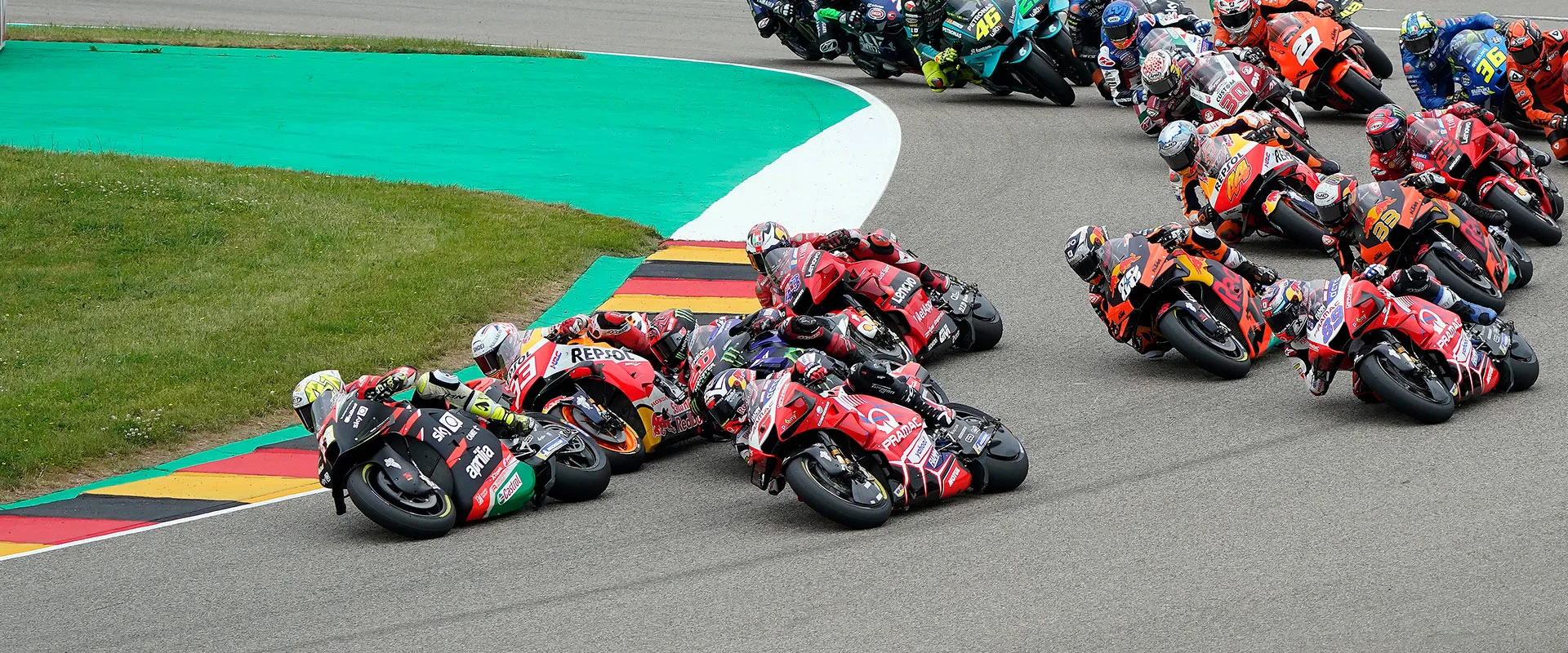
MotoGP British Grand Prix: Premier motorcycle racing returns each summer on a bike-specific 5.9 km layout - breathtaking elbow-down speeds through Maggotts and Becketts.
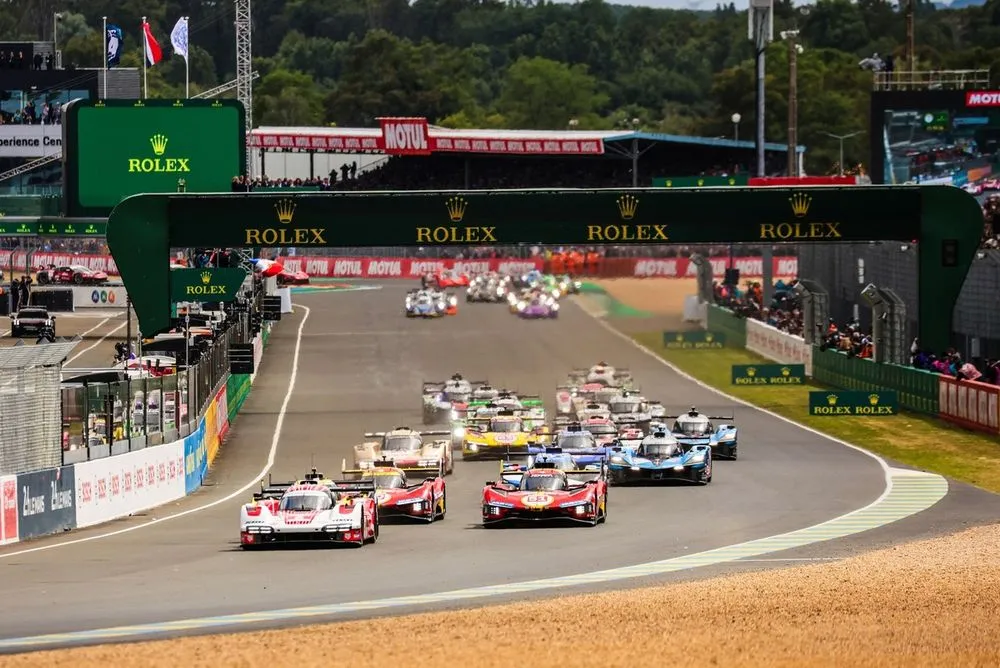
FIA World Endurance Championship: Silverstone has hosted rounds for LMP and GT machinery, with hybrid prototypes setting eye-opening averages through the fast stuff.
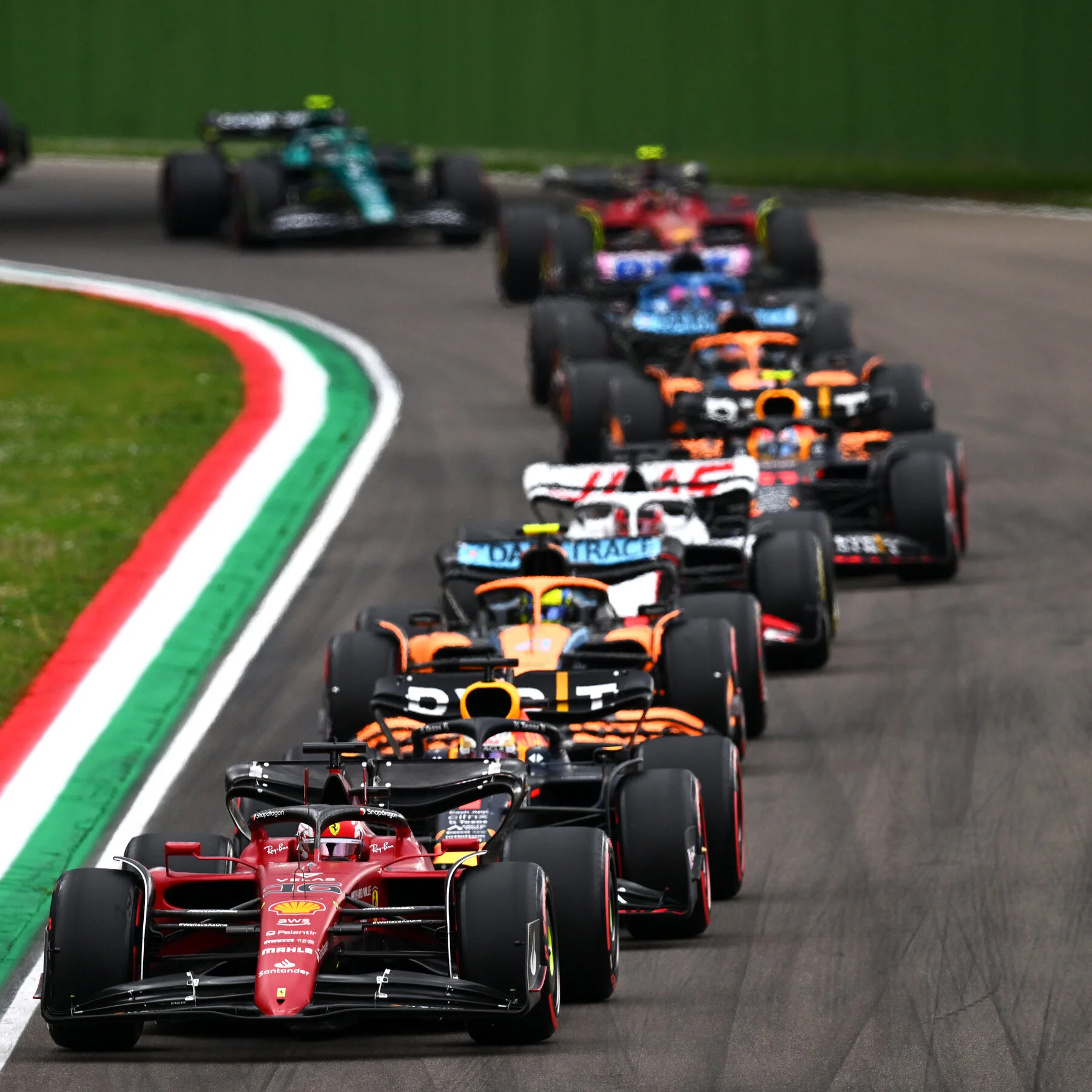
FIA Formula 2 and Formula 3: Top junior single-seater categories share the F1 weekend, showcasing future stars in slipstream battles on Wellington and Hangar.
BTCC and British GT: Britain’s marquee touring cars and national GTs race on Silverstone’s various layouts across the season, delivering dense packs and photo-finish sprints.
Porsche Supercup and Carrera Cup GB: One-make GT action often features on Grand Prix and national bills with deep grids and relentless midfield fights.
3 - 5 Jul
Silverstone Circuit
Silverstone Circuit - Northamptonshire, United Kingdom
Permanent road course on a former RAF airfield - clockwise - current GP layout introduced 2010 and used since 2011
When was the track built?
Post-war Britain turned disused airfields into race circuits, and Silverstone is the most famous of them. The perimeter roads of RAF Silverstone were first used for club racing in 1947, then formally for the RAC International Grand Prix in 1948. In 1950, Silverstone staged the first World Championship Formula 1 race, attended by King George VI. Through multiple redesigns, the venue has kept its airfield DNA while adding modern safety and facilities.
The current Grand Prix configuration debuted for 2010 with the Arena loop and a new pit complex on the Hamilton Straight from 2011, lengthening the lap and reshaping sectors without losing the track’s trademark speed.
When was its first race?
The circuit’s first race was the 1948 RAC International Grand Prix on 2 October 1948, won by Luigi Villoresi in a Maserati. Silverstone later hosted the inaugural World Championship British Grand Prix in 1950.
What's the circuit like?
- Fast and flowing: Copse is taken at stunning speed, then comes the signature Maggotts-Becketts-Chapel change of direction that compresses the field and punishes any imbalance.
- Wind and grip: As a flat ex-airfield, Silverstone is exposed to gusts that can swing balance corner to corner. Cooler UK temps often mean durable tyre life but tricky warm-up.
- DRS and overtakes: Two DRS zones - Wellington Straight into Brooklands and the Hangar Straight into Stowe - are prime passing spots, with additional action into Village and The Loop on restarts.
- Corner names with stories: Abbey and Luffield reference a medieval abbey, Maggotts is named for Maggot Moor, and Becketts for St Thomas à Becket. The Hangar Straight recalls the airfield hangars.
Benchmark pace: Hamilton’s 2020 pole 1:24.303 remains a modern reference for one-lap speed, while Verstappen’s 1:27.097 is the official race lap record.
Lap records and benchmarks (by series)
- Formula 1 (race lap): 1:27.097 - Max Verstappen, 2020 British GP (current 5.891 km layout).
- FIA WEC (LMP1 reference): 1:37.289 - Toyota TS050 Hybrid, 2019 4 Hours of Silverstone.
- FIA Formula 2: 1:39.993 - Jack Aitken, 2019 F2 round (Grand Prix layout).
- FIA Formula 3: 1:45.692 - Logan Sargeant, 2019 F3 round.
- MotoGP (recent benchmarks): All-time lap record 1:57.3 range in practice and a 1:58.895 best race lap in 2024 on the 5.9 km bike layout. Bikes use their own timing history separate from F1.
Why go?
Silverstone is the spiritual home of British motorsport - a festival atmosphere with huge grandstands, camping villages, live music and trackside fan zones. Expect sell-out crowds for F1, a packed support bill, and sightlines that let you watch cars change direction at world-beating speeds. It is one of the best places on earth to feel what modern downforce looks like in the flesh.
Where's the best place to watch?
- Becketts Complex: Panoramic view of Maggotts-Becketts-Chapel - watch drivers thread the needle at high speed and see pace differences amplified.
- Stowe: Huge braking from the Hangar Straight DRS zone - classic divebombs and outside swoops.
- Brooklands-Luffield-Woodcote: Great for overtakes from the Wellington Straight and long views as cars fight traction onto the National Pits Straight.
- Club and Hamilton Straight: Final-corner drama, podium views and start-finish action with the modern pit complex as a backdrop.
Not just F1: UK and world series at Silverstone
MotoGP British Grand Prix: Premier motorcycle racing returns each summer on a bike-specific 5.9 km layout - breathtaking elbow-down speeds through Maggotts and Becketts.
FIA World Endurance Championship: Silverstone has hosted rounds for LMP and GT machinery, with hybrid prototypes setting eye-opening averages through the fast stuff.
FIA Formula 2 and Formula 3: Top junior single-seater categories share the F1 weekend, showcasing future stars in slipstream battles on Wellington and Hangar.
BTCC and British GT: Britain’s marquee touring cars and national GTs race on Silverstone’s various layouts across the season, delivering dense packs and photo-finish sprints.
Porsche Supercup and Carrera Cup GB: One-make GT action often features on Grand Prix and national bills with deep grids and relentless midfield fights.
Never Miss Lights Out
Get alerts before every race, across all major series.
Email reminders • Calendar sync • Push notifications