
Autódromo Hermanos Rodríguez
Location
 Mexico City (Magdalena Mixhuca), Mexico
Current Local Time
Track Info
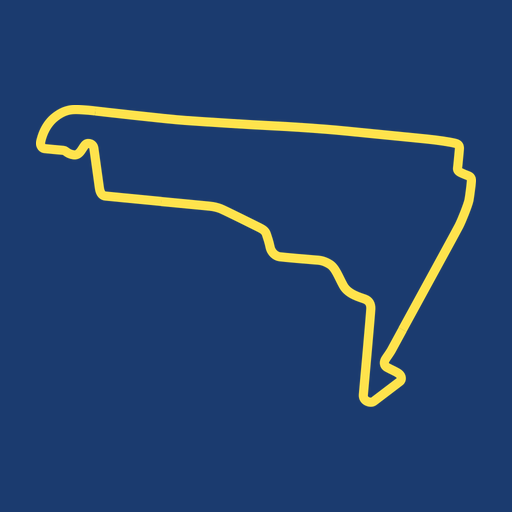
Autódromo Hermanos Rodríguez - Mexico City, Mexico
Semi-permanent road course in the Magdalena Mixhuca park - clockwise - high altitude, long straights and a unique stadium section
When was the track built?
Opened in 1959 as Ciudad Deportiva Magdalena Mixhuca, the circuit hosted international events through the 1960s before safety and infrastructure overhauls in later decades. It was renamed Autódromo Hermanos Rodríguez to honor Ricardo and Pedro Rodríguez, Mexico's racing icons.
A major 2015 redevelopment modernized the venue for F1's return: a new paddock, resurfacing, revised run offs and the creative re-routing through the baseball stadium Foro Sol, which splits the legendary Peraltada and rejoins for a final fast right at T17.
When was its first race?
The venue's first race weekend was in 1959. The Mexican Grand Prix debuted in 1962 as a non-championship event, then joined the F1 World Championship in 1963. After eras in the 60s, 80s-90s and a hiatus, Formula 1 returned in 2015 and the Mexico City Grand Prix has been a modern sell-out.
What's the circuit like?
- Altitude effects: With air this thin, teams trim huge rear wing yet still run Monaco-like cooling. Engines and turbos love the density drop, but brakes and tyres run hot and cars slide more.
- Launch and heavy stops: The long run to Turn 1 produces three-wide arrivals and big braking duels. Traction out of T3 onto the endless straight dictates top speed and overtaking chances into T4.
- Stadium sensation: The Foro Sol complex wraps grandstands around slow corners, so you watch cars thread a bowl of noise before blasting toward Peraltada's modern right-hander.
- Three DRS zones: Typically the main straight, the T3-T4 straight and the short blast later in the lap, creating repeated slipstream battles.
- Strategy themes: Track temp swings, brake cooling limits and traffic through the stadium shape tyre choices. Undercuts can bite if tyres overheat in dirty air.
- Benchmark pace: Official F1 race lap record 1:17.774. Qualifying poles often land in the low-to-mid 1:16s depending on conditions and era.
Lap records and benchmarks (by series)
- Formula 1 (race lap): 1:17.774 - Valtteri Bottas, 2021 Mexico City GP - current 4.304 km layout.
- Formula E Mexico City E-Prix: Uses a shortened infield-stadium layout, with all-electric single-seaters delivering sub 1:10 laps on that configuration.
- Champ Car / CART history: The series raced here in the 1980s and again 2002-2007 on an adapted course, with huge crowds through Foro Sol.
- NASCAR México Series: Stock cars headline national events on road and oval variants within the complex.
- WEC 6 Hours of Mexico: Hosted in 2016-2017 on the GP course, showcasing hybrid prototypes and multi-class strategy at altitude.
Why go?
A roaring grandstand amphitheatre in the heart of a world-class city. The combo of thin air top speeds, festival atmosphere in Foro Sol and Mexico City's food and culture makes this a bucket list trip. Expect passionate crowds, mariachi in the paddock and confetti on the podium.
Where's the best place to watch?
- Turn 1-2-3 complex: Starts, restarts and the heaviest braking of the lap with multiple lines and switchbacks.
- End of the T3-T4 straight: DRS slingshots into a classic divebomb zone with cutbacks through the following sequence.
- Foro Sol stadium: Immersive sound and close-up views as cars zigzag through low-speed corners surrounded by grandstands, then fire toward Peraltada.
- Peraltada T17 and main straight: See commitment through the final right and the sprint past the pits with DRS open and wheel-to-wheel finishes.
- Main grandstand: Grid, pit stops, strategy drama and podium celebrations with panoramic sightlines.
Not just F1: Mexican and world series in CDMX
Formula E: The Mexico City E-Prix turns the stadium into a cauldron with Attack Mode strategy and regenerative braking fireworks.
NASCAR México and national touring: Big local followings deliver loud, elbows-out races on mixed configurations.
Endurance and GT events: Regional and international GT races use the fast perimeter and technical stadium, creating varied traffic and strategy.
Historic festivals: Classic machinery regularly returns to celebrate the Rodríguez brothers and Mexico's deep motorsport heritage.
Transportation & Parking
Getting to Autódromo Hermanos Rodríguez - Mexico City Grand Prix
Best options are the CDMX Metro Line 9 to Velódromo, Ciudad Deportiva or Puebla, the Metrobús Line 2 stops UPIICSA and El Rodeo, the Trolebús Line 2, and the official Transportación Remota park and ride shuttles. There is no spectator parking at the circuit.
Metro and Metrobús - the easiest way
- Metro Line 9: Ride to Velódromo, Ciudad Deportiva or Puebla. These stations are the recommended access points for the event.
- Metrobús Line 2: Alight at UPIICSA or El Rodeo on the south side of the circuit. Services run from early morning to midnight.
- Trolebús Line 2: Stops at Ciudad Deportiva, Puerta 8 and Puebla place you near multiple gates.
Tip: If one station is crowded, walk to a neighboring stop on Line 9 or use Metrobús Line 2 to spread the load.
Transportación Remota - official park and ride shuttles
- Boarding points: Estadio Azteca, Plaza Carso, Auditorio Nacional, Expo México Santa Fe, Hipódromo de las Américas. Continuous departures 07:00-19:00.
- Drop zones at the circuit: Eje 3 Sur Añil by Puerta 7 - Palacio de los Deportes, Viaducto Río Piedad between Puertas 8-9, and Eje 4 Oriente between Puertas 12-13.
- Return after sessions: Single departure hub at Eje 3 Sur Añil x Río Churubusco from 15:30-19:00 back to your original boarding point.
- Payment: Tarjeta de Movilidad Integrada only - $85 MXN single or $170 MXN return. Cards sold and recharged at the boarding points.
- Perimeter shuttles: Free internal perimeter buses operate 07:00-20:00 to connect drop zones with the nearest gates.
Taxis and rideshare
- Rideshare set down: Designated drop at Puerta 6 - Palacio de los Deportes. Follow stewarded walking routes to your gate.
- Taxi ranks: Official base at Puerta 15 on Añil x Resina with metered fares. Accessible vehicles are available for internal transfer when needed.
Driving and parking
- No on-site parking: The Grand Prix does not offer spectator parking. Do not drive to the gates - use Metro, Metrobús, Trolebús or the official shuttles.
Walking from stations and shuttle drops
- Metro Line 9 stations → gates: generally 10-25 minutes depending on gate and crowd control. Follow the signed pedestrian routes around Ciudad Deportiva.
- Shuttle drop zones → gates: short, stewarded walks from Puerta 7, Puertas 8-9 or Puertas 12-13. Use the free perimeter buses if your ticketed gate is farther away.
Airports and long distance travel
- MEX Benito Juárez Airport → circuit area: The quickest public link is Metrobús Line 4 to San Lázaro then transfer to the Metro network for Line 9 to the venue area. Taxis and ride-hailing are also widely available.
Gate quick guide - what is nearest
- South and paddock side - Puertas 8-9: quickest from Puebla Metro, Metrobús L2 and shuttle drop at Viaducto Río Piedad.
- Palacio de los Deportes side - Puerta 7: handy from Velódromo and the shuttle drop on Eje 3 Sur Añil.
- East side - Puertas 12-13: best from Puebla Metro, Trolebús L2 Puerta 8 and the shuttle drop on Eje 4 Oriente.
Always follow the gate printed on your e-ticket and check the event’s mobility plan for any last minute changes to station operations and shuttle times.
Nearby Activities
Things to do around Autódromo Hermanos Rodríguez (Mexico City, Mexico)
Whether you are here for Formula 1, Formula E, NASCAR México or a national race weekend, the circuit sits inside the Magdalena Mixhuca Sports City in the east of CDMX - with world class museums, parks, food markets and day trips within easy reach for non race days.
Family friendly highlights near the circuit
- Chapultepec Park: One of the largest urban parks in the Americas with paddle boats on the lake, picnic lawns and a small train on select days.
- Chapultepec Zoo: Free entry city zoo - easy to pair with nearby museums for a half day.
- National Museum of Anthropology: World class collection including the Aztec Sun Stone - allow 2 - 3 hours minimum.
- Papalote Museo del Niño: Hands on children’s museum with science and play zones - excellent for primary school ages.
- Trajinera boats at Xochimilco: Colorful canal rides with music and food vendors - go earlier in the day for a quieter experience.
- Lucha Libre at Arena México: Family friendly spectacle nights with masked wrestlers - a uniquely local evening out.
Many museums close on Mondays. Popular family attractions use timed tickets on weekends and holidays.
Culture hits and rainy day winners
- Templo Mayor & Metropolitan Cathedral: Aztec ruins beside the Zócalo with an excellent site museum, plus the grand cathedral next door.
- Palacio de Bellas Artes: Iconic art palace for murals and exhibitions - check for evening performances.
- Frida Kahlo Museum - Casa Azul (Coyoacán): Timed tickets required and often sold out days ahead - book early during race week.
- Museo Soumaya & Museo Jumex (Polanco): Striking buildings with large collections in a walkable arts cluster.
- Torre Latinoamericana: Classic observation deck with 360 degree city views - great at sunset or after dinner.
- San Juan Market: Covered gourmet market for quick bites under one roof if showers roll through.
Eat and drink like a local
- Street and taquerías: Tacos al pastor, suadero and carnitas are race week staples. Look for busy spots with fast turnover.
- Roma - Condesa: Café terraces, contemporary Mexican dining and late dessert stops - perfect after qualifying.
- Coyoacán: Traditional markets, churros and coffee around the main squares for a relaxed afternoon.
- Polanco: High end dining and international options for celebratory Sunday dinners.
Stick to bottled or purified water. If you have sensitivities, ease into street food with cooked to order items.
Active outdoors between sessions
- Sunday on Reforma: Large sections of Paseo de la Reforma are closed to cars on many Sundays for cycling and skating - a great active morning if your schedule aligns.
- Chapultepec running loops: Shaded paths around the lakes and castle hill make easy 3 - 5 km circuits.
- Parque México & Parque España: Leafy Condesa parks for gentle walks and people watching between meals.
Easy day trips if you are extending your stay
- Teotihuacán Pyramids - 60 to 90 minutes. Sunrise hot air balloon flights followed by site visits are popular. Arrive early for cooler temps and fewer crowds.
- Puebla & Cholula - 2 hours. Talavera pottery, great cuisine and the Great Pyramid of Cholula with views to Popocatépetl on clear days.
- Toluca & Nevado de Toluca - 2 hours. High altitude crater lakes and hiking on non snowy days - check weather and access rules.
- Taxco - 2.5 to 3 hours. Mountain town known for silver workshops and dramatic hilltop views - best as a long day or overnight.
- Tepoztlán - 1.5 to 2 hours. Pueblo Mágico with a pyramid hike and weekend market stalls.
Times are approximate and can rise on headline weekends. Major sites often require timed tickets or have last entry cutoffs - confirm before you depart.
When to go and what to expect
- Peak motorsport - Late Oct to early Nov usually brings F1. Formula E and national series land in cooler months. Restaurants and popular museums fill quickly on race weekends.
- Weather - Mexico City sits at about 2,240 m. Sun is strong even on mild days and evenings can feel cool. Pack layers, sunscreen and comfortable shoes for long city walks.
Practical notes during race weeks
- On site operations: Parts of the sports park, Foro Sol and surrounding roads are redirected or closed during the event window.
- Reservations: Book Casa Azul, popular restaurants and lucha libre seats ahead of time. Many venues offer timed entry during busy periods.
- Health & altitude: Hydrate, take it steady on the first day, and consider lighter mornings if you plan a balloon flight or high elevation hike the next day.
Opening hours, seasonal operations and event week plans can change - check official sites close to your visit.