
What Is the Difference Between GT3 and Cup 2?
A beginner-friendly guide to the difference between GT3 cars and Cup 2 Porsche 911 Cup cars - including Nürburgring classes, performance, Balance of Performance, cost, driver levels and how to tell them apart on track.

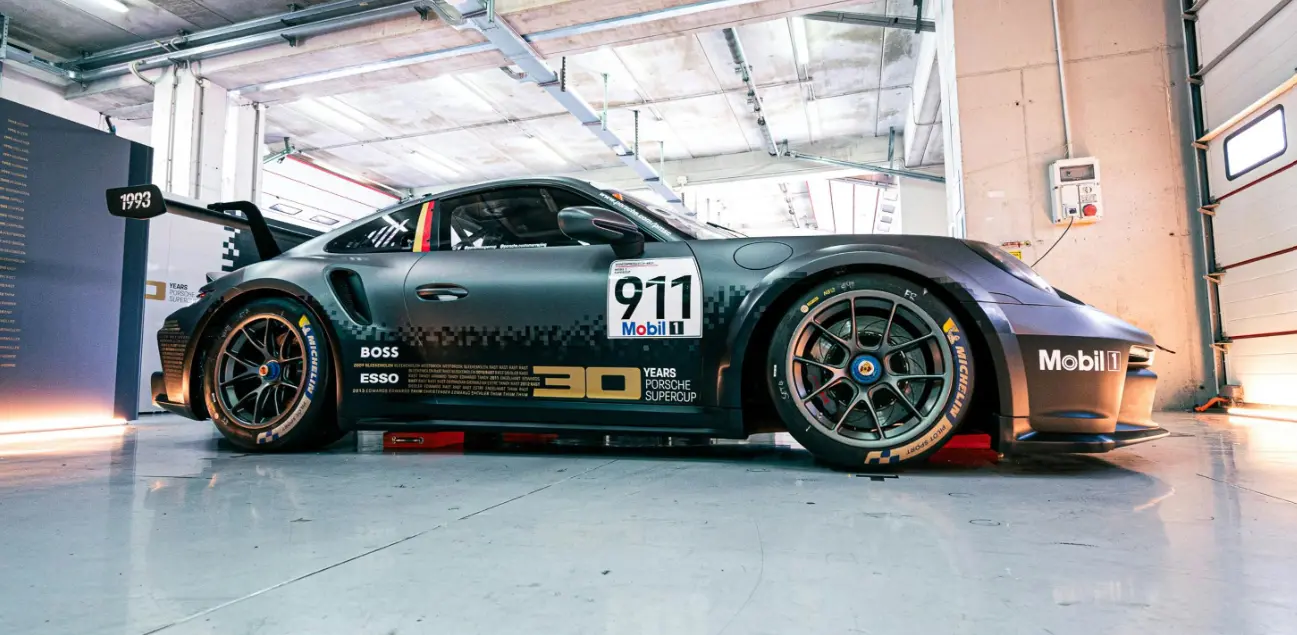
The difference between GT3 and Cup 2 is that GT3 is a multi-manufacturer international GT class, while Cup 2 is a Porsche one-make class for Porsche 911 GT3 Cup cars. In the Nürburgring Langstrecken-Serie and the 24 Hours of Nürburgring, GT3 cars normally appear in the SP9 class, while Cup 2 sits inside the Porsche Endurance Trophy Nürburgring structure.
That means a Porsche 911 GT3 R and a Porsche 911 GT3 Cup may sound similar by name, but they are not the same thing. The 911 GT3 R is Porsche’s FIA GT3 race car designed to compete against other GT3 cars from different manufacturers. The 911 GT3 Cup is a one-make cup car designed for Porsche Cup racing and Cup 2-style competition.
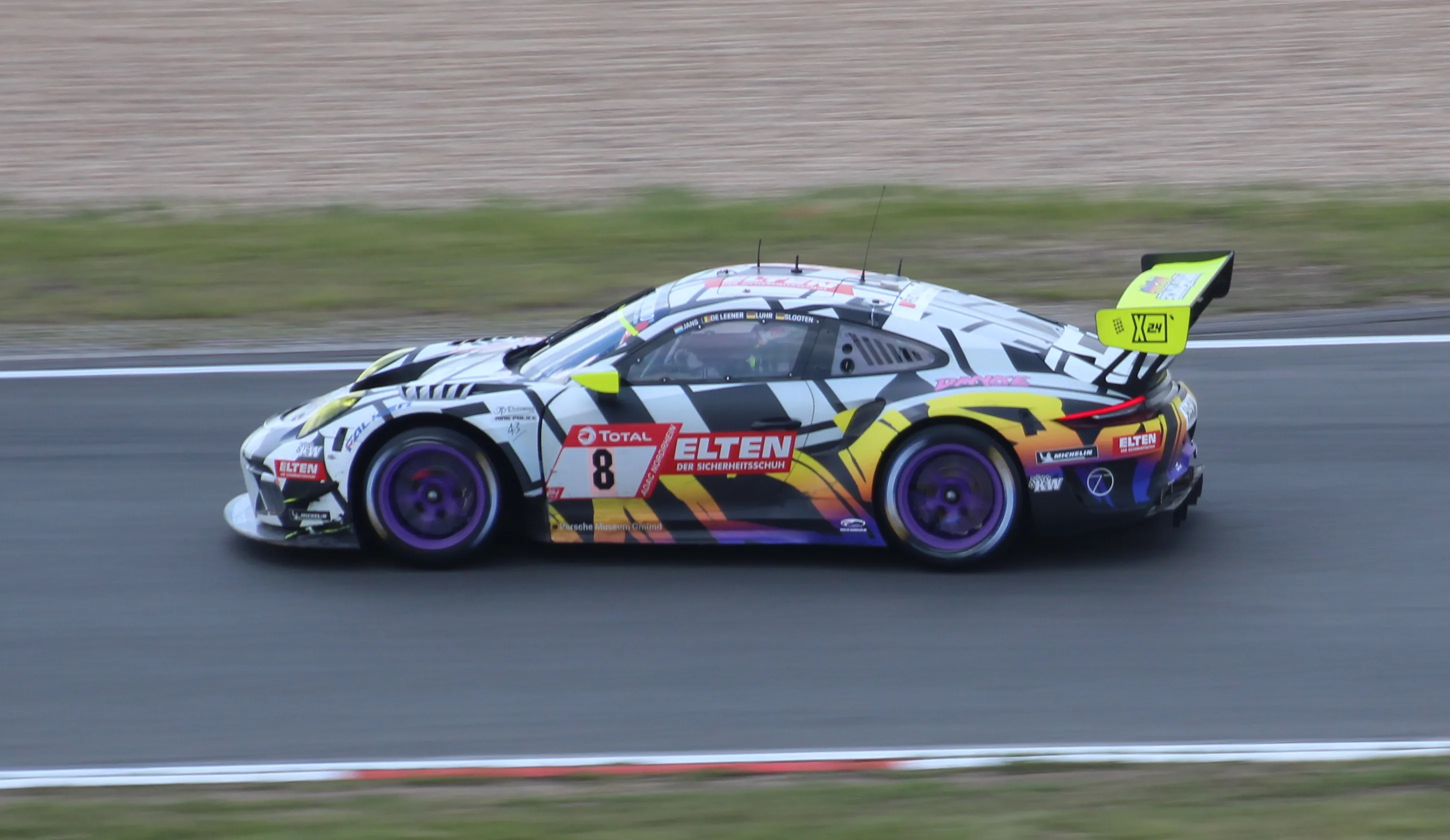
Porsche 911 GT3 R.
_(54139881159).webp)
Porsche 911 GT3 Cup 992.
Why the names are confusing
The confusion comes from Porsche naming. Porsche uses “GT3” in several different ways. There is a Porsche 911 GT3 road car, a Porsche 911 GT3 RS road car, a Porsche 911 GT3 Cup race car and a Porsche 911 GT3 R race car. Only one of those is the FIA GT3-class car.
In racing terms, the important distinction is:
- Porsche 911 GT3 R: Porsche’s GT3-class race car, built to race against other manufacturers’ GT3 cars.
- Porsche 911 GT3 Cup: Porsche’s one-make Cup race car, used in Porsche Carrera Cup, Porsche Supercup and Cup 2-style classes.
- Cup 2: the Nürburgring class for the Porsche 911 GT3 Cup inside the Porsche Endurance Trophy Nürburgring.
- SP9: the Nürburgring class where GT3 cars compete for overall victory.
So when someone says “GT3 vs Cup 2”, they are usually not asking about a Porsche road car. They are asking about the difference between a full GT3 race car and a Porsche 911 Cup car racing in the Cup 2 class.
What is a GT3 car?
A GT3 car is a manufacturer-built customer race car based on a production sports car or grand tourer. It is designed to race under FIA GT3-style regulations and to compete against cars from other manufacturers through Balance of Performance.
GT3 cars are serious professional-level GT machines. They have developed aerodynamics, sophisticated suspension, strong endurance brakes, racing electronics, a stripped cockpit, safety systems and manufacturer support. They are built for big races such as the Nürburgring 24 Hours, Spa 24 Hours, Bathurst 12 Hour, IMSA, GT World Challenge, DTM and LMGT3-style endurance racing.
- Examples: Porsche 911 GT3 R, BMW M4 GT3, Ferrari 296 GT3, Mercedes-AMG GT3, Lamborghini Huracán GT3, Aston Martin Vantage GT3, Corvette Z06 GT3.R.
- Class at the Nürburgring: usually SP9.
- Main purpose: multi-manufacturer GT racing at the highest customer level.
- Performance control: Balance of Performance across different car models.
- Driver level: often professional, factory-supported or Pro-Am depending on the championship.
For a full overview of the category, see our guide: GT3 cars explained.
What is Cup 2?
Cup 2 is a Porsche one-make class used in the Nürburgring Langstrecken-Serie and the Porsche Endurance Trophy Nürburgring. The key car is the Porsche 911 GT3 Cup, usually the 992-generation car in current competition.
The easiest way to understand Cup 2 is to think of it as a fast Porsche Cup endurance class. The cars are not GT3 cars in the FIA GT3 sense, even though the name “911 GT3 Cup” makes that easy to mix up. Cup 2 cars are designed for one-make Porsche racing, which means the cars are much more similar to each other than GT3 cars are.
- Car: Porsche 911 GT3 Cup.
- Class structure: part of the Porsche Endurance Trophy Nürburgring.
- Main purpose: Porsche one-make endurance racing on the Nordschleife.
- Performance control: mostly common car specification, not brand-vs-brand BoP.
- Driver level: a mix of professionals, strong amateurs and Pro-Am crews.
Cup 2 is quick and competitive, but it is not meant to be the top overall class. In normal conditions, the SP9 GT3 cars are the primary contenders for the overall win, while Cup 2 fights its own class battle.
GT3 vs Cup 2
- Class type: GT3 is multi-manufacturer; Cup 2 is Porsche one-make.
- Main car: GT3 can be Porsche, BMW, Ferrari, Mercedes-AMG, Lamborghini and more; Cup 2 is Porsche 911 GT3 Cup.
- Nürburgring class: GT3 usually means SP9; Cup 2 is its own Porsche class.
- Performance: GT3 is generally faster overall, with more developed aero and more GT endurance hardware.
- Racing style: GT3 is brand-versus-brand; Cup 2 is like-for-like Porsche competition.
- Cost and complexity: GT3 programmes are usually more expensive and technically complex.
- BoP: GT3 relies heavily on BoP across different cars; Cup 2 relies more on controlled specification.
- Best for fans: GT3 is best for overall battles; Cup 2 is best for close Porsche class racing.
Performance indicators
The numbers can be surprisingly close on paper, but the cars are built for different jobs. A Porsche 911 GT3 Cup car can have power and weight figures that do not look far away from some GT3 machinery, but the GT3 car is more developed as a full multi-manufacturer endurance platform.
- GT3 power: varies by car and Balance of Performance. A Porsche 911 GT3 R, for example, is quoted by Porsche at about 420 kW / 565 hp before series-specific balancing.
- Cup 2 power: the Porsche 911 GT3 Cup 992 is quoted at 375 kW / 510 BHP.
- GT3 weight: varies by model and BoP. Porsche quotes the 911 GT3 R at about 1,250 kg depending on BoP.
- Cup 2 weight: Porsche quotes the 911 GT3 Cup 992 at approximately 1,260 kg.
- GT3 aero: more developed, more adjustable and more central to performance.
- Cup 2 aero: serious for a Cup car, but simpler and less extreme than a GT3 car.
- GT3 top speed: more developed, more adjustable and more central to performance.
- Cup 2 top speed: serious for a Cup car, but simpler and less extreme than a GT3 car.
- GT3 brakes and endurance systems: built for top-level GT racing and long-distance multi-manufacturer competition.
- Cup 2 brakes and systems: still race-grade, but designed around the Porsche Cup platform and controlled class racing.
The key point is that a Cup 2 car is not slow. It is a very fast Porsche racing car. But a GT3 car is designed to fight at the front of international GT endurance racing, with more performance development and more freedom within its homologated GT3 package.
Aerodynamics: why GT3 usually has the edge
GT3 cars generally have more sophisticated aero packages than Cup 2 cars. They are designed to compete with many different manufacturers at professional GT level, so aero efficiency, cooling, balance and tyre usage are all major development areas.
A Cup 2 Porsche still has a rear wing, splitter and proper race-car aero, but it is not trying to be a GT3 car. It is a Cup car designed for a controlled Porsche racing environment. The aero is effective, but the car is less dependent on high-end GT3-style aerodynamic optimisation.
- GT3: more developed splitter, rear wing, diffuser, vents, cooling and aero balance.
- Cup 2: simpler Cup aero package, still serious but less extreme.
- On track: GT3 cars usually carry more speed through fast corners and manage tyres better over a full endurance stint.
- For spectators: GT3 cars tend to look wider, lower and more planted; Cup cars often look more raw and lively.
Engineering and setup differences
GT3 cars give teams a more complex engineering platform. They are homologated race cars, but teams still work with detailed setup tools: suspension settings, ride heights, aero balance, driver aids, tyre windows and BoP-specific operating conditions. The car is designed to be tuned for many circuits, tyres, championships and race formats.
Cup 2 is much more controlled. Because every car is based on the same Porsche 911 GT3 Cup platform, the performance differences come more from setup detail, driver confidence, traffic management, pit work and clean execution. There is less opportunity to win because your car concept is naturally better than someone else’s. That makes the racing more directly comparable.
- GT3 engineering focus: extracting performance from a car competing against different brands and layouts.
- Cup 2 engineering focus: making the same basic Porsche package work better for the driver and the Nordschleife.
- GT3 team challenge: car balance, BoP, tyre usage, driver line-up and manufacturer-specific strengths.
- Cup 2 team challenge: clean setup, consistency, reliability, pit work and mistake-free driving.
Balance of Performance vs one-make racing
This is one of the most important differences. GT3 needs Balance of Performance because the cars are fundamentally different. A front-engined BMW M4 GT3, a rear-engined Porsche 911 GT3 R and a mid-engined Ferrari 296 GT3 do not naturally have the same strengths. BoP brings them into a similar performance window.
Cup 2 does not have the same problem. The cars are all Porsche 911 GT3 Cup cars, so the class does not need to balance completely different manufacturers against each other. That does not mean every Cup 2 car is perfectly equal in practice - setup, tyres, mileage, damage, preparation and driver line-up still matter - but the basic car concept is shared.
- GT3: BoP is central because many brands and layouts race together.
- Cup 2: one-make structure means the comparison is more direct.
- GT3 fan debate: “Was that car fast because of BoP, driver or team?”
- Cup 2 fan debate: “Who is extracting the most from the same Porsche package?”
How the racing feels different
GT3 racing often feels like a battle between car concepts. Different brands are strong in different places. One car may be better on tyres, another stronger in a straight line, another more stable in braking, and another easier to drive over a stint. That gives GT3 a manufacturer-war feeling, especially in big endurance races.
Cup 2 feels more like a driver and team execution contest. Because the cars are similar, differences are easier to read. If one Cup 2 car pulls away from another, it is more likely to be due to driver pace, setup, tyre management, traffic decisions or pit work rather than one manufacturer having a better baseline car.
- GT3 racing: brand variety, factory interest, BoP stories, overall-win relevance.
- Cup 2 racing: Porsche-versus-Porsche, close class battles, clearer driver comparison.
- GT3 drama: can this manufacturer win overall?
- Cup 2 drama: which Porsche crew is executing best?
GT3 vs Cup 2 at the Nürburgring
At the Nürburgring, the difference becomes especially important because both classes can be very fast, and both may include strong drivers. SP9 GT3 cars are usually the headline machines fighting for overall victory. Cup 2 Porsche 911 GT3 Cup cars are often among the quicker non-GT3 cars, but they are fighting their own class race.
That means a Cup 2 car can be very impressive on the timing screen without being a realistic overall winner in normal conditions. It can qualify and race ahead of many other classes, and in some races it may appear surprisingly high overall, but its main target is Cup 2 victory.
- SP9: GT3 class and main overall-win category.
- Cup 2: Porsche 911 GT3 Cup class inside the Porsche Endurance Trophy Nürburgring.
- Cup 3: related Porsche class for Cayman GT4 Clubsport machinery.
- SP10: GT4 class, separate from both SP9 and Cup 2.
- Timing tip: always check both overall position and class position.
For a full breakdown of all Nürburgring classes, see: Car classes of NLS & 24 Hours of Nürburgring explained.
Cup 2 vs Cup 3: do not mix them up
Another common confusion is Cup 2 versus Cup 3. Both sit under the Porsche Endurance Trophy Nürburgring idea, but they use different Porsche models.
- Cup 2: Porsche 911 GT3 Cup, usually the 992-generation car.
- Cup 3: Porsche Cayman GT4 Clubsport, usually the 982-generation car.
- Cup 2 performance: faster, more demanding and closer to the sharp end of the field.
- Cup 3 performance: more GT4-like, more approachable and generally slower than Cup 2.
If Cup 2 is the fast 911 Cup class, Cup 3 is the Cayman GT4-style Porsche class. Both can produce excellent racing, but Cup 2 is the one most likely to be compared with GT3 because the cars are quicker and the name includes “911 GT3 Cup”.
How to tell a GT3 car from a Cup 2 car
The easiest method is to check the entry list or timing screen. If the class says SP9, you are looking at GT3. If it says Cup 2, you are looking at a Porsche 911 GT3 Cup. But if you are trackside, there are visual clues too.
- GT3 cars: more aggressive aero, wider bodywork, larger diffuser and stronger manufacturer-specific racing look.
- Cup 2 cars: recognisably Porsche 911 Cup cars, usually less extreme-looking than GT3 R machinery.
- GT3 variety: you will see different brands and engine layouts.
- Cup 2 variety: different liveries and teams, but the same basic Porsche model.
- Sound: Cup 2 has the distinctive naturally aspirated Porsche Cup sound; GT3 varies by brand and engine.
- Track behaviour: GT3 usually looks more planted in fast corners; Cup 2 often looks more raw and physical.
Common mistakes about GT3 and Cup 2
- “Cup 2 is a GT3 class.” No. Cup 2 uses the Porsche 911 GT3 Cup, but it is not the FIA GT3 class.
- “A 911 GT3 Cup is the same as a 911 GT3 R.” No. The GT3 R is Porsche’s FIA GT3 car; the GT3 Cup is a Porsche Cup car.
- “BoP makes GT3 the same as Cup 2.” No. BoP balances different GT3 models; Cup 2 is a controlled one-make class.
- “Only the overall winner matters.” Not in multi-class endurance racing. A Cup 2 class win can be the whole goal for a team.
_No.36_Ralph_Poppelaars_(DSC08266).webp)
Porsche 911 GT3 Cup 992.
GT3 and Cup 2 are both serious GT racing categories, but they are not the same thing. GT3 is a multi-manufacturer class where different brands are balanced against each other and fight for major overall wins. Cup 2 is a Porsche one-make class built around the 911 GT3 Cup, where the battle is more like-for-like and the main target is class victory.
If you are watching the Nürburgring, remember the simple version: SP9 is GT3; Cup 2 is Porsche 911 GT3 Cup. GT3 gives you the headline manufacturer fight. Cup 2 gives you fast, close Porsche endurance racing. Both are worth following, but for different reasons.
Related Articles
|
GT3 Explained: What Is a GT3 Car?
|
|
LMP3 Explained: What is an LMP3 Car?
|
|
LMP2 Explained: What is an LMP2 Car?
|
|
F1, F2, F3 & F1 Academy: Cars Compared
|
|
NLS Starting Groups Explained
|
|
Car Classes of NLS & 24 Hours of Nürburgring Explained
|
|
First Time at Le Mans: Complete Beginner’s Guide
|
|
WEC vs IMSA: What’s the Difference?
|
Related series

|
Nürburgring Langstrecken-Serie
|

|
Intercontinental GT Challenge
|

|
Formula 1
|
Related tracks

|
Nürburgring
|