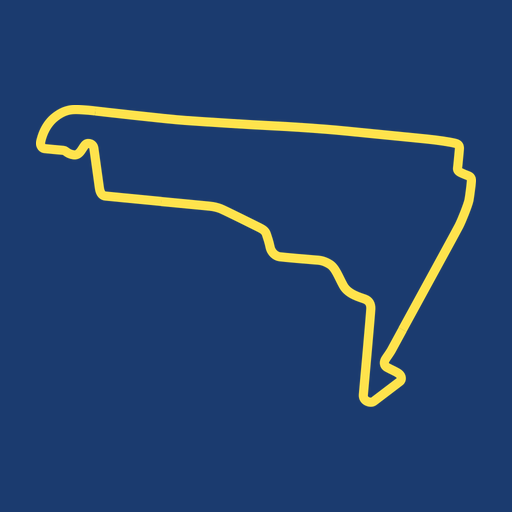
Nascar Cup - Mexico City
Display & Timezone
Display & Timezone
Showing times for Europe/Vienna
Timezone
Europe - Vienna
14 - 16 Jun
Completed
Autódromo Hermanos Rodríguez
Where To Watch Nascar in United States
|
Prime Video
United States exclusive streaming home for five mid-season Cup Series races and much of early-season practice and qualifying.
|
|
TNT Sports / WBD
United States summer partner for five Cup Series races on TNT Sports / Warner Bros. Discovery platforms.
|
|
Stream Nascar securely from anywhere with NordVPN
Traveling abroad or using public Wi-Fi? Protect your connection and access your usual coverage more securely.
|
Upcoming in Nascar
|
Texas
2 - 3 May
|
||
|
Watkins Glen
9 - 10 May
|
||
|
All-Star Dover
16 - 17 May
|
Upcoming at Autódromo Hermanos Rodríguez
|
Mexico City Grand Prix
Formula 1
30 Oct - 1 Nov
|
Track Info
Autódromo Hermanos Rodríguez - Mexico City, Mexico
Semi-permanent road course in the Magdalena Mixhuca park - clockwise - high altitude, long straights and a unique stadium section
When was the track built?
Opened in 1959 as Ciudad Deportiva Magdalena Mixhuca, the circuit hosted international events through the 1960s before safety and infrastructure overhauls in later decades. It was renamed Autódromo Hermanos Rodríguez to honor Ricardo and Pedro Rodríguez, Mexico's racing icons.
A major 2015 redevelopment modernized the venue for F1's return: a new paddock, resurfacing, revised run offs and the creative re-routing through the baseball stadium Foro Sol, which splits the legendary Peraltada and rejoins for a final fast right at T17.
When was its first race?
The venue's first race weekend was in 1959. The Mexican Grand Prix debuted in 1962 as a non-championship event, then joined the F1 World Championship in 1963. After eras in the 60s, 80s-90s and a hiatus, Formula 1 returned in 2015 and the Mexico City Grand Prix has been a modern sell-out.
What's the circuit like?
- Altitude effects: With air this thin, teams trim huge rear wing yet still run Monaco-like cooling. Engines and turbos love the density drop, but brakes and tyres run hot and cars slide more.
- Launch and heavy stops: The long run to Turn 1 produces three-wide arrivals and big braking duels. Traction out of T3 onto the endless straight dictates top speed and overtaking chances into T4.
- Stadium sensation: The Foro Sol complex wraps grandstands around slow corners, so you watch cars thread a bowl of noise before blasting toward Peraltada's modern right-hander.
- Three DRS zones: Typically the main straight, the T3-T4 straight and the short blast later in the lap, creating repeated slipstream battles.
- Strategy themes: Track temp swings, brake cooling limits and traffic through the stadium shape tyre choices. Undercuts can bite if tyres overheat in dirty air.
- Benchmark pace: Official F1 race lap record 1:17.774. Qualifying poles often land in the low-to-mid 1:16s depending on conditions and era.
Lap records and benchmarks (by series)
- Formula 1 (race lap): 1:17.774 - Valtteri Bottas, 2021 Mexico City GP - current 4.304 km layout.
- Formula E Mexico City E-Prix: Uses a shortened infield-stadium layout, with all-electric single-seaters delivering sub 1:10 laps on that configuration.
- Champ Car / CART history: The series raced here in the 1980s and again 2002-2007 on an adapted course, with huge crowds through Foro Sol.
- NASCAR México Series: Stock cars headline national events on road and oval variants within the complex.
- WEC 6 Hours of Mexico: Hosted in 2016-2017 on the GP course, showcasing hybrid prototypes and multi-class strategy at altitude.
Why go?
A roaring grandstand amphitheatre in the heart of a world-class city. The combo of thin air top speeds, festival atmosphere in Foro Sol and Mexico City's food and culture makes this a bucket list trip. Expect passionate crowds, mariachi in the paddock and confetti on the podium.
Where's the best place to watch?
- Turn 1-2-3 complex: Starts, restarts and the heaviest braking of the lap with multiple lines and switchbacks.
- End of the T3-T4 straight: DRS slingshots into a classic divebomb zone with cutbacks through the following sequence.
- Foro Sol stadium: Immersive sound and close-up views as cars zigzag through low-speed corners surrounded by grandstands, then fire toward Peraltada.
- Peraltada T17 and main straight: See commitment through the final right and the sprint past the pits with DRS open and wheel-to-wheel finishes.
- Main grandstand: Grid, pit stops, strategy drama and podium celebrations with panoramic sightlines.
Not just F1: Mexican and world series in CDMX
Formula E: The Mexico City E-Prix turns the stadium into a cauldron with Attack Mode strategy and regenerative braking fireworks.
NASCAR México and national touring: Big local followings deliver loud, elbows-out races on mixed configurations.
Endurance and GT events: Regional and international GT races use the fast perimeter and technical stadium, creating varied traffic and strategy.
Historic festivals: Classic machinery regularly returns to celebrate the Rodríguez brothers and Mexico's deep motorsport heritage.
Hotels & Accommodation
14 - 16 Jun
Completed
Autódromo Hermanos Rodríguez
Track Info
Autódromo Hermanos Rodríguez - Mexico City, Mexico
Semi-permanent road course in the Magdalena Mixhuca park - clockwise - high altitude, long straights and a unique stadium section
When was the track built?
Opened in 1959 as Ciudad Deportiva Magdalena Mixhuca, the circuit hosted international events through the 1960s before safety and infrastructure overhauls in later decades. It was renamed Autódromo Hermanos Rodríguez to honor Ricardo and Pedro Rodríguez, Mexico's racing icons.
A major 2015 redevelopment modernized the venue for F1's return: a new paddock, resurfacing, revised run offs and the creative re-routing through the baseball stadium Foro Sol, which splits the legendary Peraltada and rejoins for a final fast right at T17.
When was its first race?
The venue's first race weekend was in 1959. The Mexican Grand Prix debuted in 1962 as a non-championship event, then joined the F1 World Championship in 1963. After eras in the 60s, 80s-90s and a hiatus, Formula 1 returned in 2015 and the Mexico City Grand Prix has been a modern sell-out.
What's the circuit like?
- Altitude effects: With air this thin, teams trim huge rear wing yet still run Monaco-like cooling. Engines and turbos love the density drop, but brakes and tyres run hot and cars slide more.
- Launch and heavy stops: The long run to Turn 1 produces three-wide arrivals and big braking duels. Traction out of T3 onto the endless straight dictates top speed and overtaking chances into T4.
- Stadium sensation: The Foro Sol complex wraps grandstands around slow corners, so you watch cars thread a bowl of noise before blasting toward Peraltada's modern right-hander.
- Three DRS zones: Typically the main straight, the T3-T4 straight and the short blast later in the lap, creating repeated slipstream battles.
- Strategy themes: Track temp swings, brake cooling limits and traffic through the stadium shape tyre choices. Undercuts can bite if tyres overheat in dirty air.
- Benchmark pace: Official F1 race lap record 1:17.774. Qualifying poles often land in the low-to-mid 1:16s depending on conditions and era.
Lap records and benchmarks (by series)
- Formula 1 (race lap): 1:17.774 - Valtteri Bottas, 2021 Mexico City GP - current 4.304 km layout.
- Formula E Mexico City E-Prix: Uses a shortened infield-stadium layout, with all-electric single-seaters delivering sub 1:10 laps on that configuration.
- Champ Car / CART history: The series raced here in the 1980s and again 2002-2007 on an adapted course, with huge crowds through Foro Sol.
- NASCAR México Series: Stock cars headline national events on road and oval variants within the complex.
- WEC 6 Hours of Mexico: Hosted in 2016-2017 on the GP course, showcasing hybrid prototypes and multi-class strategy at altitude.
Why go?
A roaring grandstand amphitheatre in the heart of a world-class city. The combo of thin air top speeds, festival atmosphere in Foro Sol and Mexico City's food and culture makes this a bucket list trip. Expect passionate crowds, mariachi in the paddock and confetti on the podium.
Where's the best place to watch?
- Turn 1-2-3 complex: Starts, restarts and the heaviest braking of the lap with multiple lines and switchbacks.
- End of the T3-T4 straight: DRS slingshots into a classic divebomb zone with cutbacks through the following sequence.
- Foro Sol stadium: Immersive sound and close-up views as cars zigzag through low-speed corners surrounded by grandstands, then fire toward Peraltada.
- Peraltada T17 and main straight: See commitment through the final right and the sprint past the pits with DRS open and wheel-to-wheel finishes.
- Main grandstand: Grid, pit stops, strategy drama and podium celebrations with panoramic sightlines.
Not just F1: Mexican and world series in CDMX
Formula E: The Mexico City E-Prix turns the stadium into a cauldron with Attack Mode strategy and regenerative braking fireworks.
NASCAR México and national touring: Big local followings deliver loud, elbows-out races on mixed configurations.
Endurance and GT events: Regional and international GT races use the fast perimeter and technical stadium, creating varied traffic and strategy.
Historic festivals: Classic machinery regularly returns to celebrate the Rodríguez brothers and Mexico's deep motorsport heritage.